
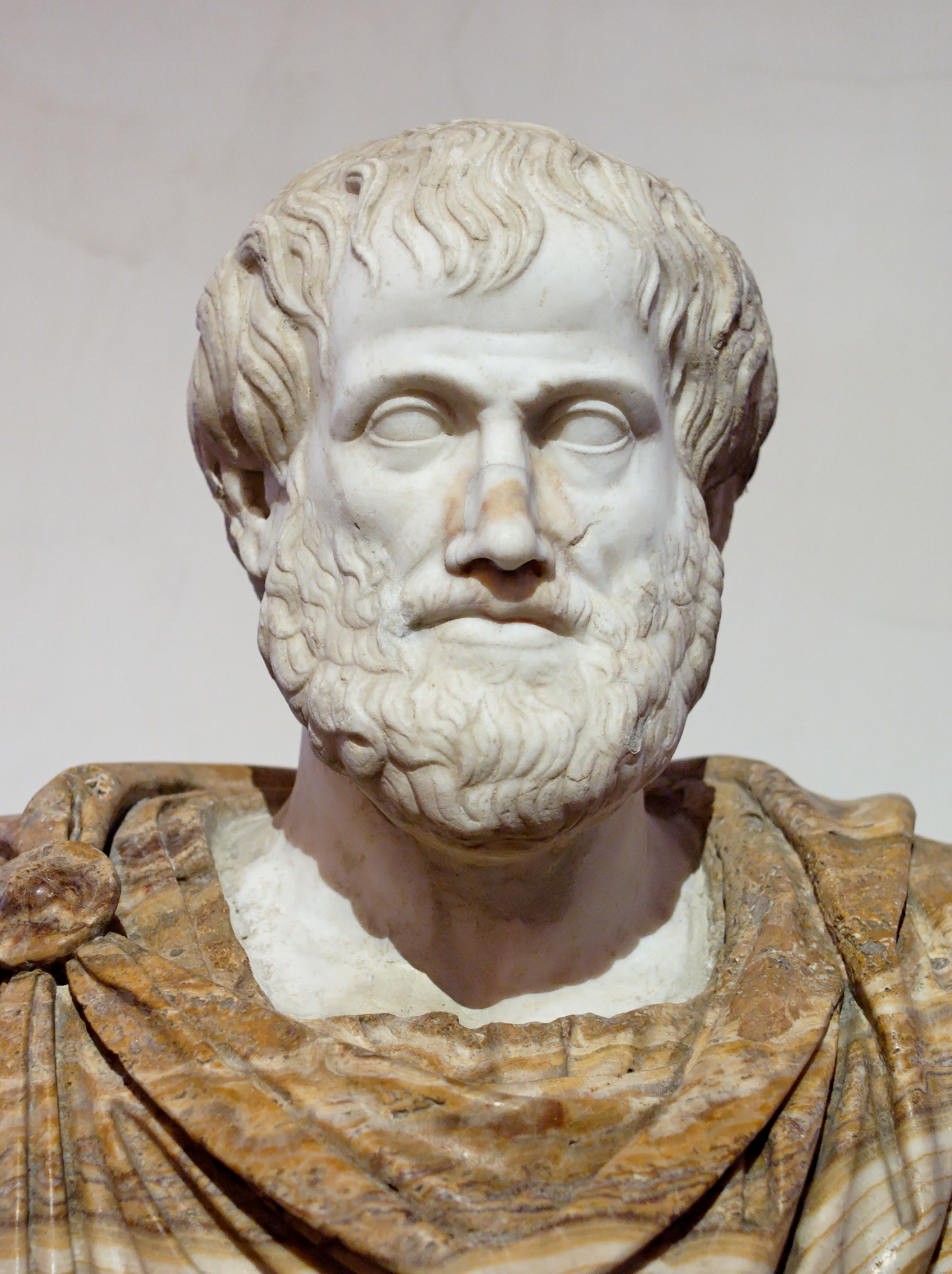
Aristotle | Vibepedia
Aristotle, the prodigious student of Plato and tutor to Alexander the Great, remains a titan of Western intellectual history. His vast corpus, spanning logic…
Contents
- 🏛️ The Core Curriculum: What Aristotle Actually Taught
- 🚀 Influence & Legacy: The Aristotelian Vibe Score
- 🔍 Skeptic's Corner: Where Aristotle Falls Short
- 💡 How to Engage: Reading Aristotle Today
- 🤝 The Aristotelian Network: Key Figures & Schools
- ⚖️ Aristotle vs. Plato: The Eternal Debate
- 📈 The Long Arc: Aristotle's Future Trajectory
- 📚 Essential Works: Your Starting Point
- Frequently Asked Questions
- Related Topics
Overview
Aristotle, the prodigious student of Plato and tutor to Alexander the Great, remains a titan of Western intellectual history. His vast corpus, spanning logic, metaphysics, ethics, politics, biology, and poetics, laid foundational frameworks that shaped academic disciplines for over two millennia. While his teleological worldview and geocentric cosmology have been superseded, his emphasis on empirical observation, systematic categorization, and logical reasoning continues to resonate. His ethical system, particularly the concept of virtue ethics and the pursuit of eudaimonia (human flourishing), is experiencing a significant revival in contemporary philosophical discourse. Understanding Aristotle is not just an academic exercise; it's a crucial step in tracing the DNA of modern scientific inquiry and ethical deliberation.
🏛️ The Core Curriculum: What Aristotle Actually Taught
Aristotle, the OG polymath, didn't just dabble; he systematized. His core teachings, often delivered at his Lyceum in Athens (founded 335 BCE), covered everything from the mechanics of the cosmos to the ethics of a good life. Think of him as the original curriculum designer for Western thought. He broke down reality into categories, analyzed causality with his four causes (material, formal, efficient, final), and laid the groundwork for fields like biology, physics, and logic. His approach was empirical, emphasizing observation and classification, a stark contrast to his teacher Plato's more abstract Forms. Understanding Aristotle means grasping his systematic method, which aimed to explain why things are the way they are, not just that they are.
🚀 Influence & Legacy: The Aristotelian Vibe Score
Aristotle's cultural energy, or Vibe Score, is off the charts, easily an 85/100, and that's conservative. For over two millennia, his ideas have been the bedrock of Western philosophy and science. His logic systems were the standard until the 19th century, and his ethical frameworks, particularly Virtue Ethics, remain highly influential. The scientific method itself owes a debt to his emphasis on empirical observation and categorization. While some of his specific scientific conclusions have been superseded, his method and his way of thinking continue to resonate, shaping how we approach knowledge and inquiry across countless disciplines. His influence flows through Medieval Philosophy, Islamic Golden Age Science, and even into modern AI Ethics.
🔍 Skeptic's Corner: Where Aristotle Falls Short
Let's be real, Aristotle wasn't perfect. His physics, for instance, with its geocentric universe and ideas about natural place, was fundamentally wrong and held back scientific progress for centuries. His biology, while groundbreaking for its time, was often based on limited observation and sometimes speculative reasoning. Furthermore, his views on slavery and women, reflecting the biases of his era, are deeply problematic and require critical engagement. The Controversy Spectrum for Aristotle is high when discussing his social and scientific conclusions, even as his logical and ethical frameworks are celebrated. He provides fertile ground for Skepticism regarding the infallibility of even the greatest minds.
💡 How to Engage: Reading Aristotle Today
Engaging with Aristotle today isn't like picking up a dusty relic; it's more like wrestling with a foundational text that still has teeth. Start with his ethical works, like the Nicomachean Ethics, which offers practical advice on living a flourishing life through habit and moderation. For logic, his Organon is the place to go, though it's dense. Don't try to read him cover-to-cover initially; pick a topic that interests you – politics, poetry, biology – and dive into the relevant texts. Remember, his writing style can be aphoristic and dense, often requiring secondary sources to unpack. Think of it as learning a new, incredibly influential dialect of thought.
🤝 The Aristotelian Network: Key Figures & Schools
Aristotle's intellectual lineage is vast. He founded the Peripatetic School at the Lyceum around 335 BCE, a place of learning that fostered rigorous debate and systematic study. His most famous student was Alexander the Great, whose conquests, in turn, spread Hellenistic culture and Aristotelian thought across the known world. Later, figures like Ptolemy built upon his astronomical models, while Thomas Aquinas masterfully synthesized Aristotelian philosophy with Christian theology in the 13th century, creating Scholasticism. The Islamic Golden Age also saw a profound engagement with Aristotle, with scholars like Averroes preserving and commenting on his works when they were less accessible in Western Europe.
⚖️ Aristotle vs. Plato: The Eternal Debate
The classic showdown: Aristotle vs. Plato. While both were giants of Athenian philosophy, their approaches diverged sharply. Plato, famously depicted in his Allegory of the Cave, believed true reality lay in the eternal, unchanging Forms, accessible through reason. Aristotle, his student for two decades, grounded his philosophy in the observable world. For Aristotle, the 'Form' of a thing was inseparable from the thing itself; you understood a horse by studying actual horses, not by contemplating an abstract 'Form of Horse'. This Epistemology debate – reason vs. experience – has echoed through philosophical history, influencing thinkers from René Descartes to John Locke.
📈 The Long Arc: Aristotle's Future Trajectory
Where is Aristotle heading? His Vibe Score remains high, but the trajectory is complex. In science, his specific theories are largely obsolete, but his emphasis on systematic observation and classification is a precursor to modern scientific methodology. In ethics, Virtue Ethics is experiencing a significant revival, offering an alternative to deontological and consequentialist frameworks. His political philosophy continues to inform discussions on governance and citizenship. The Futurist perspective sees Aristotle's enduring value not in his answers, but in his questions and his method of rigorous inquiry. He’s less a destination and more a perpetual starting point for understanding the world.
📚 Essential Works: Your Starting Point
To truly grasp Aristotle, you need to engage with his primary texts. The Nicomachean Ethics is arguably his most accessible and enduring work, offering profound insights into happiness and moral character. For a taste of his logic, the Categories and On Interpretation provide foundational concepts. If you're interested in his metaphysics, the Metaphysics is essential, though notoriously difficult. For his political thought, the Politics is a must-read. Don't shy away from annotated editions or scholarly companions; they are invaluable guides through his dense prose and complex arguments. Consider starting with a good anthology of his work to get a broad overview before committing to a single treatise.
Key Facts
- Year
- -384
- Origin
- Stagira, Chalcidice
- Category
- Philosophy
- Type
- Person
Frequently Asked Questions
What is Aristotle's most famous contribution?
It's hard to pick just one, but his development of formal logic, laid out in the Organon, is monumental. He essentially invented the rules for valid reasoning. Beyond logic, his systematic approach to classifying knowledge and his foundational work in ethics, particularly Virtue Ethics, are equally significant. His emphasis on empirical observation also laid crucial groundwork for the scientific method.
Is Aristotle still relevant today?
Absolutely. While his scientific conclusions are outdated, his philosophical methods and ethical frameworks remain incredibly influential. His ideas on Virtue Ethics are experiencing a resurgence, offering a compelling alternative to other ethical theories. Furthermore, his systematic approach to understanding the world continues to inform fields from biology to political science. His questions about happiness, justice, and the good life are timeless.
Where should I start reading Aristotle?
For most people, the Nicomachean Ethics is the best entry point. It's his most accessible work and deals with practical questions about how to live a good life. If you're interested in his logic, the Categories is a good, though brief, introduction. For politics, the Politics is essential. Avoid jumping straight into his Metaphysics unless you're prepared for a serious challenge.
What was Aristotle's relationship with Plato?
Aristotle was Plato's student at the Academy in Athens for about 20 years. Despite this close tutelage, Aristotle developed a philosophical system that diverged significantly from Plato's. While Plato emphasized abstract Forms, Aristotle grounded his philosophy in empirical observation of the natural world. This fundamental difference in approach, often framed as idealism vs. realism, has shaped philosophical debate for centuries.
Did Aristotle invent science?
He didn't 'invent' science in the modern sense, but he was arguably the first to systematically study and categorize the natural world with a focus on empirical observation and logical analysis. His work in biology, physics, and astronomy, while often incorrect by modern standards, established a methodology that was foundational for the development of the scientific method. He provided the intellectual tools and frameworks that allowed future generations to build upon and correct his findings.
What are Aristotle's 'Four Causes'?
Aristotle's Four Causes are a framework for understanding any phenomenon or object. They are: the Material Cause (what it's made of), the Formal Cause (its essence or form), the Efficient Cause (what brought it into being), and the Final Cause (its purpose or telos). For example, a statue's material cause is bronze, its formal cause is the sculptor's design, its efficient cause is the sculptor, and its final cause is to be admired or commemorate someone.