
Contents
Overview
The theoretical foundation of the Doppler effect, which posits that the observed frequency of a wave changes if the source or observer is moving, was described by Christian Doppler. While Doppler's initial work focused on light waves, the principle was soon recognized for its applicability to sound and, crucially, radio waves. Early radar systems, developed extensively during World War II by entities like the MIT Radiation Laboratory, primarily focused on detecting the presence, range, and bearing of targets. The integration of Doppler capabilities, however, began to emerge in the post-war era. Researchers like Henry G.F. Koster and David K. McIntosh were instrumental in developing practical Doppler radar systems, particularly for meteorological applications in the 1950s and 60s, moving beyond simple detection to understanding atmospheric motion.
⚙️ How It Works
At its core, Doppler radar operates by transmitting a microwave signal towards a target. When this signal reflects off a moving object, its frequency is altered due to the Doppler effect: if the object is moving towards the radar, the returned frequency increases (a positive Doppler shift); if it's moving away, the frequency decreases (a negative Doppler shift). The radar receiver captures this reflected signal, and sophisticated signal processing compares the transmitted and received frequencies. The magnitude of this frequency difference is directly proportional to the radial velocity of the target—its speed directly towards or away from the radar. This allows for precise velocity measurements, distinguishing it from conventional radar that only measures range and direction.
📊 Key Facts & Numbers
Doppler radar technology is now ubiquitous. The resolution of modern Doppler radar can distinguish between targets separated by mere meters, even at distances of hundreds of kilometers.
👥 Key People & Organizations
Key figures in the development of Doppler radar include Christian Doppler, whose work laid the theoretical groundwork. In the practical application of radar, Henry G.F. Koster and David K. McIntosh were pioneers in meteorological Doppler radar. Organizations like the National Oceanic and Atmospheric Administration (NOAA) and the U.S. Air Force have been major drivers of Doppler radar research and deployment, particularly through programs like NEXRAD, a joint effort involving NOAA, the Federal Aviation Administration, and the U.S. Air Force. Companies such as Raytheon and Lockheed Martin are significant manufacturers and developers of advanced Doppler radar systems for both civilian and military applications.
🌍 Cultural Impact & Influence
The impact of Doppler radar on weather forecasting has been profound, transforming our ability to predict and warn about severe weather events like tornadoes and hurricanes. Doppler radar has become indispensable in aviation for detecting wind shear and turbulence, enhancing flight safety. In law enforcement, it provides objective speed measurements for traffic enforcement. Its influence extends to scientific research, military surveillance, and even non-invasive medical imaging techniques, demonstrating its pervasive cultural and technological significance.
⚡ Current State & Latest Developments
Current developments in Doppler radar are focused on increasing resolution, improving signal processing for better clutter rejection (e.g., distinguishing rain from ground clutter), and expanding dual-polarization capabilities. Dual-polarization Doppler radar, which transmits and receives both horizontally and vertically polarized waves, provides more detailed information about precipitation types (rain, hail, snow) and intensity, further enhancing weather forecasting accuracy. Research is also ongoing into phased-array Doppler radar, which can electronically steer beams without mechanical movement, allowing for faster scanning and more agile target tracking. The integration of Doppler radar data with artificial intelligence and machine learning algorithms is also a rapidly growing area, promising more sophisticated analysis and prediction capabilities.
🤔 Controversies & Debates
One of the primary controversies surrounding Doppler radar, particularly in law enforcement, concerns accuracy and potential misuse. Factors like improper calibration, operator error, and environmental interference can lead to erroneous speed readings, sometimes resulting in wrongful tickets or arrests. In meteorology, while Doppler radar has saved lives, debates persist regarding the optimal placement and density of radar networks, especially in underserved regions. There are also ongoing discussions about the cost-effectiveness of upgrading to the latest dual-polarization and phased-array technologies, balancing enhanced capabilities against significant financial investment for agencies like NOAA.
🔮 Future Outlook & Predictions
The future of Doppler radar points towards even greater integration and sophistication. Phased-array Doppler radar is expected to become more widespread, offering faster scanning and the ability to track multiple targets simultaneously with greater precision. The fusion of Doppler radar data with other sensing technologies, such as lidar and satellite imagery, will create more comprehensive environmental monitoring systems. Advancements in signal processing and AI will enable real-time analysis of complex weather patterns and potentially predict the formation and trajectory of severe storms with unprecedented accuracy. Furthermore, miniaturization of Doppler radar components could lead to its incorporation into a wider array of consumer devices and autonomous systems.
💡 Practical Applications
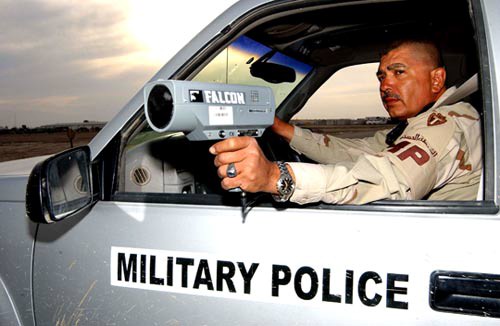
Doppler radar's practical applications are diverse and critical. In meteorology, it's the backbone of severe weather detection, tracking thunderstorms, identifying rotation indicative of tornadoes, and measuring rainfall rates for flood warnings. For aviation, it detects hazardous wind shear near airports and turbulence in flight paths, managed by air traffic control systems. Law enforcement uses handheld and vehicle-mounted Doppler radar guns to enforce speed limits. Military applications include tracking aircraft, missiles, and ground vehicles. In medicine, Doppler ultrasound, a form of Doppler technology, is used to visualize blood flow and assess cardiovascular health.
Key Facts
- Category
- technology
- Type
- technology