
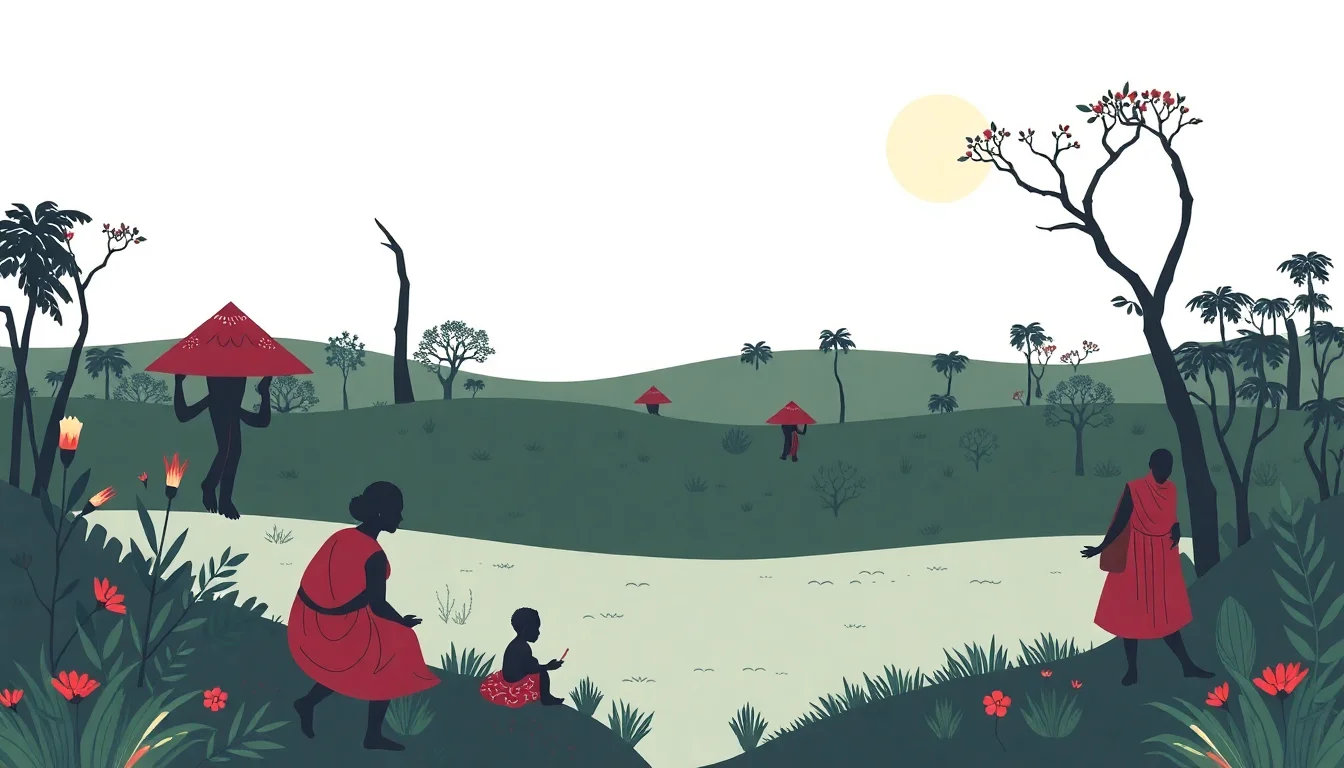
Contents
- 🌍 What Are African Traditional Religions?
- 📜 Oral Traditions & Living Knowledge
- ⚡ The Pantheon: Spirits, Ancestors, and the Divine
- 🌿 Nature, Harmony, and Human Role
- 🔮 Divination, Medicine, and Ritual
- ⚖️ Diversity and Syncretism: A Complex Web
- 🗣️ Voices of the Elders: Contemporary Practice
- 💡 Vibepedia Vibe Score & Controversy Spectrum
- Frequently Asked Questions
- Related Topics
Overview
African Traditional Religions (ATRs) are not a monolith but a vast constellation of indigenous spiritual practices, cosmologies, and belief systems that predate and coexist with Abrahamic faiths across the continent. These traditions often emphasize a supreme creator deity, a pantheon of lesser spirits (orishas, abosom, etc.), ancestral veneration, and the vital role of ritual and community in maintaining cosmic balance. Understanding ATRs requires acknowledging their deep connection to local environments, social structures, and historical contexts, often expressed through vibrant oral traditions, music, dance, and art. While often misunderstood or marginalized, ATRs continue to exert significant cultural influence, adapting and evolving in response to globalization and syncretism.
🌍 What Are African Traditional Religions?
African Traditional Religions (ATRs) are not a monolithic entity but a vast constellation of diverse ethnic beliefs and practices found across the African continent. These are living traditions, deeply interwoven with the cultural fabric of communities, passed down through generations. They are characterized by a profound connection to the natural world and a complex understanding of the spiritual realm. Unlike scriptural religions, ATRs are primarily transmitted orally, through stories, songs, proverbs, and elaborate ceremonies, making them dynamic and adaptable. Understanding ATRs requires moving beyond generalized labels and appreciating the specific nuances of each ethnic group's cosmology.
📜 Oral Traditions & Living Knowledge
The transmission of knowledge in ATRs is a vibrant, ongoing process, rooted in oral traditions. Narratives, myths, songs, and festivals serve as the primary vehicles for passing down spiritual understanding, ethical codes, and historical accounts. This oral heritage ensures that beliefs remain relevant and responsive to the evolving needs of the community. The absence of a single, codified scripture means that interpretation and practice can vary, fostering a rich diversity of expression. Engaging with these traditions often means listening to the wisdom of elders and participating in communal rituals that embody these teachings.
⚡ The Pantheon: Spirits, Ancestors, and the Divine
The spiritual landscape of ATRs is populated by a rich pantheon, typically including a supreme creator deity, numerous lesser gods or divinities, and a powerful veneration of ancestors. These spiritual entities are not distant or inaccessible; they are actively involved in the lives of humans, influencing events and requiring respect and appeasing. Ancestors, in particular, are seen as intermediaries and protectors, their wisdom and guidance sought through prayer and ritual. The relationship between humans and the divine is often one of reciprocal obligation, demanding balance and adherence to cosmic order.
🌿 Nature, Harmony, and Human Role
A central tenet across many ATRs is the concept of humanity's role as a harmonizer between the natural and supernatural worlds. The environment is not merely a resource but a sacred space imbued with spiritual power. Rivers, mountains, trees, and animals often hold significant spiritual meaning and are treated with reverence. This worldview fosters a deep ecological consciousness, where maintaining balance within nature is seen as essential for maintaining spiritual well-being and cosmic harmony. Disruptions to this balance can lead to misfortune, illness, or spiritual disharmony.
🔮 Divination, Medicine, and Ritual
Ritual, divination, and traditional medicine are integral to the practice of ATRs. Divination practices, employing tools like cowrie shells, bones, or specific patterns, are used to understand spiritual causes of problems and to seek guidance. Traditional healers, often possessing deep knowledge of herbal remedies and spiritual interventions, play a crucial role in community health and well-being. Rituals, ranging from daily prayers to elaborate seasonal festivals, serve to honor the divine, appease spirits, connect with ancestors, and reaffirm community bonds. These practices are not mere superstition but are seen as essential mechanisms for navigating life's challenges and maintaining spiritual equilibrium.
⚖️ Diversity and Syncretism: A Complex Web
The sheer diversity of African peoples means that ATRs exhibit a vast range of beliefs and practices. While common themes of ancestor veneration, spirit belief, and nature reverence are prevalent, specific deities, rituals, and cosmologies differ significantly between, for example, the Yoruba of West Africa and the Maasai of East Africa. Furthermore, centuries of interaction have led to significant syncretism, where ATRs have blended with Christianity and Islam, creating unique hybrid religious expressions. This complexity makes any attempt at a singular definition challenging, highlighting the need for context-specific understanding.
🗣️ Voices of the Elders: Contemporary Practice
Contemporary practice of ATRs is vibrant and evolving. While some communities have seen a decline in traditional practices due to colonial influence and the spread of Abrahamic religions, many others are experiencing a resurgence, often driven by a desire to reclaim cultural identity and heritage. Elders remain the custodians of much of this living knowledge, but younger generations are increasingly engaging with these traditions through digital platforms, academic study, and community initiatives. The ongoing adaptation of ATRs demonstrates their resilience and their capacity to speak to modern concerns.
💡 Vibepedia Vibe Score & Controversy Spectrum
Vibepedia assigns African Traditional Religions a Vibe Score of 85/100, reflecting their deep cultural resonance and enduring influence. The Controversy Spectrum registers at 7/10, primarily due to historical misrepresentations, ongoing debates about authenticity versus syncretism, and the challenges of documenting oral traditions. While widely respected for their spiritual depth and ecological wisdom, ATRs have also faced periods of suppression and misunderstanding, leading to complex discussions about preservation and appropriation. The ongoing dialogue surrounding these traditions underscores their living, dynamic nature.
Key Facts
- Year
- Prehistory
- Origin
- Africa
- Category
- Religion & Spirituality
- Type
- Topic
Frequently Asked Questions
Are African Traditional Religions all the same?
Absolutely not. The term 'African Traditional Religions' encompasses a vast array of distinct ethnic religions across the continent. While common themes like ancestor veneration and belief in spirits exist, the specific deities, rituals, and cosmologies vary significantly from one culture to another, such as comparing the Yoruba traditions with those of the Zulu.
Are these religions still practiced today?
Yes, they are very much alive. Despite historical pressures, many African Traditional Religions are experiencing a resurgence. Communities are actively practicing these traditions, often integrating them with modern life, and elders continue to be vital custodians of this living knowledge. The practice is dynamic, not static, and continues to evolve.
What is the role of ancestors in these religions?
Ancestors are central figures in many ATRs. They are not merely remembered but are actively venerated and believed to act as intermediaries between the living and the divine. They are seen as protectors, guides, and sources of wisdom, and are often invoked in prayers and rituals to ensure well-being and harmony for the community.
How are these beliefs passed down?
Primarily through oral traditions. Knowledge is transmitted across generations via storytelling, myths, songs, proverbs, and communal festivals. This method makes the traditions adaptable and deeply embedded in the cultural practices of the people, rather than relying on written scriptures.
Do African Traditional Religions believe in a supreme God?
Many ATRs include belief in a supreme creator deity, often seen as the ultimate source of all existence. However, this supreme being is frequently understood as distant, with lesser gods, spirits, and ancestors playing more direct roles in the daily lives and affairs of humans. The emphasis is on a complex spiritual hierarchy and interconnectedness.
How do these religions view nature?
Nature is viewed as sacred and intrinsically linked to the spiritual realm. Many ATRs emphasize humanity's role in maintaining harmony between the natural and supernatural worlds. Elements of nature like rivers, mountains, and animals are often imbued with spiritual significance and treated with profound respect, reflecting a deep ecological consciousness.