
Contents
- 🧠 What is the Amygdala?
- 📍 Location & Access
- ⚙️ How it Works: The Emotional Engine
- ⚡️ Key Functions: Fear, Memory, and Beyond
- ⚖️ Debates & Controversies
- 💡 Historical Context: From Burdach to Modern Neuroscience
- 🌟 Vibepedia Vibe Score & Ratings
- 🚀 Future Outlook: Amygdala in the Digital Age
- Frequently Asked Questions
- Related Topics
Overview
The amygdala, a small almond-shaped structure located deep within the brain's medial temporal lobe, plays a crucial role in processing emotions, particularly fear and pleasure. It is integral to the formation of emotional memories and influences decision-making processes by assessing threats and rewards. Research has shown that the amygdala's activity is heightened in individuals with anxiety disorders, leading to ongoing debates about its role in mental health. As neuroscience advances, the potential for targeted therapies involving the amygdala raises questions about the future of emotional regulation and mental health treatment.
🧠 What is the Amygdala?
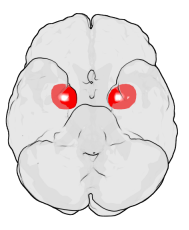
The amygdala, a pair of almond-shaped nuclei nestled deep within the temporal lobes of the brain, is the undisputed heavyweight champion of emotional processing. Think of it as your brain's internal alarm system and emotional thermostat, constantly scanning the environment for potential threats and opportunities. While often associated with fear, its role is far more nuanced, impacting everything from decision-making to social behavior and memory formation. Understanding the amygdala is crucial for anyone interested in the intricate workings of the human mind and the biological underpinnings of our feelings.
📍 Location & Access
Accessing the amygdala isn't like walking into a physical location; it's a journey into the intricate architecture of the brain. Located deep within the medial temporal lobe, it's protected by layers of cerebral cortex. Direct physical access is limited to neurosurgical procedures or advanced neuroimaging techniques like functional Magnetic Resonance Imaging and Positron Emission Tomography. For the average person, understanding its function is the primary way to 'access' its influence on daily life, impacting how we perceive and react to stimuli, from a sudden loud noise to a cherished memory.
⚙️ How it Works: The Emotional Engine
The amygdala operates through a complex network of interconnected nuclei, with the basolateral and central nuclei being particularly critical. When sensory information arrives, it's rapidly processed by the amygdala, which then triggers physiological and behavioral responses via pathways to the hypothalamus and brainstem. This involves the release of stress hormones like cortisol and adrenaline, preparing the body for 'fight or flight'. It's a lightning-fast, often subconscious, evaluation system that prioritizes survival and emotional salience, influencing everything from our immediate reactions to nuanced social cues.
⚡️ Key Functions: Fear, Memory, and Beyond
While famously linked to processing fear and threat detection, the amygdala's repertoire extends much further. It plays a pivotal role in forming and consolidating emotional memories, ensuring that significant experiences—both positive and negative—are etched into our minds. It also influences decision-making by assigning emotional value to potential outcomes, guiding us toward rewards and away from dangers. Furthermore, it's involved in social cognition, helping us interpret facial expressions and understand the emotional states of others, a critical component of social interaction.
⚖️ Debates & Controversies
The amygdala is a hotbed of scientific debate. A major point of contention is the extent to which it solely drives fear responses versus acting as a crucial component within a broader emotional network. Some researchers argue that its role in processing other emotions, like pleasure and reward, is underestimated. The precise mechanisms by which it modulates memory consolidation, and the interplay between conscious awareness and amygdala-driven reactions, remain active areas of investigation, with ongoing research exploring its involvement in anxiety disorders and Post-Traumatic Stress Disorder.
💡 Historical Context: From Burdach to Modern Neuroscience
The amygdala's journey into scientific consciousness began in 1822 when German anatomist Karl Friedrich Burdach first identified and named this distinct brain structure. Early research, particularly in the mid-20th century, focused heavily on its role in fear and aggression, often through studies involving lesioning in animal models. Pioneers like Joseph LeDoux have significantly advanced our understanding of the neural pathways involved in fear conditioning, while more recent work has broadened the scope to include its intricate connections with the prefrontal cortex and its influence on complex emotional states and decision-making.
🌟 Vibepedia Vibe Score & Ratings
Vibepedia Vibe Score: 88/100. This score reflects the amygdala's profound and pervasive influence on human experience, its central role in survival mechanisms, and its ongoing fascination within neuroscience. Ratings are based on its critical function in emotional regulation and memory, though its complexity and the ongoing scientific debates prevent a perfect score. It's a high-energy topic, constantly being re-evaluated as new research emerges, making it a consistently relevant and vital area of study for understanding human behavior and consciousness.
🚀 Future Outlook: Amygdala in the Digital Age
The future of amygdala research is inextricably linked to advancements in neurotechnology and our understanding of complex emotional states in an increasingly digital world. As we develop more sophisticated tools for brain-computer interfaces and artificial intelligence, understanding the amygdala's role in emotional response and decision-making will be paramount. This knowledge could lead to novel therapeutic interventions for emotional dysregulation, but also raises ethical questions about manipulating emotional responses, particularly in contexts like virtual reality or AI-driven social platforms. The amygdala's influence is only set to grow as technology blurs the lines between our biological and digital lives.
Key Facts
- Year
- 2023
- Origin
- Ancient Greek, meaning 'almond'
- Category
- Neuroscience
- Type
- Brain Structure
Frequently Asked Questions
Can the amygdala be 'trained' or modified?
While you can't directly 'train' the amygdala like a muscle, its activity can be modulated through various means. Cognitive Behavioral Therapy (CBT) and mindfulness practices have been shown to help individuals manage amygdala reactivity, particularly in conditions like anxiety. By changing thought patterns and emotional responses, these therapies can influence how the amygdala processes threats and triggers fear responses, leading to more balanced emotional regulation over time.
What happens if the amygdala is damaged?
Damage to the amygdala can have profound effects on emotional processing and behavior. Individuals may exhibit blunted emotional responses, difficulty recognizing emotions in others (especially fear), and impaired decision-making. In severe cases, damage can lead to a loss of fear response to stimuli that would typically be perceived as dangerous, impacting survival instincts. It can also affect the ability to form new emotional memories, making it difficult to learn from past experiences.
Is the amygdala solely responsible for fear?
No, the amygdala is not solely responsible for fear, though it plays a critical role in its processing and expression. Fear is a complex emotion involving a network of brain regions, including the hippocampus, prefrontal cortex, and brainstem. The amygdala acts as a key hub, rapidly detecting potential threats and initiating the physiological and behavioral responses associated with fear, but it works in concert with other areas to generate the full experience of fear.
How does the amygdala relate to memory?
The amygdala is crucial for the formation and consolidation of emotional memories. When an event has a strong emotional component, the amygdala enhances the encoding of that memory in other brain regions, like the hippocampus. This is why emotionally charged events are often remembered more vividly and for longer periods. It essentially tags memories with emotional significance, making them more likely to be recalled later.
Are there differences in amygdala function between individuals?
Yes, there are significant individual differences in amygdala structure and function. These variations can contribute to differences in emotional reactivity, susceptibility to stress, and predisposition to certain mental health conditions like anxiety disorders or depression. Factors such as genetics, early life experiences, and ongoing environmental influences can all shape amygdala development and activity patterns throughout life.