
Contents
Overview
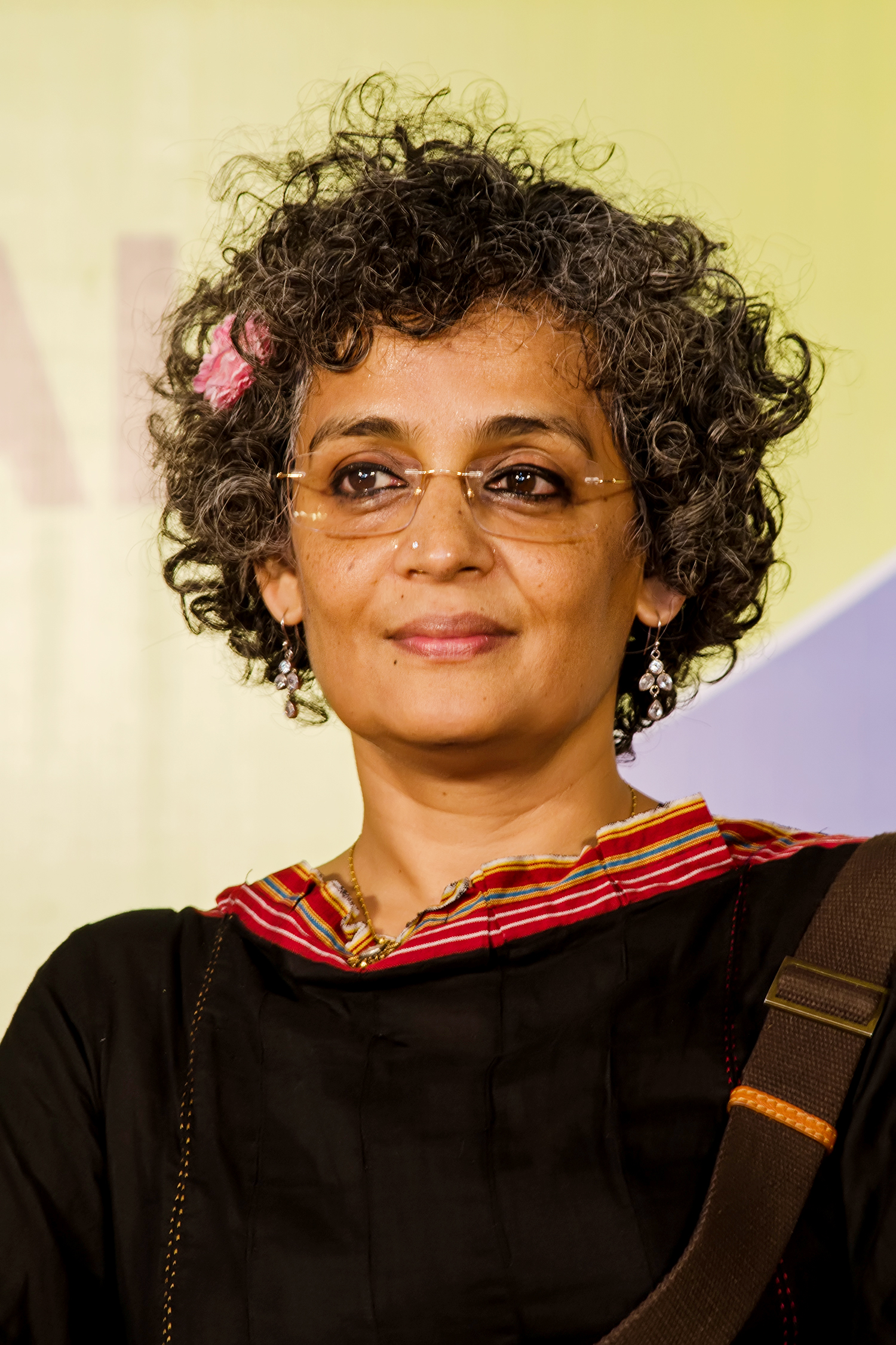
Arundhati Roy is an internationally acclaimed Indian author and activist, best known for her 1997 Booker Prize-winning novel, The God of Small Things. Born in Shillong, India, Roy’s literary career is marked by its lyrical prose and unflinching exploration of caste, class, and political power. Beyond fiction, she is a formidable public intellectual and activist, fiercely advocating for human rights, environmental justice, and indigenous land rights across India and globally. Her essays, collected in numerous volumes, dissect contemporary political issues with sharp critique, often targeting corporate power and state-sanctioned violence. Roy’s work consistently challenges dominant narratives, making her a pivotal, and often controversial, voice in global discourse.
🎵 Origins & History
Arundhati Roy was born in Shillong, India, to Mary Roy, a social activist, and Rajib Roy, a tea planter. Her parents divorced when she was two, and she was largely raised by her mother in Kerala. Roy attended the Lawrence School in Lovedale, Tamil Nadu, and later studied architecture at the University of Delhi, where she met her first husband, Gerard da Cunha. She later pursued a Master's degree in fine arts at the New Delhi Television (NDTV) workshop. Her early career included screenwriting for films. The publication of her debut novel, The God of Small Things, catapulted her to international literary fame, earning her the prestigious Booker Prize and establishing her as a significant voice in contemporary literature.
⚙️ How It Works
Roy’s literary and activist work operates on a dual track, each informing the other. Her fiction, particularly The God of Small Things, employs a non-linear narrative structure and rich, evocative language to explore the complexities of family, love, and societal constraints within the Indian context, specifically addressing the lingering impact of the caste system and colonialism. As an essayist and activist, she dissects contemporary political and social issues with a journalist's rigor and a poet's insight. She meticulously researches and articulates arguments against neoliberal policies, corporate exploitation, and state repression, often focusing on issues like dam construction, the Narmada Bachao Andolan, and the rights of indigenous peoples. Her activism is characterized by direct engagement with affected communities and a willingness to confront powerful institutions, including governments and multinational corporations like Adani Group and Reliance Industries.
📊 Key Facts & Numbers
Arundhati Roy's The God of Small Things achieved significant global reach. Her essay collections have also achieved significant global reach. Roy has received major awards for her literary and activist work, including the Booker Prize. Her activism has led to legal challenges, including charges of sedition in India, underscoring the high stakes of her public pronouncements. Her work has been translated into numerous languages, reaching an estimated global audience of millions.
👥 Key People & Organizations
Roy's personal life and career are intertwined with several key figures and organizations. Her mother, Mary Roy, was a significant influence and a prominent activist in her own right. Roy was married to filmmaker Pradip Krishen, who directed In Which Annie Gives It Those Ones. Her activism has often involved collaborating with grassroots organizations such as the Narmada Bachao Andolan and the People's Union for Civil Liberties (PUCL). She has been a vocal critic of Indian political figures like Narendra Modi and has engaged in public debates with intellectuals and policymakers. Her work has also drawn attention from international human rights organizations like Amnesty International and Human Rights Watch, who have highlighted the issues she champions. She was awarded the PEN Pinter Prize in 2024, sharing it with Alaa Abd El-Fattah, an imprisoned Egyptian writer.
🌍 Cultural Impact & Influence
Arundhati Roy's influence extends far beyond literary circles. The God of Small Things is a staple in university literature courses worldwide, shaping how many readers understand post-colonial India. Her essays have become foundational texts for anti-globalization and social justice movements, providing intellectual ammunition for activists and academics alike. She has inspired a generation of writers and thinkers to engage critically with political power and to use their platforms for social change. Her willingness to speak out against powerful entities, from the Indian state to multinational corporations, has emboldened others to do the same. Roy's work has also been instrumental in bringing global attention to issues such as the displacement caused by large-scale development projects and the ongoing struggles for Kashmir's autonomy. Her distinctive voice and unwavering commitment have cemented her status as a global icon of dissent and intellectual courage.
⚡ Current State & Latest Developments
As of 2024, Arundhati Roy remains an active and prominent voice in both literary and activist spheres. She continues to publish essays that critically analyze current events, most recently addressing the political climate in India and global conflicts. She continues to be a sought-after speaker at international forums and a frequent commentator on political issues, maintaining her role as a leading critic of state power and corporate influence. Her ongoing engagement with human rights issues, particularly concerning indigenous communities and political prisoners, ensures her continued relevance in global discourse.
🤔 Controversies & Debates
Roy's outspoken political views have made her a controversial figure, particularly within India. She has faced accusations of anti-nationalism and sedition for her critiques of the Indian government and its policies, including her support for Kashmiri separatists and her criticism of the Hindutva movement. Her stance on issues like the Narmada dam project and her critiques of corporate giants like Adani Group have drawn sharp rebukes from political leaders and industry figures. Some critics argue that her activism sometimes overshadows her literary achievements, while others contend that her literary and political work are inseparable. The charges of sedition filed against her in 2010 for alleged inflammatory speeches at a seminar highlight the contentious nature of her public pronouncements and the risks associated with challenging state authority in India. Her award of the PEN Pinter Prize in 2024, shared with Alaa Abd El-Fattah, further amplified debates surrounding freedom of expression and political dissent.
🔮 Future Outlook & Predictions
The future for Arundhati Roy appears to be a continuation of her dual career as a celebrated author and a fearless activist. With a new novel reportedly in the works, literary critics anticipate another profound exploration of the human condition, likely infused with her characteristic social and political commentary. On the activist front, her unwavering commitment to human rights and environmental justice suggests she will remain a prominent voice challenging oppressive systems globally. As geopolitical tensions rise and corporate power expands, Roy's critical analyses and calls for accountability are likely to become even more crucial. Her ability to articulate complex issues with clarity and passion positions her to continue influencing public discourse and inspiring movements for change for years to come, potentially shaping narratives around globalization and neoliberalism for future generations.
💡 Practical Applications
Arundhati Roy's work has direct practical applications in several domains. Her novels serve as powerful tools for literary education, fostering critical thinking about social structures, identity, and history. Her essays provide a framework for understanding and critiquing contemporary political and economic systems, offering analytical models for activists, journalists, and policymakers. Her advocacy work has directly impacted policy discussions and raised awareness for marginalized communities, contributing to legal battles and policy reforms related to land rights, environmental pro
Key Facts
- Category
- culture
- Type
- topic