
Contents
- 🎵 Origins & History
- ⚙️ Geopolitical Framework
- 📊 Key Facts & Numbers
- 👥 Key Figures & Organizations
- 🌍 Cultural Impact & Influence
- ⚡ Current State & Latest Developments
- 🤔 Controversies & Debates
- 🔮 Future Outlook & Predictions
- 💡 Practical Applications
- 📚 Related Topics & Deeper Reading
- Frequently Asked Questions
- References
- Related Topics
Overview
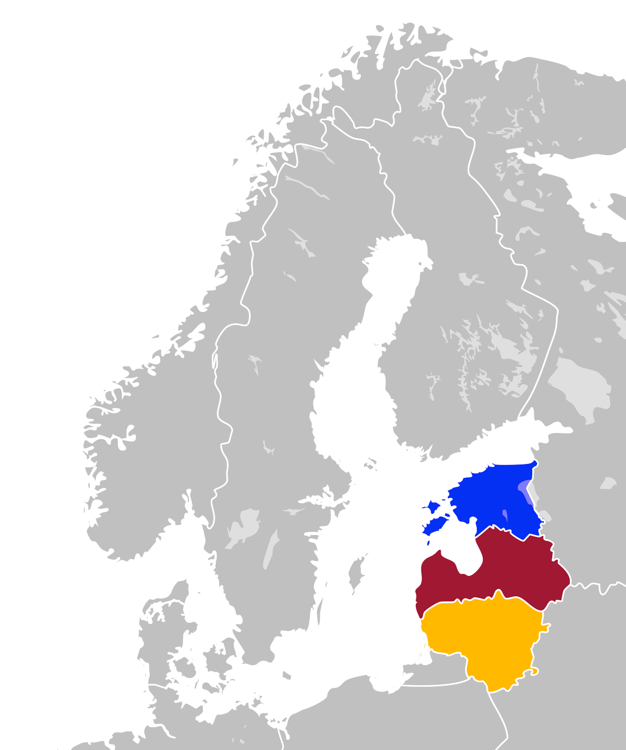
The geopolitical term 'Baltic states' or 'Baltic countries' coalesced around Estonia, Latvia, and Lithuania, three nations sharing the eastern coastline of the Baltic Sea. Their historical narrative is one of persistent struggle for self-determination against dominant regional powers. Indigenous Baltic tribes inhabited the region for millennia, but by the late Middle Ages, the Teutonic Knights and Swedish Empire exerted significant influence, followed by the Russian Empire and German Empire in subsequent centuries. The dream of independence flickered throughout these periods, finally igniting in 1918 as World War I concluded. This first taste of sovereignty was brutally interrupted in 1940 when the Soviet Union occupied and annexed all three nations, a fate compounded by the subsequent Nazi German invasion in 1941. The post-World War II era saw them firmly entrenched within the Soviet bloc, enduring decades of occupation until the Singing Revolution and the eventual restoration of independence in 1991, a pivotal moment marked by mass public demonstrations and a collective yearning for freedom.
⚙️ Geopolitical Framework
The Baltic states function as a distinct geopolitical bloc, unified by their shared history of occupation and their post-Soviet reorientation towards the West. Membership in both NATO and the European Union since 2004 anchors them firmly within Western security and economic structures, a stark contrast to their Soviet past. They are also part of the Baltic Assembly, a consultative intergovernmental organization promoting cooperation among the parliaments of Estonia, Latvia, and Lithuania, and the Council of the Baltic Sea States. Their strategic location makes them a crucial buffer zone and a frontline in contemporary geopolitical discussions, particularly concerning relations with Russia. The concept of the 'Baltic Way', a human chain formed in 1989 to protest Soviet annexation, remains a potent symbol of their shared identity and resilience.
📊 Key Facts & Numbers
Collectively, the Baltic states span approximately 175,000 square kilometers, with a combined population of roughly 6 million people. Estonia, Latvia, and Lithuania each boast unique demographic profiles, with Estonia having a population of about 1.3 million, Latvia around 1.8 million, and Lithuania the largest at approximately 2.8 million. Economically, their GDPs have seen significant growth since EU accession; for instance, Lithuania's GDP reached an estimated $70 billion in 2023, while Latvia's was around $40 billion, and Estonia's approximately $35 billion. All three nations utilize the Euro as their currency, having adopted it in 2011 (Lithuania), 2014 (Latvia), and 2011 (Estonia). Their defense spending consistently meets or exceeds the NATO target of 2% of GDP, reflecting their commitment to collective security.
👥 Key Figures & Organizations
Key figures and organizations have profoundly shaped the Baltic states' journey. During the independence movements, leaders like Vaira Vīķe-Freiberga (former President of Latvia), Vytautas Landsbergis (leader of Sajudis, Lithuania's independence movement), and Lennart Meri (former President of Estonia) were instrumental. The Baltic Assembly and the Baltic Council of Ministers serve as crucial intergovernmental bodies fostering regional cooperation. Organizations like the Estonian Institute, Latvian Institute, and Lithuanian Culture Institute work to promote their respective cultures abroad. In the defense sphere, NATO and the European Union are paramount organizations, alongside national defense forces and regional initiatives like the Baltic Defence College.
🌍 Cultural Impact & Influence
The cultural output of the Baltic states, while distinct for each nation, shares a common thread of resilience, folklore, and a deep connection to nature. Traditional music, characterized by polyphonic singing (like Estonia's Laulupidu festival, a UNESCO Intangible Cultural Heritage), folk instruments, and modern interpretations, is a significant cultural export. Literature from authors like Jonas Jonaitis (Lithuania), Rainis (Latvia), and Anton Hansen Tammsaare (Estonia) often explores themes of national identity and historical struggle. Visual arts, including painting, sculpture, and contemporary installations, reflect both historical influences and modern artistic trends. The region's unique pagan roots, blended with centuries of Christianization and Soviet-era atheism, have created a complex spiritual and cultural landscape. The concept of 'Vibes' in the Baltic context often relates to a quiet, introspective connection with the natural environment and a strong sense of community.
⚡ Current State & Latest Developments
In the current geopolitical climate, the Baltic states are at the forefront of discussions regarding European security, particularly in light of Russia's invasion of Ukraine. Their robust support for Ukraine, including significant military and humanitarian aid, underscores their strategic importance and historical awareness. Estonia has emerged as a leader in digital governance and cybersecurity, with initiatives like e-Estonia setting global benchmarks. Latvia continues to focus on developing its transit and logistics sectors, leveraging its port infrastructure. Lithuania is strengthening its defense capabilities and fostering innovation in biotechnology and fintech. All three are actively engaged in diversifying their energy sources to reduce reliance on Russian fossil fuels, investing heavily in renewable energy projects and LNG terminals.
🤔 Controversies & Debates
The primary controversy surrounding the Baltic states often revolves around their historical narratives and their relationship with neighboring Russia. Debates persist regarding the interpretation of Soviet occupation, with Russia often framing it as liberation rather than annexation, a view vehemently rejected by the Baltic nations. The treatment of Russian-speaking minorities within Estonia and Latvia has also been a point of contention, with concerns raised by Russia about discrimination, though the Baltic states maintain they uphold minority rights according to international standards. Furthermore, discussions about defense spending and burden-sharing within NATO occasionally highlight the Baltic states' consistent commitment, sometimes contrasting with the contributions of larger member states. The ongoing geopolitical tensions also fuel debates about energy security and the potential for hybrid warfare tactics originating from the East.
🔮 Future Outlook & Predictions
The future outlook for the Baltic states is intrinsically linked to the evolving security landscape in Eastern Europe. Continued vigilance against Russian assertiveness will likely remain a top priority, driving further defense cooperation within NATO and the European Union. Estonia's digital innovation trajectory is expected to accelerate, potentially solidifying its position as a global leader in e-governance and cybersecurity. Latvia aims to enhance its role as a regional logistics hub, capitalizing on its strategic location and port infrastructure. Lithuania is poised to further develop its burgeoning tech sector, particularly in areas like fintech and biotechnology. The region's commitment to renewable energy and green transition will also likely intensify, positioning them as leaders in sustainable development within the EU. The long-term demographic trends, particularly concerning population retention and migration, will also be a critical factor shaping their future.
💡 Practical Applications
The Baltic states serve as a crucial case study in post-Soviet transition, national resilience, and strategic geopolitical positioning. Their experience offers valuable lessons for other nations navigating transitions from authoritarianism to democracy and integrating into international alliances like NATO and the European Union. Estonia's pioneering work in e-governance provides a model for digital transformation in public administration worldwide. Their collective approach to energy security, particularly their efforts to diversify away from Russian fossil fuels, offers insights into building resilient energy infrastructure. Furthermore, their cultural preservation efforts, especially in maintaining distinct languages and traditions under historical pressures, highlight the importance of cultural identity in nation-building.
Key Facts
- Year
- 1918 (First Independence), 1991 (Restoration of Independence)
- Origin
- Northeastern Europe
- Category
- geography
- Type
- topic
Frequently Asked Questions
What exactly are the Baltic states?
The Baltic states are the three sovereign nations of Estonia, Latvia, and Lithuania, located on the eastern coast of the Baltic Sea in Northeastern Europe. They are united by a shared history of foreign occupation, particularly by the Russian Empire and the Soviet Union, and their subsequent re-establishment of independence in the late 20th century. Today, they are all members of NATO and the European Union, forming a distinct geopolitical region.
When did the Baltic states become independent?
All three Baltic states declared their independence in 1918, following the collapse of the Russian Empire at the end of World War I. However, their independence was interrupted when they were annexed by the Soviet Union in 1940. They regained their full sovereignty and re-established their independence in 1991, a process often referred to as the 'Singing Revolution'.
Why are the Baltic states strategically important?
The Baltic states hold significant strategic importance due to their location on the eastern flank of NATO and the EU, bordering Russia and Belarus. They serve as a crucial buffer zone and a frontline for collective defense against potential aggression from the East. Their access to the Baltic Sea also makes them important for regional trade and naval operations. Their commitment to robust defense spending and their historical experience make them key players in European security discussions.
What is the main cultural connection between Estonia, Latvia, and Lithuania?
While each nation has its own distinct language and cultural traditions, the primary cultural connection between the Baltic states stems from their shared historical experiences of occupation, their struggle for independence, and their subsequent reorientation towards Western democratic values. This shared narrative fosters a sense of solidarity and mutual understanding, often expressed through joint cultural events and regional cooperation initiatives. Their indigenous roots, blended with centuries of foreign influence, also contribute to a unique regional cultural identity.
Are the Baltic states considered part of Scandinavia?
No, the Baltic states are not typically considered part of Scandinavia. Scandinavia traditionally refers to Denmark, Norway, and Sweden, characterized by closely related languages and distinct historical and cultural ties. While there are some historical and geographical connections, and increasing cooperation, Estonia, Latvia, and Lithuania are distinct entities with their own unique linguistic families (Estonian is Finno-Ugric, while Latvian and Lithuanian are Baltic languages) and historical trajectories, often grouped more broadly within Northeastern Europe or the Baltic region.
How do the Baltic states differ from each other?
Despite their shared regional identity, the Baltic states have significant differences. Estonia's language is Finno-Ugric, related to Finnish, while Latvian and Lithuanian are Baltic languages, belonging to the Indo-European family. Historically, Estonia and Latvia were heavily influenced by German and Swedish rule, while Lithuania had a larger, more powerful medieval state (the Grand Duchy of Lithuania) and closer ties to Poland. Economically and technologically, Estonia is often seen as the most advanced, particularly in digital innovation, while Lithuania has the largest population and economy. Latvia, with its significant Russian-speaking minority, navigates unique social dynamics.
What is the 'Baltic Way'?
The 'Baltic Way' was a peaceful political demonstration that occurred on August 23, 1989, involving approximately two million people forming an unbroken human chain stretching over 600 kilometers across Estonia, Latvia, and Lithuania. This unprecedented act of solidarity was organized to protest the 50th anniversary of the Molotov-Ribbentrop Pact, which led to the Soviet annexation of the Baltic states. The Baltic Way was a powerful symbol of their collective desire for freedom and independence, drawing international attention to their plight and significantly contributing to their eventual restoration of sovereignty in 1991.