
Contents
Overview
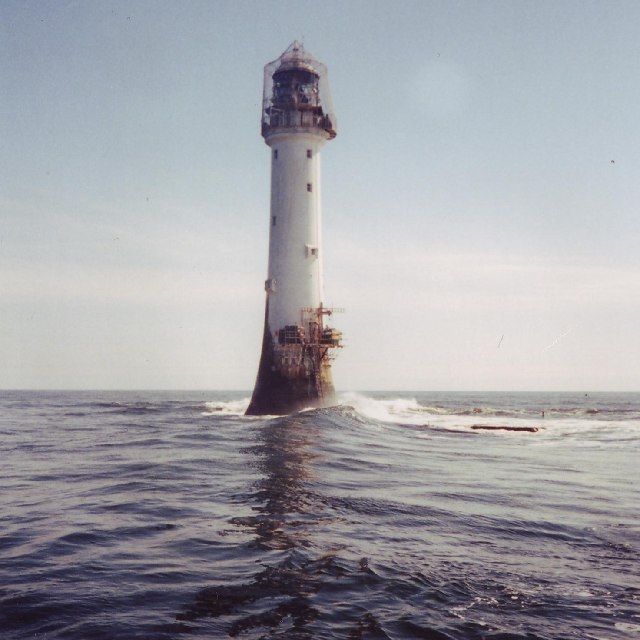
The genesis of the Bell Rock Lighthouse lies in the urgent need to mitigate the devastating shipwrecks that plagued the treacherous Bell Rock, a submerged hazard notorious for claiming vessels in the North Sea. Following numerous pleas and investigations, the Northern Lighthouse Board commissioned Robert Stevenson, a visionary engineer, to design and oversee its construction. Work commenced in 1807, a monumental undertaking involving the transport of vast quantities of granite and sandstone to the exposed rock, often only accessible for a few hours during low tide. Stevenson employed innovative techniques, including the use of interlocking stones and a revolutionary mortar, to ensure the lighthouse's structural integrity against the immense forces of the sea. The construction, fraught with logistical challenges and perilous working conditions, was completed in 1810, marking a significant triumph in maritime engineering and safety, a stark contrast to the earlier, less permanent beacons like the Pharos of Alexandria.
⚙️ How It Works
The Bell Rock Lighthouse is a marvel of solid masonry construction, designed to be as much a part of the rock as the rock itself. Its foundation comprises massive, interlocking granite courses, meticulously shaped and fitted to form a solid base that resists the relentless force of the waves. Above this, the tower rises in a tapering cylindrical form, constructed from precisely cut sandstone blocks, each weighing several tons. The internal structure features a spiral staircase, also carved from stone, providing access to the lantern room. The original lighting apparatus, a complex arrangement of Argand lamps and polished metal reflectors, was designed to project a powerful beam visible for miles. This system was later upgraded in 1843 with more advanced optics, reflecting the ongoing evolution of lighthouse technology, though the fundamental masonry structure has remained unchanged.
📊 Key Facts & Numbers
Standing a formidable 35 meters (115 feet) tall, the Bell Rock Lighthouse boasts a light visible for an impressive 35 statute miles (56 kilometers), a crucial distance for maritime navigation in the North Sea. The construction project involved an estimated 45,000 tons of stone, quarried from Arbroath and transported to the site. The lighthouse's operational costs in its early years were substantial, reflecting the complexity of maintaining a manned station on such an isolated and exposed location. Since its automation on October 24, 1988, the operational expenditure has significantly decreased, though the initial investment in its robust construction, estimated in the tens of thousands of pounds sterling at the time, was immense. The lighthouse has guided an estimated 100,000 vessels safely past the Bell Rock since its inception.
👥 Key People & Organizations
The driving force behind the Bell Rock Lighthouse was Robert Stevenson, a member of the renowned Stevenson family of engineers, who meticulously planned and executed its construction. He worked under the auspices of the Northern Lighthouse Board, the Scottish body responsible for maritime aids to navigation, established in 1786. Key figures in the construction crew included master masons and laborers who braved extreme conditions. The lighthouse's ongoing operation is now managed by the Northern Lighthouse Board, with its headquarters historically located at 84 George Street in Edinburgh since 1832. The original lamps and reflectors, removed in 1843, are now preserved at the Cape Bonavista Lighthouse in Newfoundland, Canada, a testament to their historical significance.
🌍 Cultural Impact & Influence
The Bell Rock Lighthouse has cemented its place as an enduring icon of Scottish maritime heritage and engineering prowess. Its image has graced countless postcards, artworks, and historical accounts, symbolizing resilience and safety against the formidable power of the sea. The lighthouse's design and construction techniques influenced subsequent lighthouse projects worldwide, serving as a benchmark for robust, sea-washed structures. Its enduring presence has inspired a sense of national pride and a deep appreciation for the sacrifices made by its keepers and builders. The lighthouse's story is often recounted alongside other great feats of engineering, such as the Brooklyn Bridge or the Eiffel Tower, highlighting its historical significance in the narrative of human achievement.
⚡ Current State & Latest Developments
As of 2024, the Bell Rock Lighthouse continues its vital role as an automated navigational aid, remotely monitored by the Northern Lighthouse Board. While its primary function remains, there is ongoing discussion and planning regarding its long-term preservation and potential for increased public access, balancing heritage preservation with operational requirements. The lighthouse's original optical equipment, though no longer in use at Bell Rock, is a significant artifact in maritime history. Recent technological advancements in GPS and ECDIS have altered maritime navigation, yet traditional aids like Bell Rock remain crucial as backups and for visual confirmation, particularly in adverse weather or during system failures.
🤔 Controversies & Debates
The primary 'controversy' surrounding Bell Rock, if one can call it that, revolves around the immense cost and logistical complexity of its construction in the early 19th century. Some contemporary critics questioned the necessity of such an elaborate and expensive structure for a single rock. However, the subsequent reduction in shipwrecks and the lighthouse's unparalleled longevity have overwhelmingly vindicated the project. Debates also arise regarding the best methods for preserving such a historic masonry structure against the ongoing effects of marine erosion and climate change, balancing authenticity with necessary interventions. The historical context of manned lighthouses versus modern automation also presents a point of discussion regarding the romanticized past versus practical efficiency.
🔮 Future Outlook & Predictions
The future of the Bell Rock Lighthouse appears secure, given its robust construction and continued operational importance. The Northern Lighthouse Board is committed to its maintenance, ensuring it remains a functional aid to navigation. Future developments may involve enhanced digital monitoring systems and potentially more sophisticated visitor experiences, should accessibility be improved. The lighthouse's enduring structure suggests it will continue to stand for centuries, a silent witness to maritime history. Its legacy as a pioneering feat of engineering will undoubtedly be studied and admired by future generations of engineers and historians, perhaps inspiring new approaches to resilient infrastructure in challenging environments.
💡 Practical Applications
The most significant practical application of the Bell Rock Lighthouse is its role as a maritime navigational aid, guiding ships safely through the hazardous waters of the North Sea. Its powerful beam warns vessels of the submerged Bell Rock, preventing costly and potentially fatal groundings. Beyond navigation, it serves as a critical piece of maritime infrastructure, supporting the vital shipping lanes that connect Scotland to global trade routes. The lighthouse also functions as a historical monument and a tourist attraction, drawing visitors interested in engineering, maritime history, and the dramatic coastal landscapes of Scotland. Its presence contributes to the safety and economic viability of the region's fishing and shipping industries.
Key Facts
- Category
- technology
- Type
- topic