
Contents
Overview
The genesis of the Church Street Marketplace can be traced back to 1958, a period when urban planners nationwide were exploring pedestrianization strategies to revitalize downtown cores. Burlington, Vermont, embraced this vision, initiating a multi-decade process that culminated in the marketplace's construction between 1980 and 1981. This transformation aimed to create a car-free zone that would foster a more engaging and accessible urban experience, drawing inspiration from successful pedestrian malls in cities like Kalamazoo and Boston. The project represented a significant investment in the city's commercial and social infrastructure, seeking to counter suburban sprawl and re-establish downtown as a vibrant destination.
⚙️ Design & Infrastructure
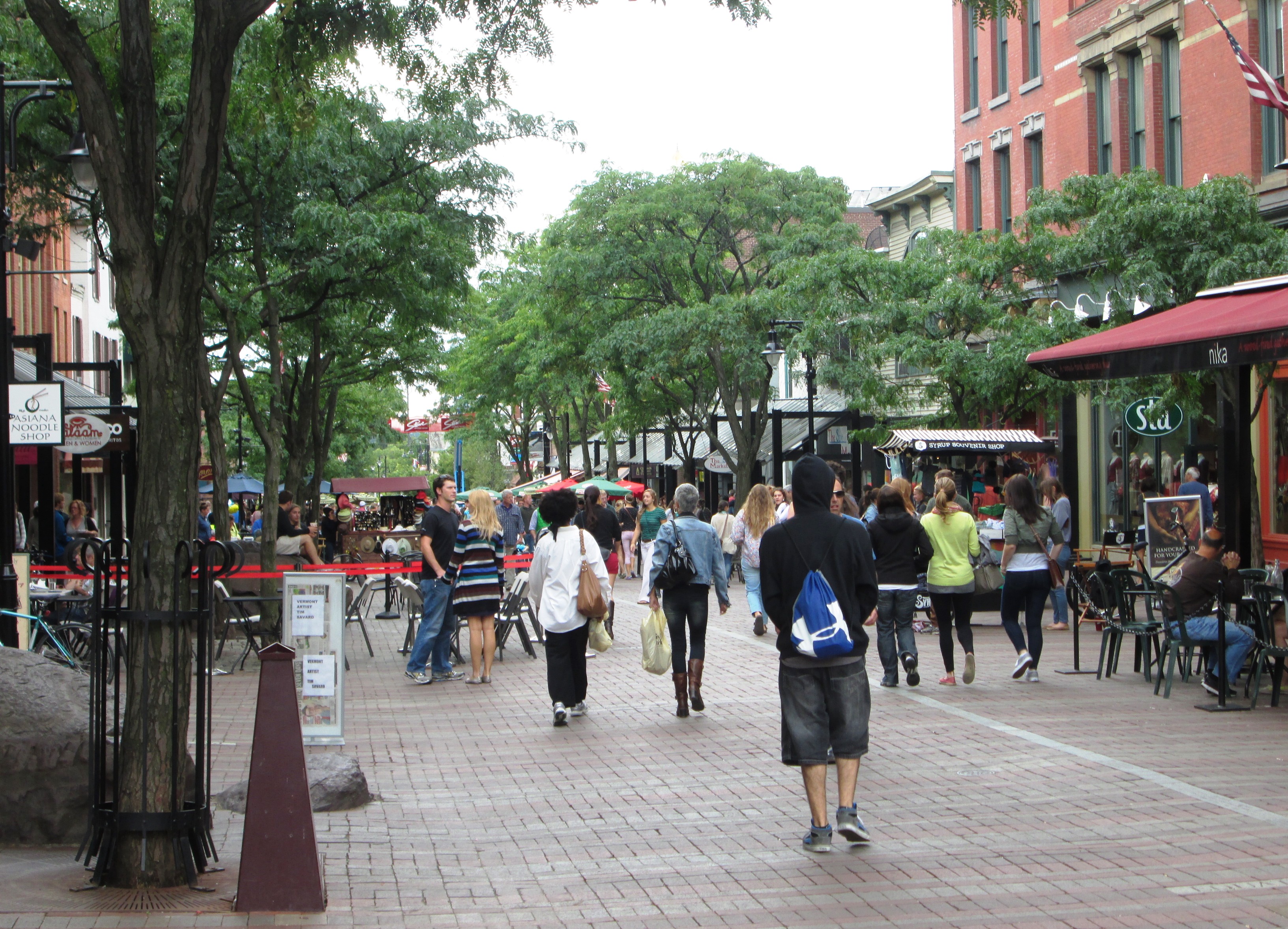
Designed by Carr, Lynch Associates of Cambridge, Massachusetts, the Church Street Marketplace is characterized by its open-air, pedestrian-first design. The four-block stretch is meticulously laid out to accommodate foot traffic, outdoor seating for numerous restaurants and cafes, and space for public art installations and seasonal events. The infrastructure prioritizes accessibility and a comfortable user experience, with considerations for landscaping, seating, and the integration of public art. This deliberate design choice has been instrumental in shaping the marketplace's enduring appeal as a gathering place, distinguishing it from conventional retail environments dominated by vehicular access and parking lots.
📊 Key Facts & Numbers
The Church Street Marketplace spans four blocks, encompassing approximately 86 storefronts. This density supports a diverse retail ecosystem, featuring a significant number of independent local businesses. Annually, the marketplace hosts over 30 public events and festivals, attracting significant economic activity for Burlington. The marketplace was designated as one of America's "Great Public Spaces" by the American Planning Association in 2008.
👥 Key People & Organizations
The Church Street Marketplace Commission is the primary entity responsible for the management and ongoing development of the marketplace. This commission, composed of local stakeholders including business owners, residents, and city officials, oversees operations, marketing, and event programming. Key figures in the marketplace's history include the urban planners and architects at Carr, Lynch Associates who developed the original design. Local business leaders and community advocates have also played crucial roles in advocating for its preservation and evolution over the decades, ensuring its continued relevance as a public space.
🌍 Cultural Impact & Influence
The American Planning Association recognized the Church Street Marketplace in 2008 by naming it one of America's "Great Public Spaces," a testament to its profound cultural impact. This designation highlights its success in fostering community interaction, supporting local commerce, and providing a vibrant public realm. The marketplace serves as a de facto town square for Burlington, hosting everything from the Vermont City Marathon finish line to the annual Burlington Winter Carnival. Its role extends beyond commerce, functioning as a crucial venue for artistic expression through events like the South End Art Hop and galleries such as The Firehouse Gallery, solidifying its status as a cultural anchor.
⚡ Current State & Latest Developments
In recent years, the Church Street Marketplace has focused on adapting to evolving retail trends and enhancing the visitor experience. Efforts have included modernizing infrastructure, improving accessibility, and integrating more sustainable practices. The commission actively works to support its diverse mix of local businesses, which remain the backbone of the marketplace's unique character. Ongoing discussions often revolve around balancing the presence of national retailers with the preservation of local identity, ensuring the marketplace remains a dynamic and relevant destination for both residents and tourists in the face of digital commerce and changing consumer habits.
🤔 Controversies & Debates
One persistent debate surrounding the Church Street Marketplace centers on the balance between national chain stores and independent local businesses. Critics argue that an increasing presence of national retailers can dilute the unique character that made the marketplace a "Great Public Space" in the first place, potentially leading to a homogenization of the retail landscape. Conversely, proponents contend that national brands can drive foot traffic and provide essential revenue that supports the overall ecosystem, including smaller local shops. Another point of contention sometimes arises regarding event programming and public space utilization, with discussions on how best to maximize the area's potential for community engagement and economic benefit without disrupting daily commerce.
🔮 Future Outlook & Predictions
The future of the Church Street Marketplace will likely involve continued adaptation to the digital age and evolving urban living. Expect further integration of technology to enhance visitor experience, potentially through augmented reality applications or improved digital wayfinding. The commission will likely continue to champion local businesses, perhaps through expanded support programs or curated retail initiatives. There's also a growing emphasis on sustainability, with potential for green infrastructure upgrades and initiatives to reduce the marketplace's environmental footprint. The challenge will be to innovate while preserving the authentic charm and community spirit that have defined Church Street for decades, ensuring it remains a vital hub for generations to come.
💡 Practical Applications
The Church Street Marketplace serves as a model for successful urban revitalization and pedestrian-friendly design. Its application lies in demonstrating how to create vibrant public spaces that integrate retail, dining, and cultural activities. Cities looking to enhance their downtown cores can study its model of commission-led management, its blend of commercial and public programming, and its commitment to fostering a strong local business presence. The marketplace also provides a practical example of how to activate streetscapes for community events, from farmers' markets and art festivals to live music performances, proving that well-designed pedestrian zones can become powerful economic and social engines.
Key Facts
- Category
- places
- Type
- place