
Contents
Overview
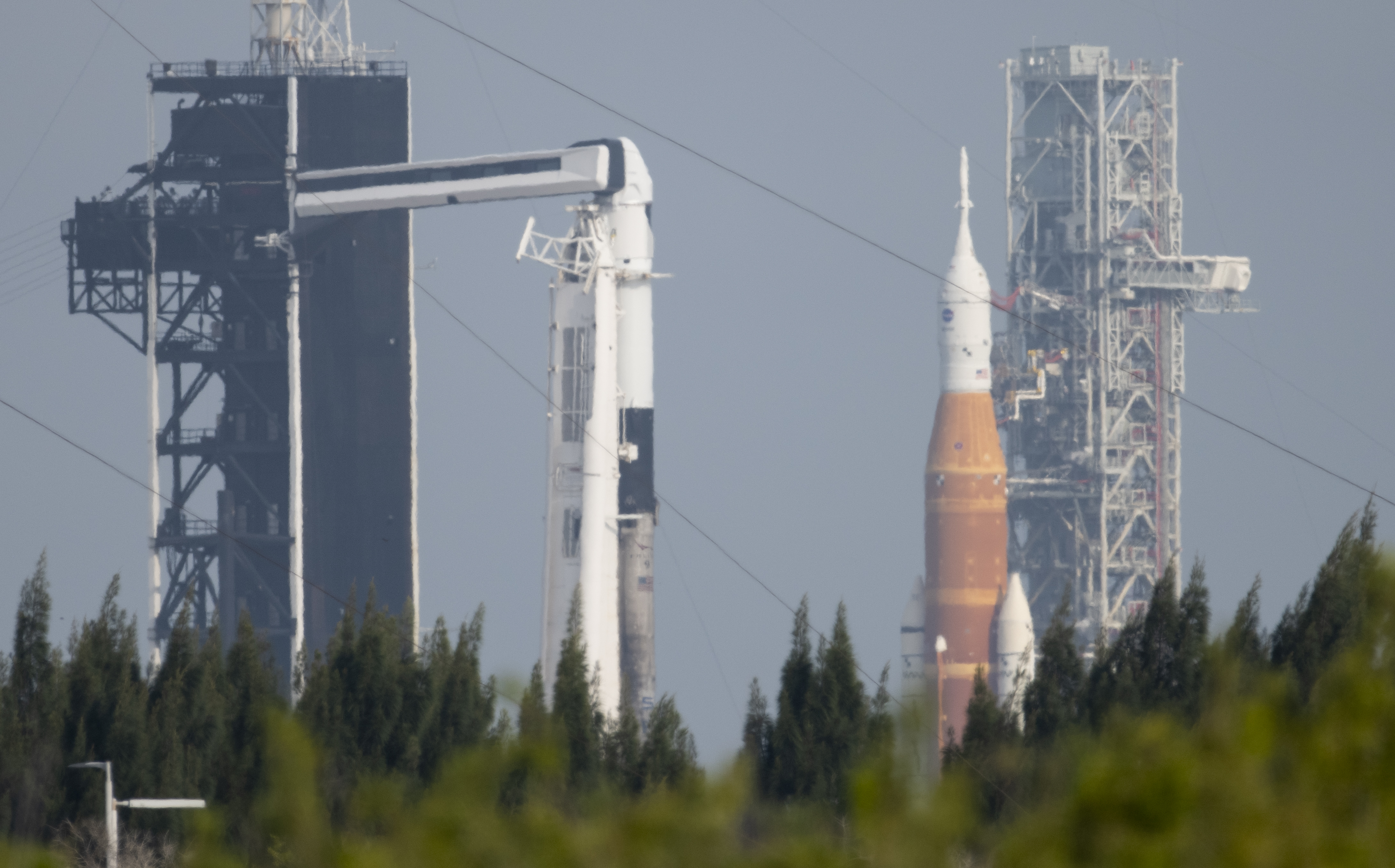
The seeds of commercial spaceflight were sown in the early days of the Space Race, though governments like the United States and the Soviet Union held a near-monopoly on space technology. Early collaborations between government agencies and private contractors laid groundwork, but it was the formation of Arianespace in 1980, emerging from the ESA's independent efforts, that marked the first significant step towards a dedicated commercial launch provider. In the US, defense contractors began adapting government-derived rockets for commercial use. However, the true revolution began in the early 2000s, fueled by visionary entrepreneurs like Elon Musk and Jeff Bezos, who injected massive private capital and a disruptive ethos into the sector, challenging the established aerospace giants and government-funded programs.
⚙️ How It Works
At its core, commercial spaceflight relies on reusable launch vehicle technology, a paradigm shift from the expendable rockets of the past. Companies like SpaceX have perfected the vertical landing of orbital-class boosters, drastically reducing per-launch costs. This involves sophisticated guidance, navigation, and control systems, advanced materials science for heat shields and structural integrity, and robust engine technology capable of multiple firings. Beyond launch, commercial entities are developing orbital servicing vehicles, in-space manufacturing capabilities, and advanced satellite constellations for global internet access, Earth observation, and scientific research, all operating under private funding and market-driven objectives.
📊 Key Facts & Numbers
The commercial space sector is experiencing exponential growth, with market projections reaching $1 trillion by 2040, according to Morgan Stanley. In 2023, over 100 orbital launches were conducted by commercial entities, a significant portion of the global total. SpaceX alone accounted for over 90 launches of its Falcon 9 rocket. The suborbital tourism market, pioneered by Virgin Galactic and Blue Origin, has already flown dozens of passengers, with ticket prices ranging from $250,000 to $450,000. The satellite servicing market is expected to grow to $10 billion by 2029, encompassing debris removal and in-orbit refueling.
👥 Key People & Organizations
The landscape of commercial spaceflight is defined by a handful of pioneering individuals and organizations. Elon Musk, founder of SpaceX and Starlink, has been instrumental in driving down launch costs with reusable rockets and building a global satellite internet constellation. Jeff Bezos, founder of Blue Origin, is investing heavily in reusable launch systems and lunar exploration ambitions. Richard Branson's Virgin Galactic has focused on suborbital space tourism. Key organizations include the Commercial Spaceflight Federation, a trade association advocating for the industry, and government bodies like the FAA, which regulates commercial space launches and reentries in the United States.
🌍 Cultural Impact & Influence
Commercial spaceflight is rapidly reshaping cultural perceptions of space, transforming it from a distant frontier reserved for national prestige into an accessible domain for commerce, tourism, and even personal aspiration. The images and videos from private missions, often shared widely on social media platforms like X and Instagram, have brought space closer to the public consciousness. The rise of space tourism, though currently exclusive, introduces the idea of ordinary citizens experiencing spaceflight. This democratization of access, coupled with the potential for off-world resource utilization, sparks imaginations and fuels a new wave of science fiction and popular culture narratives.
⚡ Current State & Latest Developments
The current state of commercial spaceflight is characterized by intense innovation and increasing competition. SpaceX continues to dominate the launch market with its Falcon Heavy and the ongoing development of its Starship system, designed for full reusability and interplanetary travel. Blue Origin is progressing with its New Glenn heavy-lift rocket and lunar lander programs. Rocket Lab is establishing itself as a key player in small satellite launch and is developing its Neutron rocket. The orbital debris removal market is gaining traction, with companies like Astroscale conducting demonstration missions. Furthermore, the development of commercial space stations, such as Axiom Space's modules, is paving the way for private human presence in orbit.
🤔 Controversies & Debates
The rapid expansion of commercial spaceflight is not without its controversies. Concerns over orbital debris are paramount, with the proliferation of satellite constellations like Starlink raising fears of increased collision risks and potential Kessler syndrome scenarios. The environmental impact of increased rocket launches, including carbon emissions and atmospheric pollution, is another growing area of debate. Furthermore, the question of space resource ownership and equitable access to space remains a contentious issue, with potential for geopolitical friction as nations and private entities vie for control over lunar and asteroid resources. The regulatory framework, particularly concerning safety and liability for private spaceflights, is still evolving.
🔮 Future Outlook & Predictions
The future of commercial spaceflight promises a dramatic expansion of human activity beyond Earth. SpaceX's Starship program aims for regular flights to the Moon and Mars, potentially establishing permanent off-world settlements by the 2030s. Blue Origin is also pursuing lunar ambitions with its Blue Moon lander. We can expect a surge in commercial space stations, enabling private research, manufacturing, and tourism in low Earth orbit. The development of in-space resource utilization, particularly lunar water ice for propellant, could unlock further deep-space exploration. The next decade will likely see the first commercial missions to asteroids for resource prospecting and the establishment of a robust space-based economy.
💡 Practical Applications
Commercial spaceflight has a wide array of practical applications transforming industries. Satellite constellations are providing global broadband internet access, bridging the digital divide in remote areas via services like Starlink. High-resolution Earth observation satellites offer critical data for climate monitoring, disaster response, and precision agriculture. In-space manufacturing, leveraging microgravity, could lead to the production of advanced materials, pharmaceuticals, and semiconductors with unique properties unattainable on Earth. Furthermore, the development of space-based solar power is being explored as a potential source of clean, abundant energy for Earth.
Key Facts
- Category
- technology
- Type
- movement