
Contents
Overview
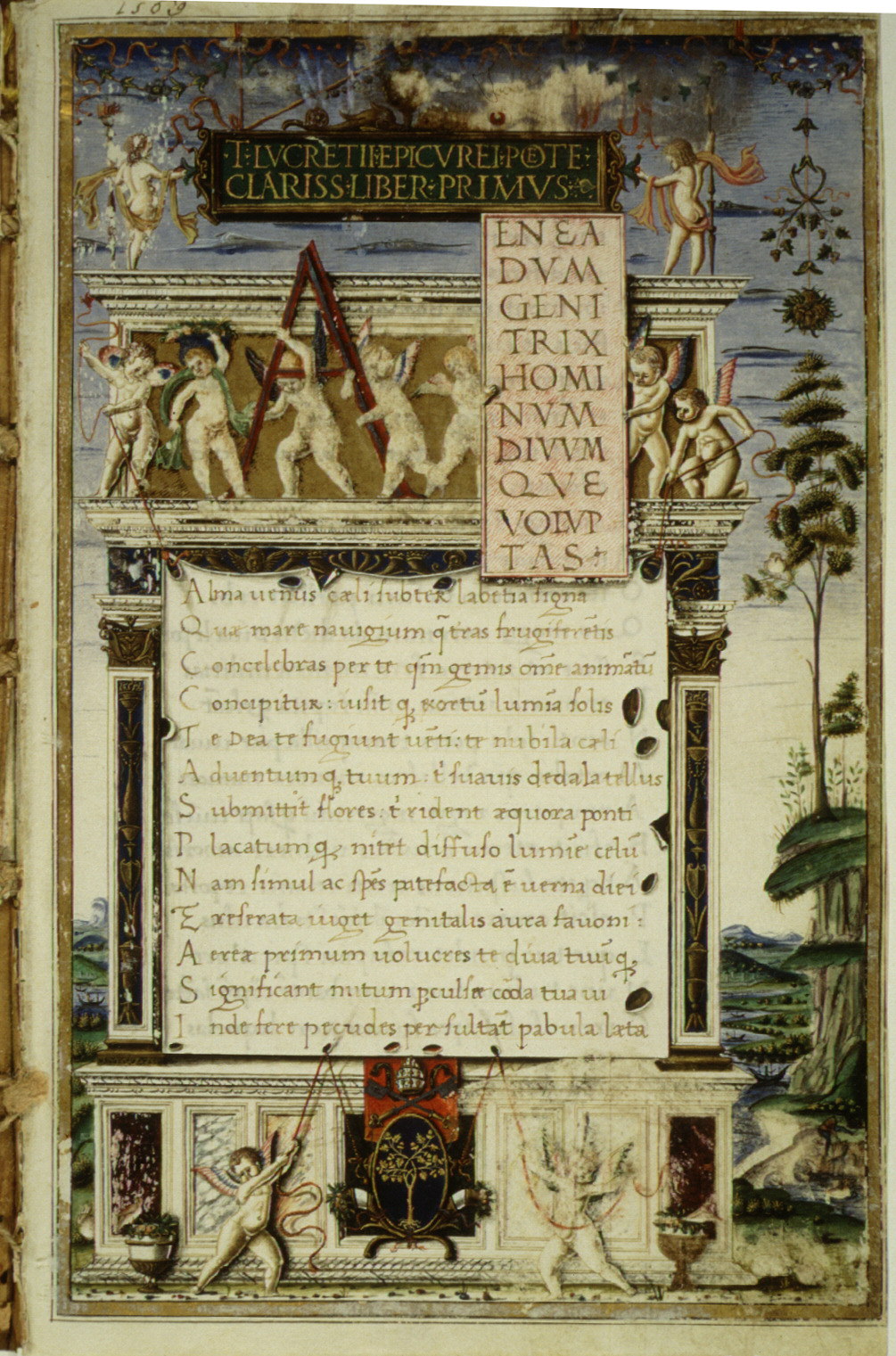
The genesis of De Rerum Natura lies in the turbulent final decades of the Roman Republic, a period rife with political upheaval and philosophical inquiry. While the exact circumstances of its composition remain shrouded in mystery, it is widely attributed to Titus Lucretius Carus, a Roman poet and follower of Epicureanism. Written between approximately 99 and 55 BCE, the poem was likely completed shortly before Lucretius's death, as suggested by Cicero, who is credited with its posthumous publication. Its very existence is a testament to the intellectual currents of the era, where Greek philosophical traditions were being adapted and disseminated within Roman society. The poem's structure, comprising six untitled books, reflects a systematic attempt to convey complex philosophical ideas through the accessible medium of verse, a daring endeavor for its time.
⚙️ How It Works
At its core, De Rerum Natura functions as an extended philosophical treatise on atomism, the theory that all matter is composed of indivisible particles called atoms, moving in a void. Lucretius meticulously details how these atoms, through various combinations and collisions, give rise to everything from the smallest dust motes to the grandest celestial bodies. He explains the soul as a material entity, composed of fine atoms that disperse upon death, thereby refuting notions of an afterlife or divine punishment. The poem also delves into the nature of perception, arguing that our senses are the primary source of knowledge, and that phenomena like thunder, lightning, and disease are natural occurrences governed by physical laws, not divine wrath or favor. The concept of the 'swerve' (clinamen) is introduced to explain how atoms, in their otherwise predictable downward motion, can deviate, allowing for free will and the formation of complex structures.
📊 Key Facts & Numbers
The sheer scale of De Rerum Natura is staggering: it comprises approximately 7,400 lines of dactylic hexameter, the traditional meter of epic poetry. The poem is divided into six distinct books, each tackling specific aspects of Epicurean philosophy. It explores over 1,000 distinct natural phenomena, from the properties of light and sound to the causes of earthquakes and volcanic eruptions. Lucretius's work predates the formal establishment of the Roman Empire by several years, placing its creation firmly within the late Roman Republic. The poem's influence can be seen in its estimated readership; while exact figures are impossible to ascertain, its survival through multiple manuscript copies suggests a significant, albeit likely elite, audience over centuries. The rediscovery of the poem in the 15th century by Poggio Bracciolini in a monastery library in 1417 marked a pivotal moment, igniting renewed interest in classical thought and scientific inquiry.
👥 Key People & Organizations
The central figure is undoubtedly Titus Lucretius Carus (c. 99 – c. 55 BCE), the Roman poet and philosopher credited with authoring De Rerum Natura. His profound understanding and eloquent articulation of Epicurean principles are the bedrock of the poem. Epicurus himself (341–270 BCE), the Greek philosopher whose teachings Lucretius championed, serves as the intellectual progenitor, though he never directly interacted with Lucretius. Later, Marcus Tullius Cicero (106–43 BCE), a prominent Roman statesman and philosopher, played a crucial role in the poem's survival, having edited and published it posthumously. In the Renaissance, scholars like Poggio Bracciolini were instrumental in its rediscovery, bringing it back into the intellectual mainstream. The Roman Republic itself serves as the socio-political context, a period of intense intellectual ferment and philosophical borrowing from Greek traditions.
🌍 Cultural Impact & Influence
The cultural resonance of De Rerum Natura has been profound and enduring, acting as a crucial conduit for Epicurean thought into Western civilization. Its rediscovery in the 15th century by Poggio Bracciolini was a watershed moment for the Renaissance, fueling a renewed interest in classical learning and a more secular, humanistic worldview. The poem's scientific explanations, particularly its atomistic theories, prefigured later scientific developments and influenced thinkers like Giordano Bruno and Galileo Galilei. Its emphasis on overcoming fear of death and divine retribution offered a powerful philosophical balm that resonated through centuries, impacting humanist thought and Enlightenment philosophies. The poem's vivid imagery and philosophical depth have inspired countless artists, writers, and thinkers, cementing its status as a foundational text in the history of Western thought and literature.
⚡ Current State & Latest Developments
In the contemporary era, De Rerum Natura continues to be studied and debated, its philosophical and scientific insights remaining remarkably relevant. While modern science has advanced far beyond the atomism of Lucretius, his fundamental approach—seeking naturalistic explanations for phenomena and advocating for a life free from superstition and fear—continues to inform secular and humanist movements. Editions and translations of the poem are readily available, with scholars and enthusiasts engaging with its complex verses. The poem's influence is also visible in popular culture, where its themes of atomism, the nature of reality, and the pursuit of pleasure without excess are often referenced in literature, film, and even video games. The ongoing dialogue between ancient philosophy and modern science ensures De Rerum Natura's continued vitality.
🤔 Controversies & Debates
The most significant controversy surrounding De Rerum Natura centers on its perceived atheism and its challenge to traditional Roman religious beliefs. By positing a universe governed by natural laws and the random interactions of atoms, Lucretius directly contradicted the prevailing polytheistic worldview, which attributed natural events to the direct intervention of gods like Jupiter and Neptune. This materialist and mechanistic view of the cosmos was radical for its time and likely contributed to the secrecy surrounding its composition and publication. Critics, both ancient and modern, have debated the extent to which Lucretius truly rejected all forms of divinity or merely sought to redefine the gods' relationship with the universe, emphasizing their detachment from human affairs. Furthermore, the poem's explicit advocacy for pleasure as the highest good, when properly understood as absence of pain and mental disturbance, has often been misinterpreted as simple hedonism, leading to ongoing discussions about the nuances of Epicurean ethics.
🔮 Future Outlook & Predictions
The future outlook for De Rerum Natura is one of continued relevance, particularly as humanity grapples with existential questions amplified by technological advancement and global challenges. Its naturalistic explanations for phenomena continue to provide a framework for understanding the universe, even as scientific discoveries like quantum mechanics reveal complexities far beyond classical atomism. The poem's enduring message of overcoming the fear of death and embracing a life guided by reason and tranquility offers a potent antidote to modern anxieties, potentially influencing future therapeutic approaches and philosophical discourse. As societies increasingly seek meaning outside traditional religious structures, Lucretius's secular worldview and emphasis on empirical observation are likely to gain further traction, ensuring his work remains a vital touchstone for understanding our place in the cosmos.
💡 Practical Applications
While De Rerum Natura is primarily a philosophical and poetic work, its practical applications lie in its profound impact on human thought and well-being. Its core tenet—that understanding the natural world liberates individuals from superstitious fear and anxiety—offers a timeless prescription for mental tranquility. By explaining phenomena like death and divine intervention as natural processes, Lucretius provides a framework for confronting existential dread, a concept still relevant in modern psychology and philosophy. The poem's advocacy for pleasure as the ultimate good, defined as the absence of pain and mental disturbance, continues to offer a counterpoint to more ascetic or pleasure-seeking philosophies.
Key Facts
- Category
- philosophy
- Type
- topic