
Contents
Overview
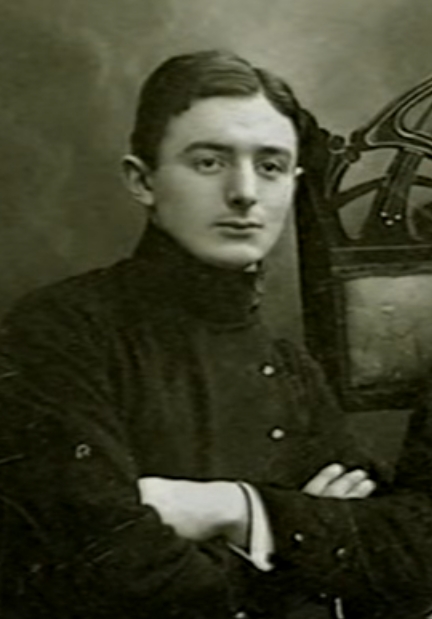
Dziga Vertov, born David Kaufman in 1896, was a revolutionary Soviet filmmaker and theorist whose avant-garde approach to documentary cinema shattered conventions and laid the groundwork for modern filmmaking techniques. Rejecting staged narratives, Vertov championed the 'Kino-Eye' theory, believing the camera could capture a more profound truth than the human eye by employing montage, unconventional angles, and rapid editing. His seminal 1929 work, Man with a Movie Camera, is a dizzying, kinetic masterpiece that remains a benchmark in cinematic innovation, celebrated for its technical prowess and philosophical depth. Vertov's influence extends far beyond his era, shaping the cinéma vérité movement and inspiring generations of filmmakers to push the boundaries of visual storytelling. Despite facing ideological pressures and periods of obscurity, Vertov's legacy endures as a testament to the power of radical artistic vision in capturing the pulse of life itself.
🎵 Origins & History
Born David Abelevich Kaufman on January 2, 1896 (December 21, 1895, Old Style) in Białystok, then part of the Russian Empire (now Poland), Dziga Vertov emerged from a fertile ground of artistic experimentation in the early Soviet Union. He adopted the pseudonym 'Dziga Vertov' in 1917, a name evoking the whirring of a camera. His early work involved editing newsreels for the Bolshevik government, where he honed his skills in rapid assembly and propaganda dissemination. Vertov was a key figure in the Kinoks collective, alongside his wife Elizaveta Svilova and brother Mikhail Kaufman, pushing the boundaries of what documentary film could be. This period saw the creation of his influential 'Kino-Pravda' (Cinema-Truth) series, which sought to capture raw, unadulterated reality through innovative filming and editing techniques, setting the stage for his magnum opus.
⚙️ How It Works: The Kino-Eye
Vertov's filmmaking philosophy, encapsulated by his 'Kino-Eye' (Kino-Glaz) theory, posited that the camera, with its ability to move, zoom, and capture moments imperceptible to the human eye, could achieve a higher degree of truth than conventional filmmaking. He famously stated, 'I am the kino-eye. I am the mechanical eye. I, a machine, show you the world as only I can see it.' This involved meticulous planning of shots, often from unconventional angles – from cranes, moving vehicles, or even hidden perspectives – to deconstruct and reassemble reality. His editing was characterized by rapid cuts, jump cuts, and rhythmic montages, creating a dynamic, almost symphonic, portrayal of urban life and industrial processes, as exemplified in his masterpiece Man with a Movie Camera. Vertov believed in the power of montage to create new meanings and emotional impact, moving beyond mere observation to active interpretation.
📊 Key Facts & Numbers
Vertov's most celebrated film, Man with a Movie Camera (1929), was ranked the 8th greatest film of all time in the 2012 Sight & Sound poll, a testament to its enduring impact. His 'Kino-Pravda' series, launched in 1922, comprised 16 issues, each a short documentary film. Vertov's work often featured extensive footage of industrial sites, urban landscapes, and the daily lives of Soviet citizens, aiming to showcase the progress and dynamism of the new socialist state. His films were typically shot on 35mm film, a standard format that allowed for wide distribution across Soviet cinemas. Despite his groundbreaking work, Vertov faced criticism from some within the Soviet film establishment, particularly for his perceived lack of adherence to socialist realism, leading to periods where his films were suppressed or he was assigned less prominent roles. His total output includes over 40 films, though many are now lost or exist only in fragments.
👥 Key People & Organizations
Dziga Vertov's creative output was deeply intertwined with his family and collaborators. His wife, Elizaveta Svilova, was a crucial collaborator, often serving as editor and co-director, and was instrumental in preserving his legacy. His brothers, Mikhail Kaufman and Boris Kaufman, were also accomplished cinematographers who worked on some of Vertov's most iconic films, including Man with a Movie Camera (Mikhail) and A Fourth Dimension (Boris). The Kinoks collective, which Vertov co-founded, was a significant hub for avant-garde filmmaking in the early Soviet period. Later, the radical French film collective Dziga Vertov Group, active from 1968 to 1972, adopted his name and experimental spirit, though their political and aesthetic aims differed significantly. Vertov's work was also supported and sometimes critiqued by figures within the Soviet film industry, such as Lev Kuleshov and Sergei Eisenstein, with whom he engaged in theoretical debates about montage and cinematic truth.
🌍 Cultural Impact & Influence
Vertov's influence on documentary filmmaking is immeasurable. His Kino-Eye theory and radical editing techniques directly inspired the cinéma vérité movement in the 1950s and 60s, championed by filmmakers like Jean Rouch and Edgar Morin, who sought to capture spontaneous reality. The innovative use of montage and unconventional camera work in Man with a Movie Camera has been emulated and referenced by countless filmmakers across genres, from Michael Bay's kinetic action sequences to the experimental documentaries of Errol Morris. His theoretical writings, though sometimes dense, provided a philosophical framework for understanding the camera as an active participant in constructing reality, rather than a passive recorder. The Dziga Vertov Group, a French film collective, explicitly named themselves in his honor, continuing his legacy of radical political and aesthetic filmmaking. His work continues to be studied in film schools worldwide, solidifying his status as a foundational figure in cinematic history.
⚡ Current State & Latest Developments
In the contemporary era, Vertov's films are primarily experienced through retrospectives, academic study, and digital restorations. While no new films are being produced under his direct supervision, his theoretical framework and stylistic innovations remain highly relevant. Digital filmmaking technologies and accessible recording devices have, in a sense, democratized the 'Kino-Eye,' allowing more individuals to capture and edit reality in ways Vertov pioneered. Film festivals and archives continue to screen and preserve his work, ensuring its accessibility to new generations. The ongoing debate about the nature of cinematic truth and the ethics of representation in documentary filmmaking often circles back to Vertov's foundational ideas about the camera's active role. His influence is felt in the proliferation of user-generated content on platforms like YouTube and TikTok, where raw, unpolished footage often takes precedence.
🤔 Controversies & Debates
The primary controversy surrounding Vertov's work, particularly during his lifetime, centered on his adherence to Soviet ideology and the definition of 'truth' in his films. Critics, including some within the Soviet film industry, accused him of formalism and of prioritizing aesthetic experimentation over clear socialist messaging. His rejection of narrative and character development in favor of a more abstract, observational style was seen by some as detached from the everyday lives of the proletariat. Furthermore, the very notion of 'Kino-Pravda' (Cinema-Truth) has been debated: can a film, by its very nature of selection, editing, and perspective, ever be purely objective? Vertov's insistence on the camera's superior vision was also challenged by filmmakers who emphasized the director's subjective interpretation and the importance of human performance. The Dziga Vertov Group, while inspired by him, also courted controversy with their radical politics and confrontational filmmaking style.
🔮 Future Outlook & Predictions
The future relevance of Dziga Vertov's work lies in its continued ability to provoke questions about the nature of reality and representation in media. As artificial intelligence and virtual reality technologies advance, Vertov's ideas about the camera's ability to construct and deconstruct perception become even more pertinent. His emphasis on the active, interpretive role of the filmmaker in shaping audience understanding is a crucial counterpoint to the passive consumption of media. Future developments may see his films integrated into interactive educational platforms or used as case studies for analyzing the evolution of visual language. The ongoing quest for authenticity in an increasingly mediated world ensures that Vertov's radical pursuit of 'Kino-Truth' will continue to resonate, challenging filmmakers and audiences alike to critically examine what they see and how it is presented. His legacy will likely continue to inspire new forms of documentary and experimental cinema that push the boundaries of perception.
💡 Practical Applications
Vertov
Key Facts
- Category
- culture
- Type
- topic