
Contents
Overview
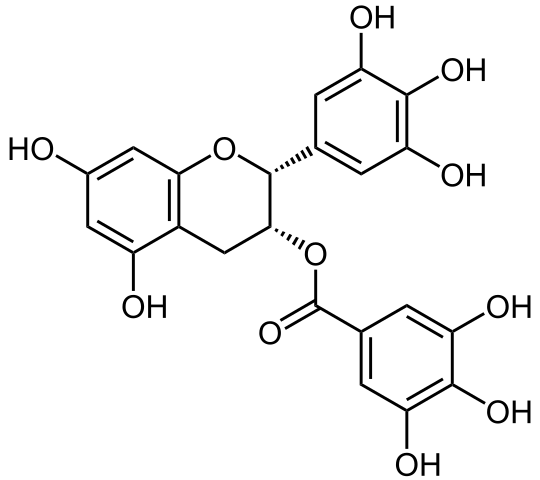
The story of EGCG is intrinsically linked to the long history of tea consumption, particularly in East Asia, where its health benefits have been recognized for centuries. While the precise moment of EGCG's isolation is difficult to pinpoint, its chemical characterization accelerated in the late 19th and early 20th centuries as analytical chemistry advanced. Early research, often conducted in Japan and China, began to unravel the complex chemical composition of tea, identifying catechins as key bioactive compounds. The late 20th century saw a surge in Western scientific interest, fueled by epidemiological studies suggesting a correlation between high tea consumption and lower rates of certain chronic diseases. This period marked the transition of EGCG from a traditional remedy to a subject of rigorous pharmacological investigation, with institutions like the National Institutes of Health (NIH) funding numerous studies.
⚙️ How It Works
EGCG operates through a multifaceted biochemical mechanism, primarily driven by its potent antioxidant capabilities. As a flavonoid, it effectively scavenges free radicals, neutralizing reactive oxygen species (ROS) that contribute to cellular damage and aging. Beyond direct antioxidant action, EGCG modulates numerous cellular signaling pathways. It can inhibit enzymes involved in inflammation, such as cyclooxygenase (COX) and lipoxygenase (LOX), and interfere with signaling cascades like NF-κB, a master regulator of inflammatory responses. Furthermore, research suggests EGCG can influence cell cycle progression, induce apoptosis (programmed cell death) in cancer cells, and modulate angiogenesis (the formation of new blood vessels), which is critical for tumor growth. Its interaction with various proteins and receptors within cells is a complex area of ongoing study, with new targets being identified regularly.
📊 Key Facts & Numbers
The global market for EGCG-rich products is substantial, with estimates placing the green tea extract market alone in the billions of dollars annually. A typical serving of brewed green tea can contain anywhere from 50 to 150 mg of EGCG, though this varies significantly based on brewing time, temperature, and tea varietal. Concentrated EGCG supplements, however, can deliver upwards of 200-400 mg per capsule, with some formulations exceeding 500 mg. Studies have shown that EGCG bioavailability is relatively low, with only about 1-2% of ingested EGCG being absorbed into the bloodstream, a figure that can be enhanced by co-ingestion with piperine or fats. The concentration of EGCG in different tea types varies: green tea typically contains 1-4% EGCG by dry weight, while black tea contains significantly less due to oxidation processes.
👥 Key People & Organizations
While EGCG itself is a molecule, its research and application involve numerous key individuals and organizations. Prominent researchers in the field include Dr. Chung-Sik Chin and Dr. Qing-Li Wu, who have published extensively on its health effects. Major research institutions globally, such as the University of California, Los Angeles (UCLA) and the University of Tokyo, host laboratories dedicated to polyphenol research. The Camellia sinensis plant, the source of tea, is cultivated by countless farmers worldwide, forming the base of the EGCG supply chain. Companies like Nestlé and Unilever incorporate tea extracts into various consumer products, while supplement manufacturers such as NOW Foods and Nature Made produce concentrated EGCG capsules, driving significant commercial interest and investment in the compound.
🌍 Cultural Impact & Influence
EGCG's cultural resonance is profound, largely due to its association with green tea and the centuries-old wellness traditions of East Asia. It's a cornerstone of the "healthy lifestyle" narrative, often touted as a natural remedy for a myriad of ailments. This perception has fueled its integration into the global dietary supplement industry, where it's marketed for everything from weight management to cognitive enhancement. The aesthetic of EGCG is often linked to purity, naturalness, and ancient wisdom, contrasting with synthetic pharmaceuticals. Its influence extends to the culinary world, with EGCG being incorporated into functional foods and beverages, and even into cosmetic formulations for its purported anti-aging and skin-protective benefits, reflecting a broader trend towards "nutraceuticals" that bridge food and medicine.
⚡ Current State & Latest Developments
The current landscape for EGCG is characterized by a dynamic interplay between promising preclinical research and mixed clinical trial results. While numerous studies in cell cultures and animal models demonstrate significant therapeutic potential, large-scale human trials have yielded inconsistent outcomes, particularly concerning its efficacy in cancer prevention and treatment. Regulatory bodies like the U.S. Food and Drug Administration (FDA) have not approved EGCG as a drug for any specific disease, classifying it as a dietary supplement. Recent developments include ongoing research into novel delivery systems to improve EGCG's bioavailability and targeted delivery, as well as investigations into its synergistic effects when combined with other compounds or chemotherapy agents. The market continues to grow, driven by consumer demand for natural health products, despite the scientific uncertainties.
🤔 Controversies & Debates
The primary controversy surrounding EGCG centers on the gap between its demonstrated in vitro and animal study benefits and its often-disappointing performance in human clinical trials. Critics argue that the hype surrounding EGCG, particularly in the supplement industry, is not fully supported by robust scientific evidence for many of its purported health claims, leading to potential consumer deception. Another significant concern is the risk of liver injury associated with high-dose EGCG supplements, a phenomenon reported in several case studies and reviews, prompting warnings from regulatory agencies in some regions. The debate also extends to its efficacy in specific applications; for instance, while some studies suggest benefits for weight loss, meta-analyses often show only modest effects, if any. The question of optimal dosage and long-term safety remains a point of contention among researchers and health professionals.
🔮 Future Outlook & Predictions
The future of EGCG research is likely to focus on overcoming its bioavailability challenges and identifying specific patient populations or disease contexts where it demonstrates clear clinical benefit. Advances in nanotechnology and drug delivery systems could lead to more effective EGCG formulations, potentially unlocking its therapeutic potential for conditions like neurodegenerative diseases or specific types of cancer. Personalized medicine approaches may also play a role, identifying individuals who are genetically predisposed to respond better to EGCG. Furthermore, continued exploration of its synergistic effects with other compounds, including pharmaceuticals and natural products, could reveal new therapeutic avenues. The ongoing scientific endeavor aims to move beyond broad health claims to pinpoint precise, evidence-based applications for EGCG, potentially leading to its eventual approval as a therapeutic agent for specific conditions.
💡 Practical Applications
EGCG finds practical application in several key areas, primarily driven by its antioxidant and anti-inflammatory properties. In the dietary supplement industry, it's a popular ingredient marketed for general wellness, immune support, and weight management, often found in products derived from green tea extract. Its use extends to the food and beverage sector, where it's added to functional drinks, energy bars, and other products to enhance their perceived health benefits. In cosmetics and skincare, EGCG is incorporated into anti-aging creams, sunscreens, and topical treatments due to its potential to protect against UV-induced damage and reduce inflammation. Research is also exploring its use in medical
Key Facts
- Category
- science
- Type
- topic