
Contents
Overview
The Gobi's history is etched in millennia of geological and human activity. Its formation is tied to tectonic shifts and the drying of ancient seas, with fossil discoveries in regions like the Flaming Cliffs (Bayanzag) revealing a prehistoric past teeming with dinosaurs, notably unearthed by Roy Chapman Andrews and the American Museum of Natural History expeditions in the 1920s. For centuries, the Gobi served as a vital artery for nomadic peoples and the vast Mongol Empire, facilitating trade and military movements across Eurasia. Its strategic importance is underscored by its role in connecting East and West along segments of the Silk Road. The name itself, 'Gov' in Mongolian, signifies a waterless region, a term that has become synonymous with the harsh, arid landscapes of the Mongolian Plateau, distinct from the sandy deserts often depicted in popular imagination.
⚙️ How It Works
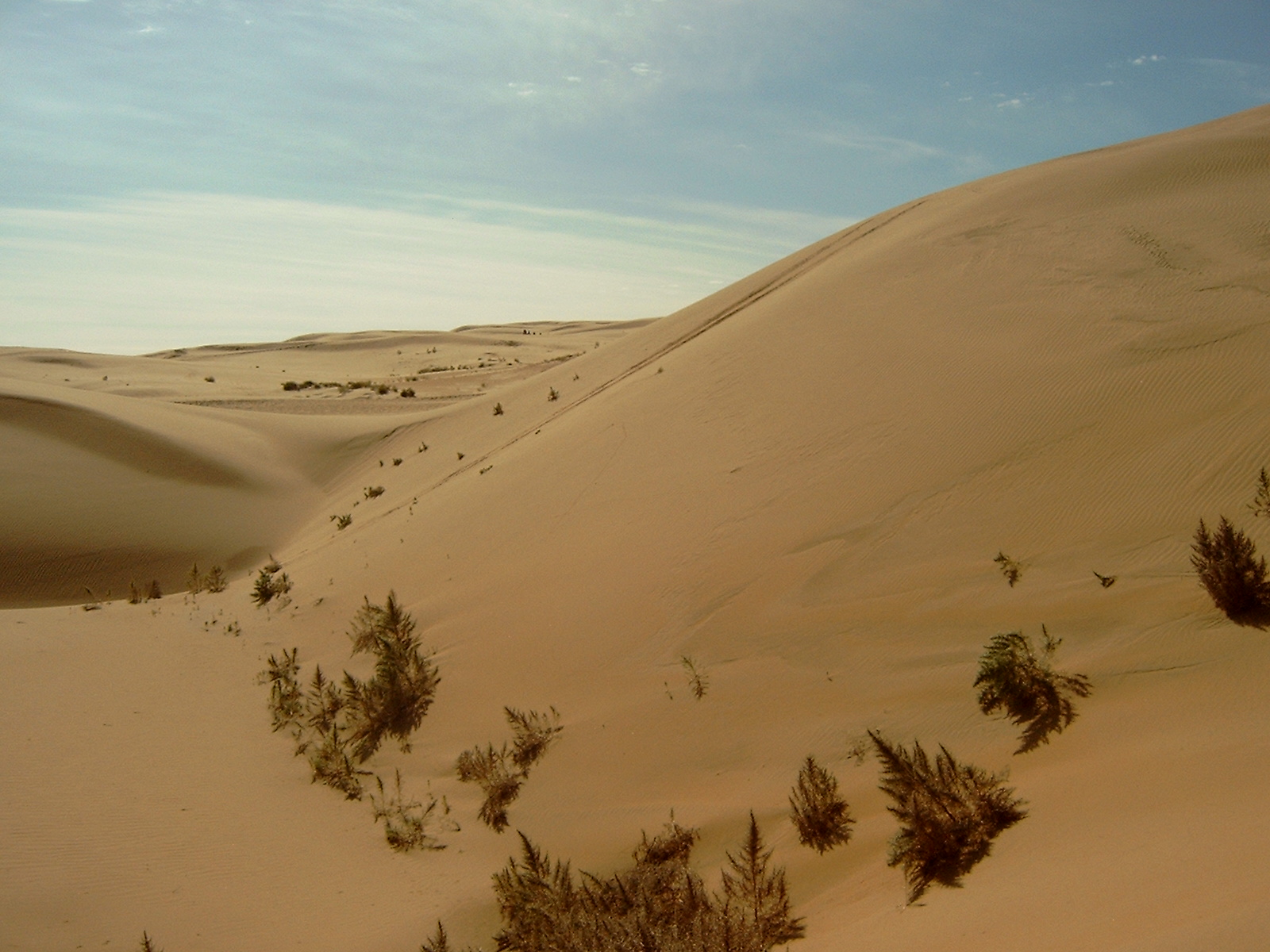
The Gobi functions as a complex arid ecosystem shaped by extreme climatic forces. Its defining characteristic is its cold desert climate, a result of its high latitude and elevation. This leads to dramatic temperature swings, with summer highs potentially exceeding 40°C (104°F) and winter lows plummeting below -40°C (-40°F). Precipitation is scarce, averaging less than 200 mm (8 inches) annually, often falling as snow in winter. The landscape is predominantly rocky plains and gravelly terrain, interspersed with sand dunes, particularly in its western reaches. Sparse vegetation, including drought-resistant shrubs like saxaul and various grasses, supports a unique array of wildlife adapted to these unforgiving conditions, such as the Mongolian wild ass (Khulan) and the resilient Gobi bear.
📊 Key Facts & Numbers
The Gobi Desert is a region of immense scale and stark realities. It covers an astounding 2,354,460 square kilometers (909,060 sq mi), making it the sixth-largest desert in the world, larger than countries like Saudi Arabia or Mexico. Its vastness is home to a sparse human population. The Gobi experiences extreme temperature variations, with average annual temperatures fluctuating wildly, often by more than 35°C (63°F) between summer and winter. Annual precipitation is meager, with some areas receiving less than 50 mm (2 inches) of rain, contributing to its arid classification. Despite its harshness, it harbors unique biodiversity, with estimates suggesting over 500 species of flora and fauna adapted to its extreme conditions, though many, like the Gobi bear, are critically endangered.
👥 Key People & Organizations
While no single individual 'founded' the Gobi, its exploration and scientific understanding owe much to figures like Roy Chapman Andrews, whose paleontological expeditions in the 1920s for the American Museum of Natural History brought global attention to its fossil-rich deposits. Indigenous nomadic groups, such as the Mongols and Kazakhs, have been the primary human inhabitants for millennia, their traditional lifestyles deeply intertwined with the desert's ecology. Modern scientific research is often conducted by institutions like the Chinese Academy of Sciences and the Mongolian Academy of Sciences, focusing on desertification, biodiversity, and resource management. Organizations like the World Wildlife Fund and the Wildlife Conservation Society are actively involved in conservation efforts for its endangered species.
🌍 Cultural Impact & Influence
The Gobi Desert has profoundly shaped human history and culture in Central Asia. It was a formidable barrier and a strategic corridor for the Mongol Empire, influencing its expansion and governance across Eurasia. The legendary Silk Road traversed parts of its periphery, facilitating the exchange of goods, ideas, and technologies between East and West for centuries. For nomadic peoples, the Gobi is not merely a barren wasteland but a homeland, imbued with spiritual significance and traditional knowledge passed down through generations. Its stark beauty and challenging environment have inspired art, literature, and film, often portraying it as a symbol of resilience, isolation, and untamed nature. The discovery of dinosaur fossils, particularly by Roy Chapman Andrews, has cemented its place in scientific and popular culture as a 'dinosaur graveyard.'
⚡ Current State & Latest Developments
The Gobi Desert is currently grappling with significant environmental and socio-economic shifts. Desertification is a major concern, exacerbated by climate change and unsustainable land-use practices, threatening to expand the desert's boundaries and impact surrounding agricultural regions. Increased demand for resources, particularly coal and minerals, has led to intensified mining activities, raising environmental concerns regarding water usage, pollution, and habitat disruption. Conservation efforts are ongoing for iconic species like the Gobi bear and Bactrian camel, with organizations like the World Wildlife Fund working with local communities and governments. The region is also seeing increased interest in renewable energy, particularly solar power, due to its vast, open, and sunny terrain.
🤔 Controversies & Debates
The Gobi Desert is a focal point for several significant debates. The most pressing is the issue of desertification: scientists and environmentalists debate the primary drivers—whether they are predominantly climatic shifts or human activities like overgrazing by livestock and extensive mining operations. The impact of resource extraction, particularly coal mining in regions like Inner Mongolia, is heavily contested, with proponents highlighting economic benefits and job creation, while critics point to severe environmental degradation, water depletion, and methane emissions. Furthermore, there's ongoing discussion about the best strategies for conserving its unique biodiversity, balancing the needs of local nomadic communities with the protection of endangered species like the Gobi bear. The effectiveness and ethical implications of large-scale renewable energy projects in such a sensitive ecosystem are also subjects of debate.
🔮 Future Outlook & Predictions
The future of the Gobi Desert is poised between significant challenges and potential opportunities. The ongoing desertification trend, driven by climate change and human activity, suggests a continued expansion of arid conditions, potentially impacting food security in surrounding regions and displacing wildlife. However, the Gobi's vast, sun-drenched plains make it a prime candidate for large-scale solar energy development, which could provide a sustainable economic alternative to fossil fuel extraction, though careful planning will be needed to mitigate environmental impacts. Conservationists hope that increased global awareness and targeted interventions can stabilize and potentially reverse the decline of critically endangered species like the Gobi bear. The region's rich paleontological heritage also promises continued scientific discovery, potentially yielding new insights into prehistoric life and Earth's history.
💡 Practical Applications
While not a hub for conventional industry, the Gobi Desert has several unique practical applications and significance. Its vast, open spaces and consistent sunlight make it an ideal location for large-scale solar power installations, with several major projects underway or planned in both China and Mongolia. The desert's arid conditions and unique soil composition are also studied for potential applications in astrobiology research, serving as a terrestrial analog for Martian environments, aiding in the development of exploration technologies and understanding life's potential beyond Earth. Furthermore, its rich fossil beds are invaluable for paleontological research, providing crucial data for understanding dinosaur evolution and prehistoric ecosystems, attracting scientific expeditions and contributing to global knowledge. The traditional nomadic lifestyles, though challenged, offer insights into sust
Key Facts
- Category
- nature
- Type
- topic