
Contents
Overview
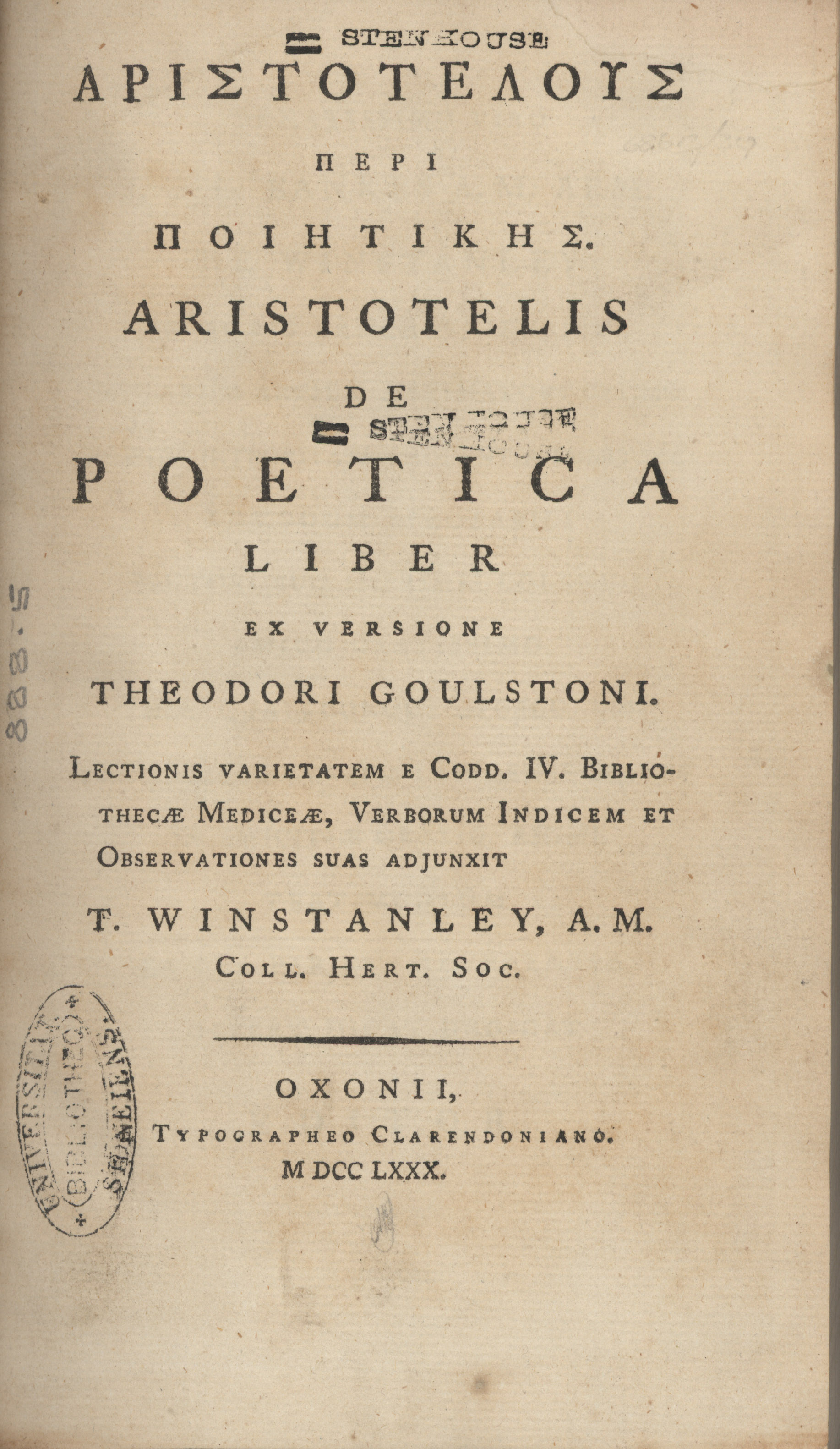
The concept of hamartia traces its roots to ancient Greece, appearing in texts predating Aristotle's seminal work, the Poetics. The term itself, derived from the Greek verb 'hamartánein' (ἁμαρτάνειν), literally means 'to miss the mark' or 'to err.' Early philosophical and theological discussions, particularly within Christian theology, grappled with the idea of human fallibility and its divine consequences. However, Aristotle in his Poetics (circa 335 BCE) codified hamartia as a crucial element of tragedy, defining it as a character's error in judgment or a flaw that precipitates their ruin. This definition, though influential, has been the subject of continuous scholarly interpretation and debate for over two millennia, shaping how we understand the mechanics of tragic narratives.
⚙️ How It Works
At its core, hamartia functions as the narrative engine driving a protagonist's tragic trajectory. It's not merely a simple mistake, but a significant misstep, often stemming from a character's inherent disposition, a moment of ignorance, or a misguided belief. For instance, in Sophocles' Oedipus Rex, Oedipus's relentless pursuit of the truth, coupled with his pride and haste, constitutes his hamartia, leading him to unknowingly fulfill a prophecy of patricide and incest. The mechanism isn't always a moral failing; it can be an action taken with good intentions that, due to unforeseen circumstances or flawed perception, results in catastrophic outcomes. This interplay between character, action, and consequence is what makes hamartia a potent dramatic device, as explored by scholars like D.W. Lucas and H.D.F. Kitto.
📊 Key Facts & Numbers
The concept of hamartia has been analyzed across thousands of dramatic works and critical essays since antiquity. While precise quantitative data is elusive, the term appears in an estimated 15,000 academic articles and books globally, indicating its persistent scholarly interest. Aristotle's Poetics, the foundational text, is estimated to have sold over 1 million copies worldwide in various translations. The concept is central to understanding approximately 500 major Greek tragedies that have survived from antiquity, with scholars estimating that over 1,000 more have been lost. The influence of hamartia can be seen in an estimated 70% of Western dramatic literature produced between the 5th century BCE and the 19th century CE.
👥 Key People & Organizations
Key figures instrumental in defining and debating hamartia include Aristotle, whose Poetics (circa 335 BCE) provided the most influential early analysis. Later scholars like D.W. Lucas (author of 'Greek Tragedy', 1928) and H.D.F. Kitto (author of 'Greek Tragedy: An Introduction', 1939) offered significant reinterpretations. In the realm of psychology, Sigmund Freud and Carl Jung explored related concepts of unconscious drives and archetypal flaws that echo the dramatic function of hamartia. While no single organization exclusively studies hamartia, its analysis is a staple in departments of Classics, Literature, and Philosophy at institutions like Harvard University and Oxford University.
🌍 Cultural Impact & Influence
Hamartia's influence extends far beyond the confines of classical studies, permeating Western literature, psychology, and even everyday language. It provides a framework for understanding character arcs in everything from Shakespearean plays like Hamlet and Macbeth to modern films and novels. The concept informs psychological theories about self-sabotage and the roots of personal failure, as explored by figures like Alfred Adler. In popular culture, the idea of a 'fatal flaw' is a ubiquitous trope, shaping how audiences perceive heroes and villains. The term itself has entered common parlance, often used metaphorically to describe any significant error in judgment with negative repercussions, demonstrating its deep cultural penetration.
⚡ Current State & Latest Developments
In contemporary discourse, hamartia remains a vital concept for literary criticism and narrative analysis. Modern playwrights and screenwriters continue to employ its principles, consciously or unconsciously, to craft compelling characters and dramatic conflicts. For instance, the characters in HBO's 'Succession' often hinge on the characters' hamartiatic traits, such as Logan Roy's ruthless ambition or Kendall Roy's insecurity. The ongoing study of ancient texts, facilitated by digital humanities initiatives at universities like Stanford University, continues to unearth new perspectives on hamartia. Furthermore, its application in fields like game design is emerging, as developers seek to create more complex and relatable player characters whose choices have meaningful consequences.
🤔 Controversies & Debates
The primary controversy surrounding hamartia lies in its precise definition: is it an inherent character flaw, or a tragic mistake/accident? Aristotle's original text is ambiguous, leading to divergent interpretations. Critics like A.W. Verrall have argued for a more literal 'missing the mark' interpretation, suggesting the tragic outcome is not necessarily tied to a moral failing. Conversely, many, including G.F. Else, maintain that hamartia implies a character defect, a psychological predisposition to error. This debate is further complicated by theological interpretations, particularly in Christian theology, where 'sin' (hamartia in the Septuagint) carries a strong moral dimension. The distinction between internal flaw and external accident remains a persistent point of contention.
🔮 Future Outlook & Predictions
The future of hamartia likely lies in its continued adaptation to new media and interdisciplinary applications. As artificial intelligence-driven narrative generation becomes more sophisticated, understanding the fundamental principles of tragic structure, including hamartia, will be crucial for creating compelling AI-generated stories. Furthermore, its application in behavioral economics and decision science may deepen, as researchers explore how cognitive biases and heuristics mirror the 'errors in judgment' central to hamartia. The ongoing re-evaluation of classical texts through digital tools and comparative literature studies will undoubtedly yield fresh insights into its enduring power.
💡 Practical Applications
Hamartia finds practical application in numerous fields beyond literary analysis. In psychology, understanding a patient's 'hamartia' can be analogous to identifying core defense mechanisms or cognitive distortions that lead to maladaptive behaviors. Therapists and counselors often help individuals recognize patterns of self-sabotage or flawed decision-making that mirror tragic flaws. In business strategy, recognizing a company's 'hamartia'—its core weakness or blind spot, such as Kodak's failure to adapt to digital photography—can be critical for survival. Even in sports psychology, coaches might help athletes identify and mitigate the mental 'flaws' that hinder peak performance, such as performance anxiety.
Key Facts
- Category
- philosophy
- Type
- concept