
Contents
- ⚙️ What Exactly Is a Heat Engine?
- 📜 A Brief History: From Steam to Silicon
- 💡 How They Actually Work: The Thermodynamics
- 🚂 Types of Heat Engines: A Spectrum of Power
- ⚡ Applications: Where You'll Find Them
- 🌍 Environmental Impact: The Big Debate
- 🔬 Efficiency Limits: The Carnot Conundrum
- 🚀 The Future of Heat Engines: Beyond Fossil Fuels
- Frequently Asked Questions
- Related Topics
Overview
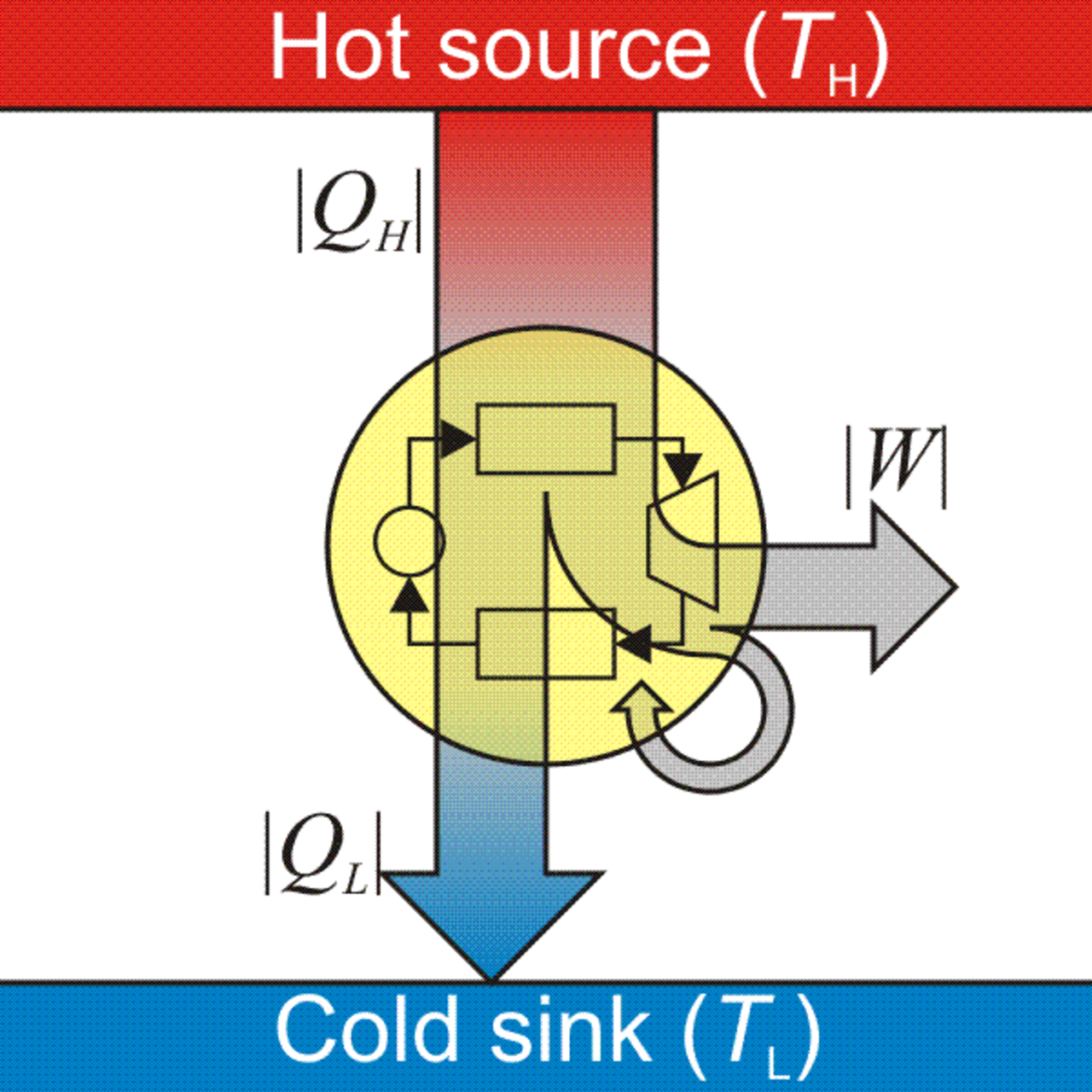
A heat engine is fundamentally a device designed to convert thermal energy into useful mechanical or electrical work. Think of it as a sophisticated energy transducer. It operates by moving a 'working substance' – typically a gas or liquid – from a high-temperature state to a low-temperature state. A heat source provides the initial thermal energy, raising the working substance's temperature. As this substance expands or changes phase within the engine's mechanism, it performs work. Finally, the substance is cooled in a 'cold sink,' completing the cycle. This process is governed by the fundamental laws of thermodynamics, specifically the second law of thermodynamics, which dictates that not all heat can be converted into work; some is always lost as waste heat or due to inefficiencies like friction.
📜 A Brief History: From Steam to Silicon
The lineage of the heat engine stretches back to the Industrial Revolution, with Thomas Savery's steam pump in 1698 and Thomas Newcomen's atmospheric engine in 1712 marking early, albeit crude, attempts. James Watt's improvements in the 1760s, particularly the separate condenser, dramatically increased efficiency and truly ushered in the age of steam power, transforming manufacturing and transportation. The concept, however, has evolved far beyond simple steam. By the late 19th century, the principles were being applied to electrical generation, and today, the term encompasses everything from internal combustion engines in your car to the complex thermodynamic cycles powering massive power plants.
💡 How They Actually Work: The Thermodynamics
At its heart, a heat engine operates on a thermodynamic cycle. The core principle involves absorbing heat from a high-temperature reservoir (like burning fuel or a nuclear reactor), using a portion of that heat to do work (e.g., pushing a piston or spinning a turbine), and then rejecting the remaining heat to a low-temperature reservoir (like the atmosphere or a body of water). The efficiency of this conversion is theoretically bounded by the Carnot efficiency, a ceiling determined by the temperatures of the hot and cold reservoirs. Real-world engines always fall short of this ideal due to irreversible processes such as friction and heat loss to the surroundings.
🚂 Types of Heat Engines: A Spectrum of Power
The world of heat engines is diverse. Steam engines, historically dominant, still power many electric power generation facilities using external combustion. Internal combustion engines (ICEs), like those in most vehicles, burn fuel directly within a combustion chamber. Gas turbines are crucial for aviation and large-scale power generation, utilizing hot combustion gases to spin a turbine. Even less common types, such as Stirling engines (external combustion, highly efficient but slow to respond) and thermoelectric generators (converting temperature differences directly to electricity), fit the broad definition. Each type has unique advantages in terms of power output, efficiency, size, and fuel flexibility.
⚡ Applications: Where You'll Find Them
Heat engines are ubiquitous, forming the backbone of modern civilization. They power the vast majority of global electricity generation, from coal and natural gas plants to concentrated solar thermal facilities. Transportation relies heavily on them, with ICEs in cars, trucks, and ships, and jet engines in aircraft. Industrial processes, from manufacturing to mining, depend on their mechanical and electrical output. Even in niche applications, like cogenerating heat and power in buildings or powering remote sensors with radioisotope thermoelectric generators (RTGs), heat engines are indispensable.
🌍 Environmental Impact: The Big Debate
The environmental footprint of heat engines is a major point of contention. Traditional engines, particularly those burning fossil fuels like coal, oil, and natural gas, are significant contributors to greenhouse gas emissions, driving climate change. The combustion process releases carbon dioxide (CO2), nitrogen oxides (NOx), and particulate matter, impacting air quality and public health. While advancements in emission control technologies have mitigated some local pollution, the global CO2 issue remains a critical challenge, fueling the urgent search for cleaner alternatives and more efficient engine designs.
🔬 Efficiency Limits: The Carnot Conundrum
The theoretical maximum efficiency of any heat engine operating between two temperatures is given by the Carnot cycle, formulated by Sadi Carnot in 1824. This ideal efficiency is calculated as 1 - (T_cold / T_hot), where temperatures are in Kelvin. For example, a power plant operating with a hot reservoir at 600 K (327°C) and a cold reservoir at 300 K (27°C) has a theoretical maximum efficiency of 50%. Real-world engines, however, rarely exceed 30-40% for typical fossil fuel plants, and even advanced ones like jet engines might reach 60% in optimal conditions. Overcoming these thermodynamic limitations is a constant engineering pursuit.
🚀 The Future of Heat Engines: Beyond Fossil Fuels
The future of heat engines is inextricably linked to decarbonization. Research is heavily focused on renewable energy integration, such as using solar thermal energy to drive steam turbines or developing advanced geothermal systems. Hydrogen combustion and synthetic fuels are being explored as lower-carbon alternatives for ICEs and turbines. Nuclear fusion, if achieved practically, promises a virtually limitless, clean heat source. Furthermore, advancements in materials science and energy storage could enable more efficient and flexible heat engine designs, potentially even reviving interest in less conventional types like advanced Stirling engines for specific applications.
Key Facts
- Year
- 1712
- Origin
- United Kingdom
- Category
- Thermodynamics & Engineering
- Type
- Concept
Frequently Asked Questions
What is the most common type of heat engine today?
The most prevalent heat engines are internal combustion engines (ICEs) found in vehicles and steam turbines used in the vast majority of electric power generation plants worldwide. While ICEs are being challenged by electrification in transportation, steam turbines remain critical for grid stability, often powered by natural gas or nuclear energy. The sheer scale of electricity generation means steam turbines, as a category of heat engine, arguably have the largest global impact.
Can a heat engine run in reverse?
Yes, a system that runs a thermodynamic cycle in reverse is known as a refrigerator or heat pump. Instead of using work to produce a net output of work from heat, it uses work to transfer heat from a colder reservoir to a hotter one. This is crucial for cooling and heating applications, demonstrating the reversible nature of the underlying thermodynamic principles, though with its own set of efficiency considerations.
What is the difference between an open and closed cycle heat engine?
In a closed-cycle heat engine, the working substance is continuously recycled, never leaving the system. Stirling engines and steam turbines (in some configurations) are examples. In an open-cycle heat engine, the working substance is taken from the atmosphere, used, and then expelled, such as in internal combustion engines and gas turbines. Open cycles are often simpler and allow for higher operating temperatures but can lead to greater emissions and material stress.
How does friction affect heat engine efficiency?
Friction is an irreversible process that converts useful mechanical energy into heat, which is then typically lost to the surroundings. This directly reduces the net work output of the engine, thereby lowering its overall thermal efficiency. Minimizing friction through lubrication, precise engineering, and material selection is a key strategy for improving engine performance and longevity.
Are there any heat engines that don't use combustion?
Absolutely. Solar thermal power plants use concentrated sunlight to heat a fluid, which then drives a steam turbine. Geothermal power plants tap into the Earth's internal heat. Nuclear power plants use nuclear fission to generate heat for steam turbines. Even thermoelectric generators convert temperature differences directly into electricity without any moving parts or combustion, though their efficiency is typically very low for large-scale power generation.