
Contents
Overview
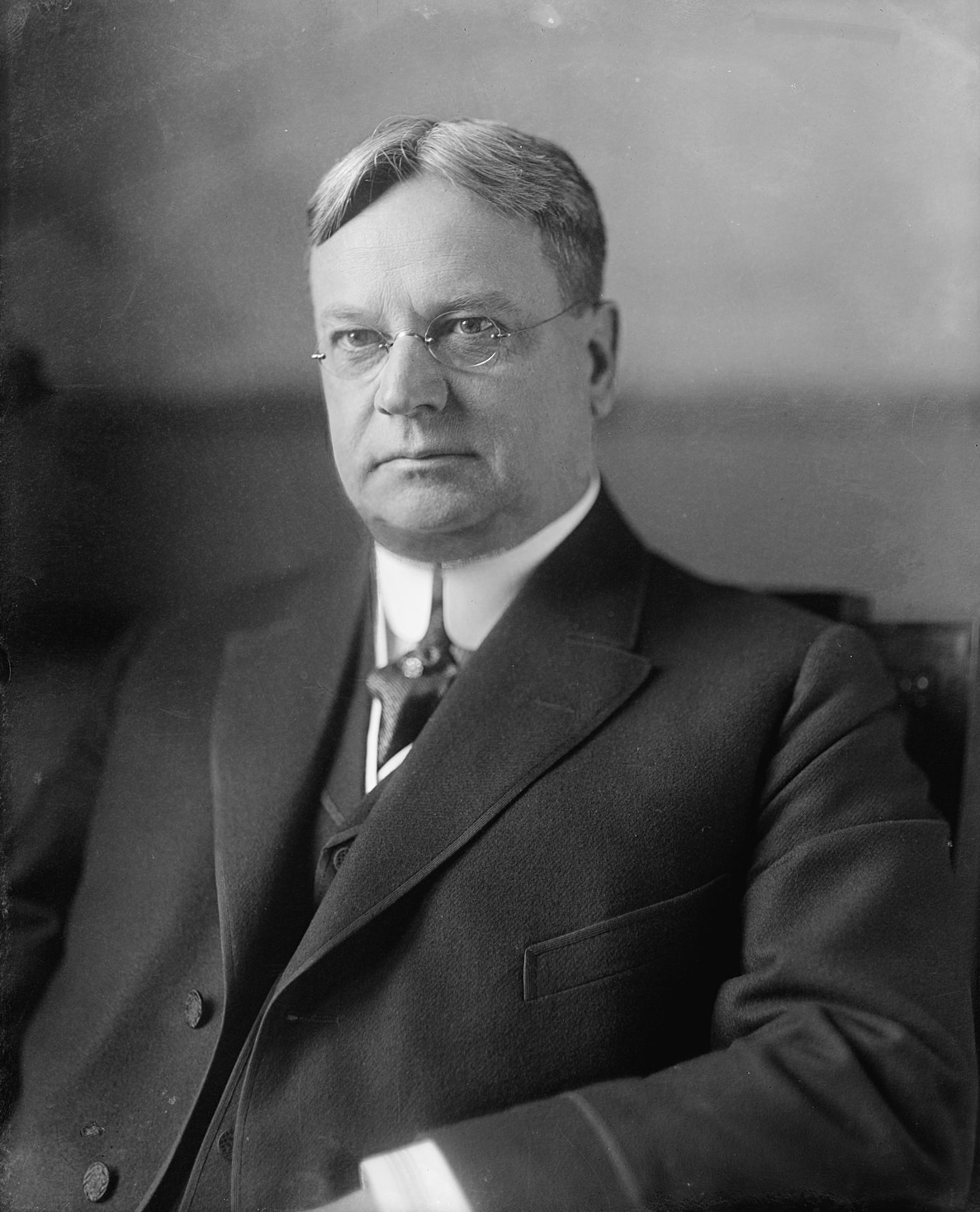
Hiram Warren Johnson (1866-1945) was a towering figure in early 20th-century American politics, a leading Progressive who parlayed his reputation as a crusading prosecutor into the governorship of California and later a long tenure in the U.S. Senate. Born in Sacramento, Johnson's early career as a lawyer and assistant district attorney in San Francisco established his reputation for battling corruption. As governor from 1911 to 1917, he championed landmark reforms like direct democracy (initiative, referendum, recall) and women's suffrage. His national profile surged when he ran as Theodore Roosevelt's vice-presidential running mate on the Progressive Party ticket. Serving in the Senate from 1917 until his death, Johnson became a prominent isolationist voice, opposing American entry into both World Wars and famously blocking Woodrow Wilson's League of Nations. His career spanned a transformative era, reflecting both the idealism of the Progressive movement and the complex geopolitical shifts of the interwar period.
🎵 Origins & History
Hiram Warren Johnson’s political journey began in Sacramento, California, where he was born. After a stint as a stenographer and reporter, he pursued law, eventually establishing a practice in San Francisco. His early legal career was marked by a fierce dedication to justice, notably as an assistant district attorney in San Francisco. It was during this period that he gained statewide notoriety for his relentless prosecution of corrupt officials and powerful corporate interests. This anti-corruption stance became the bedrock of his political ascent, laying the groundwork for his later reformist agenda and earning him the moniker "the Lion of California."
⚙️ Political Machine Crusher
Johnson’s rise to prominence was inextricably linked to his role as a "muckraker" prosecutor. In San Francisco, he famously took on powerful political machines, exposing widespread bribery and political graft that implicated city officials and business leaders. His successful prosecutions, often against formidable legal opposition and political pressure, solidified his image as an incorruptible champion of the people. This reputation was crucial in his 1910 gubernatorial campaign, where he ran on a platform of breaking the grip of special interests and restoring power to the citizenry, a message that resonated deeply with a state weary of corporate dominance.
📊 Key Facts & Numbers
Johnson’s governorship was a whirlwind of progressive reform. During his tenure, California adopted the initiative, referendum, and recall – tools of direct democracy. Women gained the right to vote in California. His administration also oversaw the creation of the California State Parks system and the establishment of a railroad commission to regulate utility rates. He ran as Theodore Roosevelt's vice-presidential candidate on the Progressive Party ticket, which garnered a significant percentage of the popular vote, demonstrating the national appeal of his progressive ideals. He served more than one term as governor of California.
👥 Key People & Organizations
Key figures in Hiram Johnson’s political orbit included his father, Grove L. Johnson, also a politician, and Theodore Roosevelt, whose Progressive Party nomination for vice president propelled Johnson onto the national stage. As governor, he worked closely with progressive reformers and legislators who supported his agenda of direct democracy and corporate regulation. In the U.S. Senate, he often found himself allied with figures like William Edgar Borah and George Norris on issues of foreign policy and economic reform. His political battles were frequently against established political machines, such as the Southern Pacific Railroad, and later, against presidents like Woodrow Wilson over international commitments.
🌍 Cultural Impact & Influence
Johnson’s impact on California politics was profound, embedding principles of direct democracy that continue to shape the state’s governance. His national profile as a progressive leader and his vice-presidential run made him a symbol of the era's reformist fervor. However, his later shift towards isolationism in the Senate, particularly his staunch opposition to the League of Nations and American involvement in World War II, marked a complex evolution of his political stance. His career illustrates the broader tensions within the Progressive movement itself, as idealism clashed with pragmatic concerns about national sovereignty and international entanglements.
⚡ Senate Stalwart
Elected to the U.S. Senate, Hiram Johnson served for nearly three decades. He was a consistent voice for American isolationism, famously leading the charge against Woodrow Wilson's proposal for the League of Nations, arguing it would entangle the U.S. in foreign conflicts. Throughout the 1920s and 1930s, he remained a critic of interventionist foreign policy, voting against American entry into World War I and later opposing U.S. involvement in the lead-up to World War II. Domestically, he supported some New Deal programs but remained skeptical of expanding federal power, reflecting his consistent distrust of centralized authority.
🤔 Controversies & Debates
Johnson’s political career was not without controversy. His progressive reforms in California, while lauded by many, were criticized by some business interests as detrimental to economic growth. His staunch isolationism in the Senate drew sharp criticism from internationalists and later historians who viewed it as detrimental to global stability. Furthermore, his stance on immigration, particularly his support for the Immigration Act of 1924 which severely restricted Asian immigration, reflects a more problematic aspect of his political legacy, aligning with prevailing nativist sentiments of the time. The debate continues over whether his isolationism was a principled stand for American sovereignty or a missed opportunity to shape a more cooperative post-war world.
🔮 Future Outlook & Predictions
The legacy of Hiram Johnson’s isolationism continues to be debated in the context of American foreign policy. While his era of strong isolationist sentiment has largely waned, the underlying concerns about foreign entanglements and national sovereignty remain relevant in contemporary discussions about global engagement. His championing of direct democracy in California serves as a lasting model for citizen participation, though its effectiveness and potential for manipulation are subjects of ongoing analysis. The future may see a re-evaluation of his anti-war stance in light of evolving global threats and alliances, potentially leading to new interpretations of his role in shaping American foreign policy debates.
💡 Practical Applications
Johnson’s most significant practical application lies in the realm of governance and political reform. The mechanisms of direct democracy he championed in California – the initiative, referendum, and recall – are now standard tools used by citizens in numerous U.S. states and even some countries to propose laws, challenge legislative decisions, and remove elected officials. His anti-corruption crusades provided a blueprint for prosecutors and reformers seeking to hold powerful interests accountable. Furthermore, his persistent questioning of foreign interventionism continues to inform debates about the role of the United States in international affairs, influencing policymakers and public opinion on matters of war and peace.
Key Facts
- Category
- history
- Type
- person