
Contents
Overview
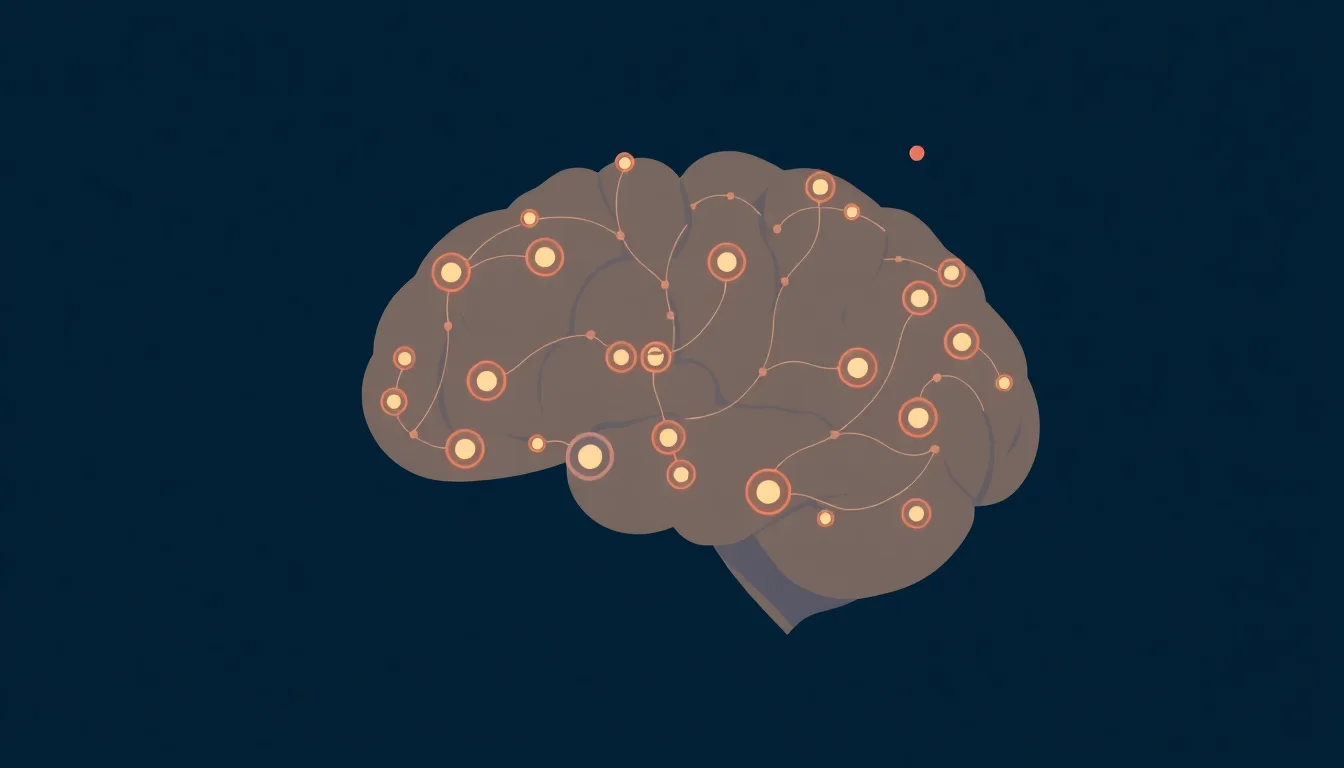
Information Processing Theory (IPT) is a cognitive psychology framework that views human learning and thinking through the lens of computational processes. It posits that individuals actively process information from their environment, much like a computer, rather than passively reacting to stimuli. IPT emphasizes the maturational changes in these cognitive mechanisms as a child develops, influencing their capacity for learning and problem-solving. The theory has profoundly influenced educational psychology and artificial intelligence, offering a structured model for understanding how knowledge is acquired, stored, and retrieved.
🎵 Origins & History
The intellectual lineage of Information Processing Theory (IPT) traces back to the American experimental psychology tradition, particularly the work of Clark Hull and Edward Tolman in the mid-20th century. The core idea was to understand cognition not as a black box, but as a series of discrete, measurable steps, akin to algorithms running on hardware.
⚙️ How It Works
Executive functions, managed by areas like the prefrontal cortex, oversee these processes, directing attention, inhibiting irrelevant information, and strategizing.
📊 Key Facts & Numbers
The forgetting curve described by Hermann Ebbinghaus indicates that a significant portion of learned information can be lost within days if not reinforced.
👥 Key People & Organizations
Key figures in the development of Information Processing Theory include George Miller, whose work on memory capacity was foundational. Robert Sternberg expanded the theory with his triarchic theory of intelligence, which includes analytical, creative, and practical components.
🌍 Cultural Impact & Influence
The analogy of the mind as a computer has permeated popular culture and influenced the design of educational software and instructional methods. It provided a framework for understanding cognitive development that complemented Jean Piaget's stage theory by offering a more continuous, process-oriented view.
⚡ Current State & Latest Developments
Researchers are increasingly focusing on the neural correlates of information processing, using techniques like fMRI and EEG. The development of more sophisticated computational models, often employing neural networks and deep learning architectures, allows for more complex simulations of human cognition. Current research also explores individual differences in processing speed and working memory capacity, and their implications for learning disabilities and cognitive aging. The ongoing integration of IPT with embodied cognition and situated cognition theories is also a significant trend.
🤔 Controversies & Debates
Critics argue that the mind is far more complex and dynamic than any current computer, influenced by emotions, social context, and biological embodiment. The reductionist nature of IPT is also questioned, with some arguing it oversimplifies the richness of human experience and consciousness. Discrete stage models are often criticized for not fully accounting for the parallel and interactive nature of cognition.
🔮 Future Outlook & Predictions
The future of Information Processing Theory likely lies in its continued integration with other fields, particularly neuroscience and embodied cognition. Expect more sophisticated computational models that incorporate biological constraints and real-time brain activity data. Research will likely delve deeper into the interplay between emotion and cognition, and how factors like stress or motivation impact information processing efficiency. The development of personalized learning systems, tailored to an individual's specific cognitive profile and processing strengths, is a strong prediction. We may also see IPT principles applied to understanding collective intelligence and how groups process information, moving beyond the individual mind to networked cognition. The challenge will be to maintain the theory's explanatory power while embracing the messy, biological reality of human thought.
💡 Practical Applications
IPT has direct applications in numerous fields. In education, it informs instructional design, curriculum development, and teaching strategies aimed at optimizing memory and learning, such as spaced repetition and elaborative rehearsal. It's fundamental to understanding and diagnosing learning disabilities like dyslexia and ADHD, by identifying specific deficits in attention, working memory, or processing speed. In human-computer interaction (HCI), IPT principles guide the design of user-friendly interfaces and intuitive software by considering user cognitive load and memory limitations. It also underpins the development of [[cognitive-training|cogn
Key Facts
- Category
- philosophy
- Type
- topic