
Contents
Overview
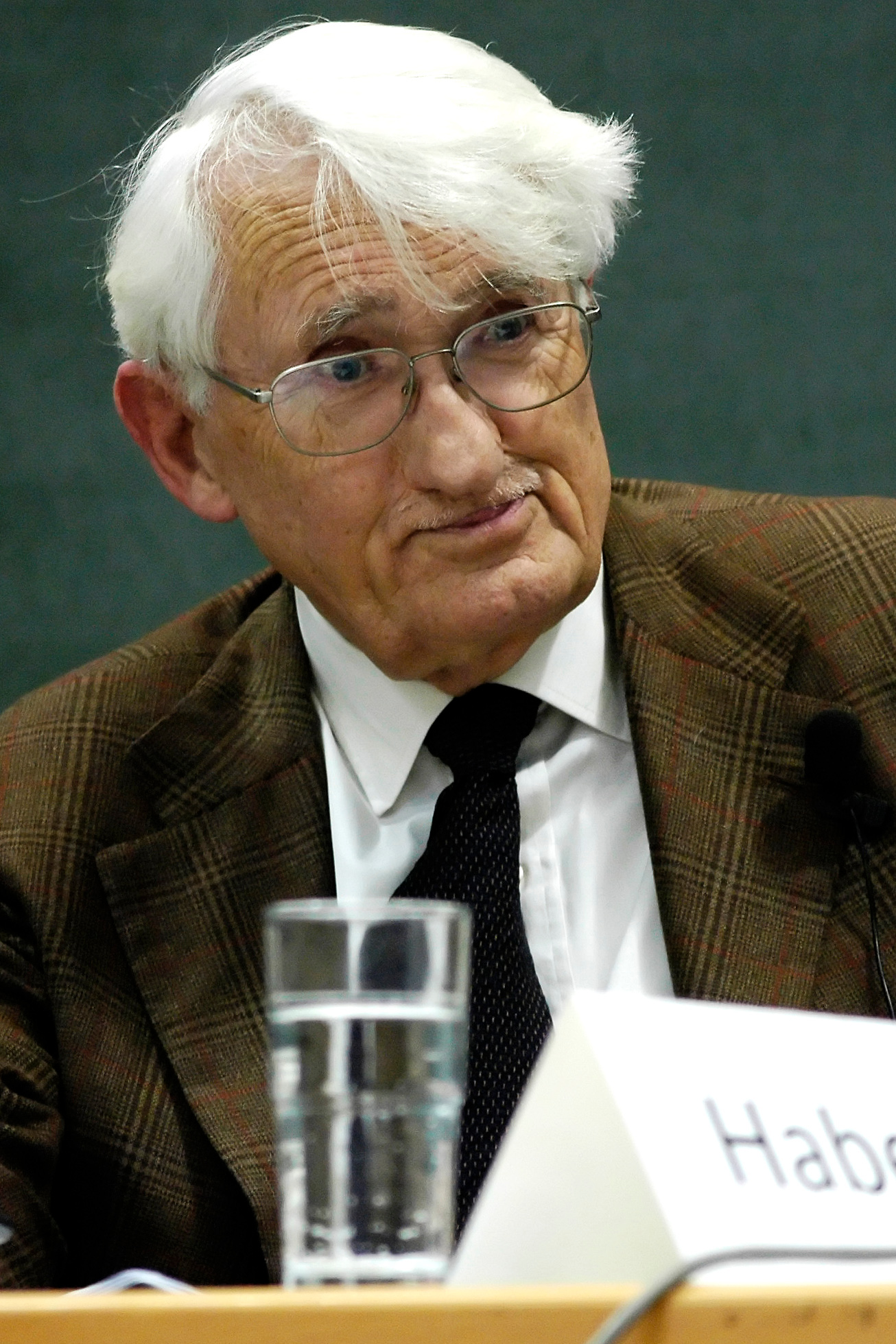
Habermas was born on 18 June 1929, in Düsseldorf, Germany. He studied philosophy, history, and psychology at the University of Göttingen, University of Zurich, and University of Bonn. His academic career was marked by professorships at Heidelberg University and Goethe University Frankfurt. Habermas was also the director of the Max Planck Institute in Starnberg. His work was heavily influenced by the Frankfurt School, a group of scholars including Theodor Adorno and Max Horkheimer.
💡 Key Ideas & Contributions
Habermas's major works include The Structural Transformation of the Public Sphere (1962) and The Theory of Communicative Action (1981). The former is a social history of the emergence and decline of bourgeois public discourse, while the latter advances a theory of rationality grounded in interpersonal linguistic communication. His ideas have been compared to those of John Rawls and Michel Foucault. Habermas's concept of communicative rationality has been influential in fields like sociology, political science, and philosophy, with scholars like Pierre Bourdieu and Judith Butler engaging with his work.
🌎 Cultural Impact & Legacy
Habermas's ideas have had a significant impact on contemporary politics, particularly in Germany. His work on the public sphere and communicative rationality has been applied to issues like democracy, globalization, and human rights. Habermas has been involved in public debates and discussions with scholars like Noam Chomsky and Richard Rorty. His legacy continues to shape critical theory and pragmatism, with many scholars, including Jean-Luc Nancy and Alain Badiou, engaging with his ideas.
📢 Criticisms & Controversies
Despite his influential work, Habermas has faced criticisms and controversies. Some scholars, like Chantal Mouffe, have argued that his theory of communicative rationality is too narrow and neglects the role of power and conflict in shaping public discourse. Others, like Ernesto Laclau, have criticized Habermas's views on democracy and the public sphere. Habermas's work continues to be debated and discussed by scholars across various disciplines, including Jacques Derrida and Giorgio Agamben.
Key Facts
- Year
- 1929-2026
- Origin
- Germany
- Category
- philosophy
- Type
- person
Frequently Asked Questions
What is Habermas's concept of communicative rationality?
Habermas's concept of communicative rationality refers to a type of rationality that is grounded in interpersonal linguistic communication, rather than in instrumental or strategic reason. This concept is central to his theory of communicative action, which he developed in his 1981 book The Theory of Communicative Action. Scholars like John Searle and Robert Brandom have engaged with this concept.
What is the significance of Habermas's work on the public sphere?
Habermas's work on the public sphere is significant because it highlights the importance of public discourse and deliberation in shaping democratic societies. His book The Structural Transformation of the Public Sphere (1962) is a social history of the emergence and decline of bourgeois public discourse, and it has been influential in fields like sociology, political science, and philosophy. Scholars like Jürgen Habermas and Nancy Fraser have built upon his work.
How has Habermas's work been received and criticized?
Habermas's work has been widely discussed and debated by scholars across various disciplines. Some scholars, like Chantal Mouffe, have argued that his theory of communicative rationality is too narrow and neglects the role of power and conflict in shaping public discourse. Others, like Ernesto Laclau, have criticized Habermas's views on democracy and the public sphere. Despite these criticisms, Habermas's work continues to be influential and widely read.
What is Habermas's relationship to the Frankfurt School?
Habermas is associated with the Frankfurt School, a group of scholars that includes Theodor Adorno and Max Horkheimer. The Frankfurt School is known for its critical theory and its emphasis on the role of power and ideology in shaping society. Habermas's work has been influenced by the Frankfurt School, and he has built upon the ideas of its members. Scholars like Herbert Marcuse and Walter Benjamin have also been associated with the Frankfurt School.
How has Habermas's work influenced contemporary politics?
Habermas's work has had a significant impact on contemporary politics, particularly in Germany. His ideas on the public sphere and communicative rationality have been applied to issues like democracy, globalization, and human rights. Habermas has been involved in public debates and discussions with scholars like Noam Chomsky and Richard Rorty. His legacy continues to shape critical theory and pragmatism, with many scholars engaging with his ideas.