
Contents
Overview
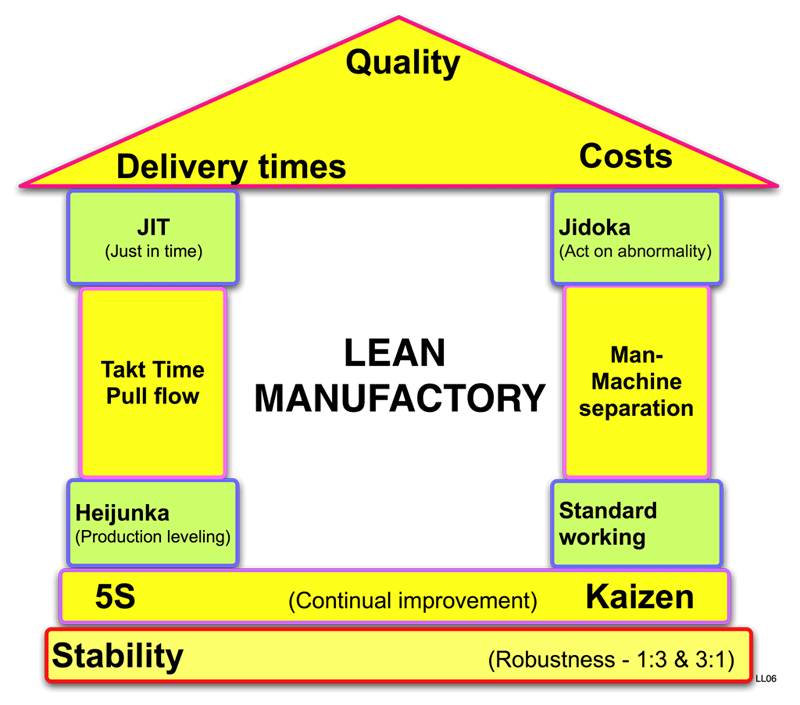
The genesis of Just-In-Time (JIT) inventory can be traced back to post-World War II Japan, specifically within the Toyota Motor Corporation. Taiichi Ohno was a key architect of the Toyota Production System (TPS). Inspired by American supermarkets where shelves were restocked only as items were purchased, Ohno envisioned a manufacturing system that mirrored this demand-driven replenishment. The goal was to move away from the mass-production model of building up large inventories, which tied up capital and masked production inefficiencies. Early iterations of JIT were refined throughout the 1950s and 1960s. JIT fundamentally reshaped global manufacturing practices and influenced subsequent management philosophies like lean manufacturing.
⚙️ How It Works
At its core, JIT operates on a pull system, meaning production is triggered by actual customer demand rather than forecasts. When a product is sold or a component is used, a signal (often a kanban card) is sent upstream to the preceding production stage or supplier. This triggers the production or delivery of precisely the quantity needed, exactly when it's needed. This requires meticulous coordination between departments and suppliers, often involving small, frequent deliveries of high-quality materials. The system minimizes work-in-progress (WIP) inventory, reduces storage space requirements, and drastically cuts down on the costs associated with holding excess stock, such as warehousing, insurance, and obsolescence. The efficiency gains are predicated on a stable production environment and reliable supply chains, as any disruption can halt the entire process.
📊 Key Facts & Numbers
Globally, JIT has been instrumental in transforming industries. For instance, the automotive sector, where JIT originated, saw inventory levels plummet. Studies have shown that implementing JIT can reduce inventory holding costs by as much as 50-75%. The system also aims to reduce lead times; for some manufacturers, JIT has cut production lead times by over 50%. However, the fragility of JIT was starkly illustrated during the COVID-19 pandemic, where supply chain disruptions led to shortages of critical components, costing some industries billions in lost revenue.
👥 Key People & Organizations
The most prominent figure associated with JIT is Taiichi Ohno. His insights into waste reduction and flow optimization laid the groundwork for the Toyota Production System. Other key figures include Shigeo Shingo, who contributed significantly to the development of poka-yoke (mistake-proofing) techniques, a crucial element for JIT's success, and Eiji Toyoda, who provided the leadership at Toyota to implement these radical new ideas. Beyond Toyota, companies like Ford and General Motors eventually adopted JIT principles, albeit with varying degrees of success, and management consultants like James P. Womack and Daniel T. Jones popularized the concept globally through their seminal work on lean thinking.
🌍 Cultural Impact & Influence
JIT's influence extends far beyond manufacturing floors, permeating business strategy and management theory. It fostered a global shift towards efficiency, waste reduction, and customer-centric production, fundamentally altering how businesses perceive and manage their operations. The emphasis on supplier relationships and collaborative partnerships became a hallmark of modern supply chain management. JIT's success also spurred the development of related methodologies like Six Sigma and Total Quality Management (TQM), all aiming to enhance operational excellence. The concept's cultural resonance lies in its promise of streamlined, agile, and cost-effective operations, a powerful allure for businesses seeking a competitive edge in a globalized marketplace.
⚡ Current State & Latest Developments
There's a growing trend towards a hybrid approach, often termed 'Just-in-Case' (JIC) or 'Resilient Supply Chains.' This involves strategically building buffer stocks for critical components or finished goods, diversifying supplier bases across different geographic regions, and investing in advanced supply chain visibility tools. Companies like Apple, known for its sophisticated supply chain management, have also faced challenges, prompting discussions about balancing JIT's cost benefits with the need for greater resilience against unforeseen disruptions. The focus is shifting from pure cost optimization to a more balanced strategy that incorporates risk management.
🤔 Controversies & Debates
The primary controversy surrounding JIT inventory is its inherent vulnerability to disruptions. Critics argue that the relentless pursuit of minimal inventory leaves businesses exposed to shocks such as natural disasters, geopolitical instability, labor strikes, or pandemics. This can lead to stockouts, lost sales, damaged customer relationships, and significant financial losses. Conversely, proponents maintain that the inefficiencies and hidden costs masked by large inventories are a greater long-term risk. They argue that well-managed JIT systems, coupled with robust risk mitigation strategies and strong supplier relationships, can actually enhance resilience by promoting agility and rapid problem-solving. The debate often centers on finding the optimal balance between lean efficiency and strategic redundancy.
🔮 Future Outlook & Predictions
The future of JIT inventory will likely involve a more sophisticated integration with advanced technologies. Artificial intelligence (AI) and machine learning are expected to play a role in the future of JIT inventory, enabling more precise JIT execution. Internet of Things (IoT) devices can provide real-time tracking of inventory and shipments, offering greater visibility and control. Blockchain technology may further enhance supply chain transparency and traceability. However, the trend towards 'Just-in-Case' strategies, driven by recent global events, suggests that pure JIT might become less prevalent, replaced by hybrid models that strategically incorporate buffer stocks and diversified sourcing. The ultimate goal will be to create supply chains that are both highly efficient and robustly resilient, a delicate balancing act that will continue to evolve.
💡 Practical Applications
JIT inventory is most famously applied in the automotive industry, where manufacturers like Toyota use it to manage vast numbers of parts from numerous suppliers. It's also crucial in electronics manufacturing, enabling companies to assemble complex products with rapidly evolving components without holding excessive stock of costly or quickly obsolete parts. The fast fashion industry utilizes JIT principles to quickly respond to changing consumer trends, getting new designs from concept to store shelves in weeks. In the food and beverage industry, JIT helps minimize spoilage and ensure product freshness, particularly for perishable goods. Even in service industries, elements of JIT can be seen in scheduling staff or ordering supplies based on immediate needs.
Key Facts
- Category
- technology
- Type
- topic