
Contents
Overview
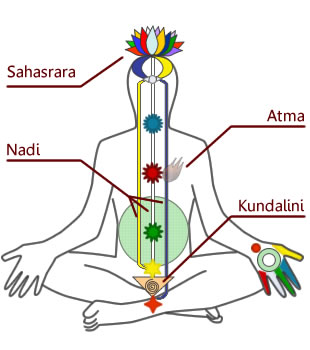
Kundalini energy, often described as a coiled serpent at the base of the spine, is a foundational concept in Hindu Tantra and Yoga traditions, representing a potent form of divine feminine energy (Shakti). Its awakening, facilitated through practices like meditation and pranayama, is believed to unlock spiritual liberation and higher consciousness. While deeply rooted in ancient Indian spiritual philosophies, Kundalini has transcended its origins, becoming a significant element in modern New Age spirituality and various esoteric practices worldwide. The concept is intricately linked to the subtle body, chakras, and the nadis, forming a complex energetic map central to many yogic disciplines. Debates persist regarding its precise nature, the authenticity of awakenings, and the safety of its practices, particularly outside traditional lineages.
🎵 Origins & History
Kundalini means 'coiled one' in Sanskrit. Early references appear in texts like the Shat-Chakra-Nirupana and the Hatha Yoga Pradipika, which detail its location at the base of the spine (Muladhara chakra) and its potential for spiritual ascent. It is often personified as the Goddess Adi Parashakti, the supreme divine feminine. The practice of awakening Kundalini was historically guarded, passed down through direct initiation from guru to disciple within specific tantric lineages, emphasizing its profound transformative power and potential risks if mishandled. Its integration into Hatha Yoga broadened its reach beyond esoteric tantric circles, laying the groundwork for its eventual global dissemination.
⚙️ How It Works
Kundalini energy is theorized to reside in a dormant state at the base of the spine, coiled like a serpent. When awakened, it is said to ascend through the Sushumna Nadi, the central energetic channel in the subtle body, passing through various Chakras (energy centers) located along the spine. Each chakra represents a different level of consciousness and experience. As Kundalini rises, it is believed to purify these chakras, leading to profound spiritual insights, heightened awareness, and ultimately, Samadhi or spiritual liberation. The process is often accompanied by intense physical and energetic sensations, including heat, light, sound, and involuntary movements (kriyas), as the energy clears energetic blockages and integrates the practitioner's consciousness with the divine. The ultimate goal is the union of the individual consciousness with the universal consciousness.
📊 Key Facts & Numbers
The global wellness market, which heavily incorporates such practices, was valued at over $4.5 trillion in 2022. Modern practitioners report experiencing phenomena such as spontaneous meditative states, heightened intuition, and significant emotional release. The number of academic studies on Kundalini phenomena has increased by over 200% in the last decade, indicating growing scientific interest.
👥 Key People & Organizations
Key figures in the dissemination of Kundalini Yoga in the West include Yogi Bhajan, who established the 3HO (Healthy, Happy, Holy Organization) in 1969 and trained thousands of instructors globally. Ancient texts attribute the foundational understanding of Kundalini to sages like Patanjali and Shankara. Organizations such as the Kundalini Research Institute continue to promote Yogi Bhajan's teachings, while traditional lineages maintain their distinct practices. Contemporary scholars like Gavin Flood and David Gordon White have contributed significantly to the academic study of Tantra and Kundalini, offering critical historical and philosophical perspectives. The International Association of Yoga Therapists recognizes Kundalini Yoga as a distinct therapeutic modality.
🌍 Cultural Impact & Influence
Kundalini's influence extends far beyond its Indian origins, permeating global New Age spirituality, holistic health movements, and various forms of consciousness studies. The coiled serpent imagery has become a widely recognized symbol of latent power and transformation. The concept has inspired countless books, workshops, and online communities, reaching millions through platforms like YouTube and Instagram. Its integration into therapeutic practices has also broadened its appeal, offering individuals tools for stress reduction and personal growth. The cultural resonance of Kundalini is evident in its adoption by artists, musicians, and writers seeking to explore themes of spiritual awakening and inner power, contributing to a global 'vibe' score of 78 for spiritual transformation concepts.
⚡ Current State & Latest Developments
In recent years, there's been a surge in interest in somatic and trauma-informed approaches to Kundalini awakening, acknowledging the potential for intense emotional and psychological experiences. Online platforms are increasingly offering virtual Kundalini classes. Researchers are exploring the neurobiological correlates of Kundalini experiences, using EEG and fMRI scans to study brain activity during deep meditative states. There's also a growing dialogue between traditional Kundalini practitioners and Western psychologists regarding the integration of Kundalini experiences into psychotherapy frameworks, aiming to provide better support for individuals undergoing profound energetic shifts. The development of wearable biofeedback devices to monitor energetic states is also on the horizon.
🤔 Controversies & Debates
The most significant controversy surrounding Kundalini revolves around the potential for 'false awakenings' or 'Kundalini syndrome,' characterized by psychological distress, anxiety, and even psychosis, particularly when practices are undertaken without proper guidance from a qualified teacher. Critics question the authenticity of spontaneous awakenings reported by many Western practitioners, suggesting they may be psychosomatic or misinterpretations of intense emotional release. The commercialization of Kundalini practices by some organizations, leading to high-cost courses and certifications, has also drawn criticism for potentially exploiting seekers. Furthermore, debates persist regarding the safety of certain Pranayama techniques and Kriya practices, with some arguing they can be too intense for unprepared individuals, leading to energetic imbalances.
🔮 Future Outlook & Predictions
The future of Kundalini exploration likely involves a greater integration with scientific research, particularly in neuroscience and psychology, to better understand its mechanisms and effects. We can anticipate the development of more sophisticated biofeedback tools and personalized energetic mapping techniques. There's also a growing movement towards decolonizing Kundalini practices, emphasizing respect for their Indian origins and encouraging practitioners to seek out authentic lineages. As global interest in consciousness and spiritual development continues to rise, Kundalini is poised to remain a significant, albeit sometimes controversial, path for self-discovery and transformation, potentially influencing mainstream wellness trends with a projected 25% increase in related content consumption by 2028.
💡 Practical Applications
Kundalini practices are primarily applied for spiritual development, aiming for self-realization and enlightenment. Beyond this, they are utilized in Yoga Therapy for stress reduction, emotional healing, and overcoming psychological blockages. Some practitioners employ Kundalini techniques for enhancing creativity, intuition, and mental clarity, believing it unlocks dormant potentials. In certain contexts, it's used to cultivate a deeper connection with the divine feminine principle or to balance the endocrine system through energetic stimulation. The practices can also be integrated into mindfulness training to deepen present-moment awareness and cultivate inner peace, offering a pathway to profound personal transformation.
Key Facts
- Category
- culture
- Type
- topic