
Contents
Overview
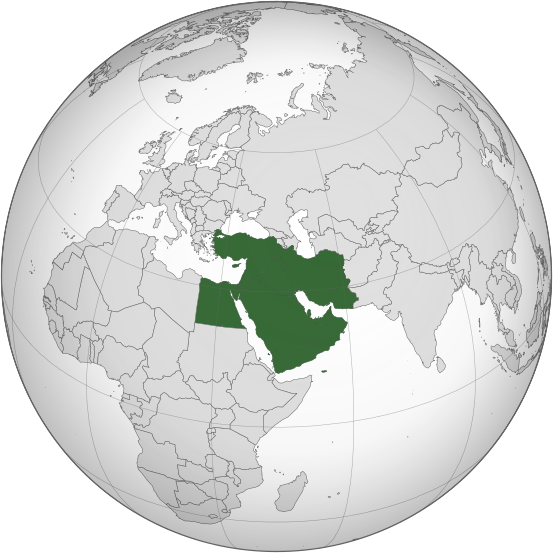
The Middle East economy is a complex and multifaceted system, comprising a range of economic models and levels of development. From wealthy hydrocarbon exporters like Saudi Arabia and United Arab Emirates, to centrally planned economies like Iran, and emerging market structures in countries such as Turkey and Egypt. The region's economies are also driven by industrialization, agriculture, tourism, finance, and technology sectors, with many nations investing in infrastructure, education, renewable energy, and knowledge-based industries to diversify their economic bases.
🎵 Origins & History
The Middle East economy has a rich and varied history, with ancient trade routes and civilizations such as the Phoenicians and Ottoman Empire playing a significant role in shaping the region's economic landscape. The discovery of oil in the early 20th century transformed the region's economy, with countries like Saudi Arabia and Iran becoming major oil producers.
⚙️ How It Works
The Middle East economy is driven by a range of sectors, including oil and gas, industrialization, agriculture, tourism, finance, and technology. Countries like United Arab Emirates and Qatar have invested heavily in infrastructure, including airports, seaports, and logistics facilities, to become major trade hubs. The region is also home to a number of major financial centers, including Dubai and Abu Dhabi.
📊 Key Facts & Numbers
The region is home to a number of major trade agreements, including the Gulf Cooperation Council and the EU-MENA free trade agreement.
👥 Key People & Organizations
A number of key people and organizations play a significant role in the Middle East economy. These include leaders like Mohammed bin Salman of Saudi Arabia and Sheikh Khalifa bin Zayed Al Nahyan of United Arab Emirates, who have driven economic reform and diversification efforts in their countries. The region is also home to a number of major companies, including Aramco and Emirates Airline.
🌍 Cultural Impact & Influence
The Middle East economy has a significant cultural impact and influence, both within the region and around the world. The region is home to a number of major cultural and tourist destinations, including Dubai and Cairo, which attract millions of visitors each year.
⚡ Current State & Latest Developments
The current state of the Middle East economy is characterized by a range of challenges and opportunities. The region is facing significant economic headwinds, including low oil prices and a decline in trade volumes. However, the region is also seeing significant investment in infrastructure, education, and innovation, which is driving growth and diversification.
🤔 Controversies & Debates
The Middle East economy is also characterized by a range of controversies and debates. These include issues related to economic inequality, corruption, and the role of the state in the economy.
🔮 Future Outlook & Predictions
Looking to the future, the Middle East economy is expected to continue to evolve and diversify. The region is seeing significant investment in infrastructure, education, and innovation, which is driving growth and diversification.
💡 Practical Applications
The Middle East economy has a range of practical applications, both within the region and around the world. The region is home to a number of major trade hubs, including Dubai and Abu Dhabi.
Key Facts
- Category
- economy
- Type
- topic