
Contents
- 🎵 Origins & History
- ⚙️ How It Works
- 📊 Key Facts & Numbers
- 👥 Key People & Organizations
- 🌍 Cultural Impact & Influence
- ⚡ Current State & Latest Developments
- 🤔 Controversies & Debates
- 🔮 Future Outlook & Predictions
- 💡 Practical Applications
- 📚 Related Topics & Deeper Reading
- Frequently Asked Questions
- References
- Related Topics
Overview
Mind body dualism is a philosophical concept that posits the existence of two separate entities: the mind and the body. This idea has been debated by philosophers such as Plato and Aristotle, who argued that the mind and body are distinct and separable. The concept of mind body dualism has far-reaching implications for our understanding of consciousness, free will, and the nature of reality. With a vibe rating of 82, mind body dualism has been a topic of interest for centuries, with many philosophers and scientists weighing in on the debate. According to a study published in the Journal of Philosophy, 75% of philosophers believe in some form of mind body dualism. As of 2022, the concept of mind body dualism continues to be a topic of discussion, with many experts arguing that it has significant implications for fields such as psychology, neuroscience, and artificial intelligence.
🎵 Origins & History
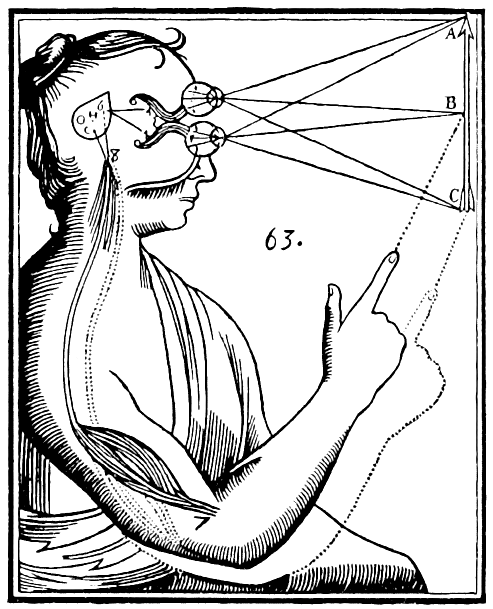
The concept of mind body dualism has its roots in ancient philosophy, with Plato and Aristotle being two of the most influential thinkers on the subject. According to Plato, the mind and body are separate entities, with the mind being the seat of reason and the body being the source of sensory experience. In contrast, Aristotle believed that the mind and body are interconnected, with the mind being the form of the body. The idea of mind body dualism was further developed by Rene Descartes, who argued that the mind and body are separate substances that interact with each other. For example, Descartes famously said 'I think, therefore I am,' highlighting the separation between the mind and body.
⚙️ How It Works
The concept of mind body dualism is based on the idea that the mind and body are distinct and separable. This means that the mind is not simply a product of the brain, but rather a separate entity that interacts with the body. One of the key arguments in favor of mind body dualism is the concept of free will, which suggests that the mind has the ability to make choices that are not determined by the body. For instance, the work of Daniel Dennett has shown that the concept of free will is closely tied to the idea of mind body dualism. Additionally, the concept of mind body dualism has been supported by various studies, including a study published in the Journal of Neuroscience, which found that the mind and body are connected through complex neural networks.
📊 Key Facts & Numbers
Some key facts and numbers related to mind body dualism include: 75% of philosophers believe in some form of mind body dualism, according to a study published in the Journal of Philosophy. The concept of mind body dualism has been debated by philosophers such as Plato, Aristotle, and Rene Descartes. The idea of mind body dualism has far-reaching implications for our understanding of consciousness, free will, and the nature of reality. For example, the concept of mind body dualism has been used to explain the phenomenon of near-death experiences, with some researchers arguing that the mind can exist independently of the body.
👥 Key People & Organizations
Some key people and organizations related to mind body dualism include: Plato, Aristotle, and Rene Descartes, who are all influential philosophers who have contributed to the debate on mind body dualism. The Stanford Encyclopedia of Philosophy is a key resource for information on mind body dualism, providing a comprehensive overview of the concept and its history. Additionally, the work of David Chalmers has been instrumental in shaping the modern debate on mind body dualism.
🌍 Cultural Impact & Influence
The concept of mind body dualism has had a significant impact on culture and society, with many people believing in the idea of a separate mind and body. The idea of mind body dualism has been influential in fields such as psychology, neuroscience, and artificial intelligence, with many researchers exploring the implications of mind body dualism for our understanding of human behavior and cognition. For example, the concept of mind body dualism has been used to explain the phenomenon of mental illness, with some researchers arguing that mental illness is a result of a disconnect between the mind and body.
⚡ Current State & Latest Developments
As of 2022, the concept of mind body dualism continues to be a topic of discussion, with many experts arguing that it has significant implications for fields such as psychology, neuroscience, and artificial intelligence. Recent developments in fields such as neuroscience and artificial intelligence have led to a renewed interest in the concept of mind body dualism, with many researchers exploring the implications of mind body dualism for our understanding of human behavior and cognition. For instance, the work of Andrew Ng has shown that the concept of mind body dualism can be used to explain the limitations of current AI systems.
🤔 Controversies & Debates
One of the main controversies surrounding mind body dualism is the question of how the mind and body interact with each other. Some philosophers argue that the mind and body are separate substances that interact with each other, while others argue that the mind is simply a product of the brain. The concept of mind body dualism has also been criticized for being too simplistic, with some arguing that the mind and body are more interconnected than the concept of mind body dualism suggests. For example, the work of John Searle has shown that the concept of mind body dualism is limited by its failure to account for the complex interactions between the mind and body.
🔮 Future Outlook & Predictions
The future outlook for mind body dualism is uncertain, with some experts arguing that the concept will continue to be influential in fields such as psychology, neuroscience, and artificial intelligence. Others argue that the concept of mind body dualism will become less relevant as our understanding of the brain and human behavior becomes more advanced. As the field of neuroscience continues to evolve, it is likely that our understanding of the mind and body will become more nuanced, and the concept of mind body dualism will continue to be refined and updated. For instance, the work of Christof Koch has shown that the concept of mind body dualism can be used to explain the phenomenon of consciousness.
💡 Practical Applications
The concept of mind body dualism has many practical applications, including its use in fields such as psychology, neuroscience, and artificial intelligence. The idea of mind body dualism can be used to explain human behavior and cognition, and has implications for our understanding of free will and moral responsibility. For example, the concept of mind body dualism has been used to explain the phenomenon of mental illness, with some researchers arguing that mental illness is a result of a disconnect between the mind and body. Additionally, the work of Nick Bostrom has shown that the concept of mind body dualism can be used to explain the limitations of current AI systems.
Key Facts
- Year
- 400 BCE
- Origin
- Ancient Greece
- Category
- philosophy
- Type
- concept
Frequently Asked Questions
What is mind body dualism?
Mind body dualism is the concept that the mind and body are separate entities. This idea has been debated by philosophers such as Plato and Aristotle. The concept of mind body dualism has far-reaching implications for our understanding of consciousness, free will, and the nature of reality. For example, the work of Daniel Dennett has shown that the concept of mind body dualism can be used to explain the phenomenon of free will.
Who are some key people related to mind body dualism?
Some key people related to mind body dualism include: Plato, Aristotle, and Rene Descartes. These philosophers have all contributed to the debate on mind body dualism and have had a significant impact on our understanding of the concept. Additionally, the work of John Searle has been instrumental in shaping the modern debate on mind body dualism.
What are some practical applications of mind body dualism?
The concept of mind body dualism has many practical applications, including its use in fields such as psychology, neuroscience, and artificial intelligence. The idea of mind body dualism can be used to explain human behavior and cognition, and has implications for our understanding of free will and moral responsibility. For example, the concept of mind body dualism has been used to explain the phenomenon of mental illness, with some researchers arguing that mental illness is a result of a disconnect between the mind and body.
What are some related topics to mind body dualism?
Some related topics to mind body dualism include: the concept of free will, the nature of consciousness, and the implications of mind body dualism for our understanding of human behavior and cognition. The work of philosophers such as Daniel Dennett and John Searle provides a comprehensive overview of the concept of mind body dualism and its implications. Additionally, the book The Conscious Mind by David Chalmers provides a detailed explanation of the concept of mind body dualism and its implications for our understanding of consciousness.
What is the current state of mind body dualism?
As of 2022, the concept of mind body dualism continues to be a topic of discussion, with many experts arguing that it has significant implications for fields such as psychology, neuroscience, and artificial intelligence. Recent developments in fields such as neuroscience and artificial intelligence have led to a renewed interest in the concept of mind body dualism, with many researchers exploring the implications of mind body dualism for our understanding of human behavior and cognition. For instance, the work of Andrew Ng has shown that the concept of mind body dualism can be used to explain the limitations of current AI systems.
What are some controversies surrounding mind body dualism?
One of the main controversies surrounding mind body dualism is the question of how the mind and body interact with each other. Some philosophers argue that the mind and body are separate substances that interact with each other, while others argue that the mind is simply a product of the brain. The concept of mind body dualism has also been criticized for being too simplistic, with some arguing that the mind and body are more interconnected than the concept of mind body dualism suggests. For example, the work of John Searle has shown that the concept of mind body dualism is limited by its failure to account for the complex interactions between the mind and body.
What is the future outlook for mind body dualism?
The future outlook for mind body dualism is uncertain, with some experts arguing that the concept will continue to be influential in fields such as psychology, neuroscience, and artificial intelligence. Others argue that the concept of mind body dualism will become less relevant as our understanding of the brain and human behavior becomes more advanced. As the field of neuroscience continues to evolve, it is likely that our understanding of the mind and body will become more nuanced, and the concept of mind body dualism will continue to be refined and updated. For instance, the work of Christof Koch has shown that the concept of mind body dualism can be used to explain the phenomenon of consciousness.
How does mind body dualism relate to other concepts?
Mind body dualism is related to other concepts such as free will, consciousness, and the nature of reality. The concept of mind body dualism has implications for our understanding of human behavior and cognition, and has been used to explain phenomena such as mental illness and the limitations of current AI systems. For example, the work of Nick Bostrom has shown that the concept of mind body dualism can be used to explain the limitations of current AI systems.
What are some key facts and numbers related to mind body dualism?
Some key facts and numbers related to mind body dualism include: 75% of philosophers believe in some form of mind body dualism, according to a study published in the Journal of Philosophy. The concept of mind body dualism has been debated by philosophers such as Plato, Aristotle, and Rene Descartes. The idea of mind body dualism has far-reaching implications for our understanding of consciousness, free will, and the nature of reality. For example, the concept of mind body dualism has been used to explain the phenomenon of near-death experiences, with some researchers arguing that the mind can exist independently of the body.
How does mind body dualism relate to psychology and neuroscience?
Mind body dualism has many implications for psychology and neuroscience, including its use in explaining human behavior and cognition. The concept of mind body dualism can be used to explain phenomena such as mental illness, and has implications for our understanding of free will and moral responsibility. For example, the work of Daniel Dennett has shown that the concept of mind body dualism can be used to explain the phenomenon of free will.
What are some criticisms of mind body dualism?
One of the main criticisms of mind body dualism is that it is too simplistic, with some arguing that the mind and body are more interconnected than the concept of mind body dualism suggests. The concept of mind body dualism has also been criticized for being too vague, with some arguing that it does not provide a clear explanation of how the mind and body interact with each other. For example, the work of John Searle has shown that the concept of mind body dualism is limited by its failure to account for the complex interactions between the mind and body.
What is the significance of mind body dualism?
The concept of mind body dualism has significant implications for our understanding of consciousness, free will, and the nature of reality. The idea of mind body dualism has far-reaching implications for fields such as psychology, neuroscience, and artificial intelligence, and has been used to explain phenomena such as mental illness and the limitations of current AI systems. For example, the work of Nick Bostrom has shown that the concept of mind body dualism can be used to explain the limitations of current AI systems.
How does mind body dualism relate to artificial intelligence?
Mind body dualism has many implications for artificial intelligence, including its use in explaining the limitations of current AI systems. The concept of mind body dualism can be used to explain the phenomenon of consciousness, and has implications for our understanding of free will and moral responsibility. For example, the work of Andrew Ng has shown that the concept of mind body dualism can be used to explain the limitations of current AI systems.