
Contents
Overview
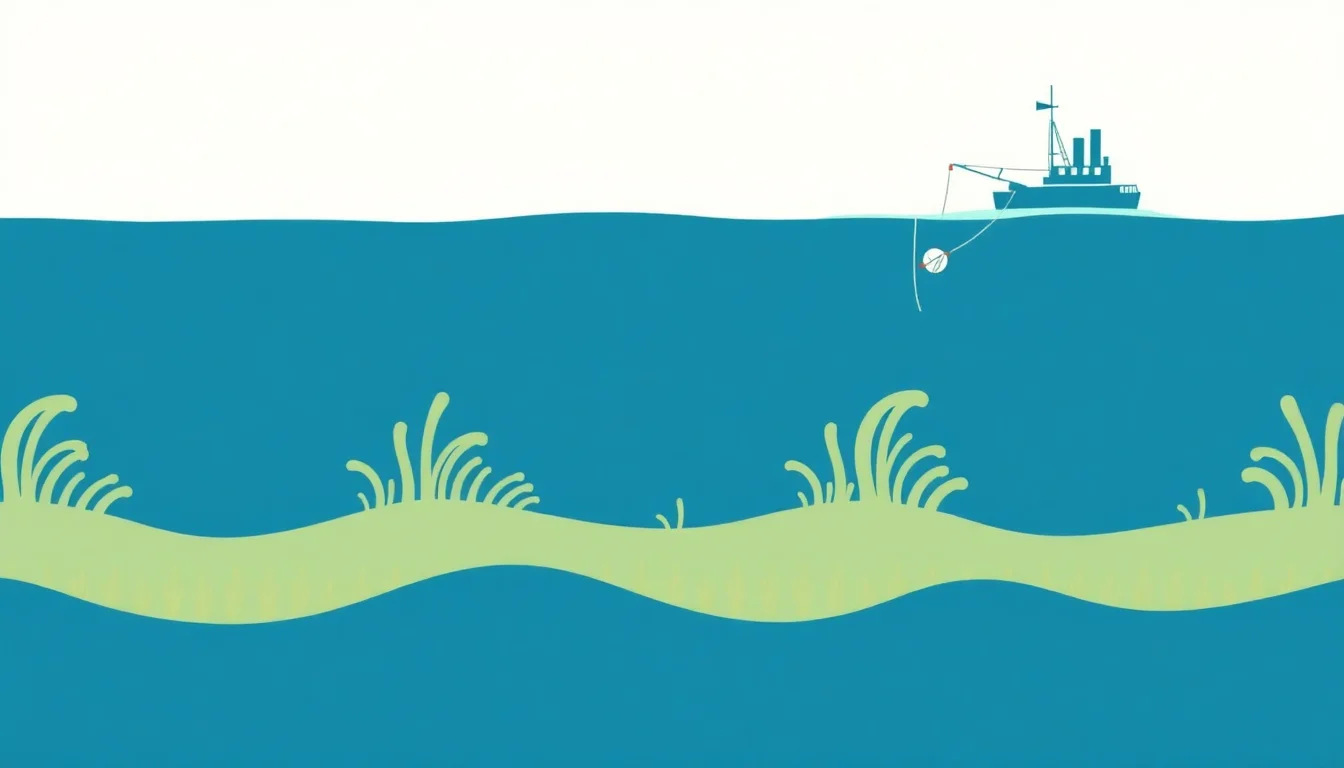
Ocean floor sampling is the process of collecting physical samples from the seabed, a critical endeavor for understanding Earth's geology, marine ecosystems, and resource potential. It's not just about grabbing a handful of mud; it's a highly technical operation involving specialized equipment deployed from research vessels. These samples, ranging from sediment cores to rock fragments, provide direct evidence of past environments, tectonic activity, and the presence of valuable minerals. For anyone serious about deep-sea research, resource exploration, or even historical climate reconstruction, mastering the nuances of ocean floor sampling is non-negotiable. The data gleaned from these samples fuels everything from climate modeling to the search for new pharmaceutical compounds.
🔬 Core Technologies & Methods
The toolkit for ocean floor sampling is as diverse as the seabed itself. Core sampling, using devices like gravity corers and piston corers, extracts long, undisturbed columns of sediment, revealing layered histories. Dredging and grab sampling are employed for collecting surface sediments and rocks, offering a snapshot of current conditions. More advanced techniques include ROVs and AUVs equipped with manipulators and specialized sampling tools, allowing for precise collection in challenging terrains. The choice of method hinges on the specific scientific question, the depth, and the geological substrate, each with its own engineering marvels and limitations.
🚢 Who Uses Ocean Floor Sampling?
The primary users of ocean floor sampling are scientific institutions and governmental geological surveys, such as the USGS and the BGS. These entities conduct fundamental research into plate tectonics, paleoceanography, and marine biodiversity. Beyond pure science, the oil and gas sector and deep-sea mining firms rely heavily on sampling to assess hydrocarbon reserves and evaluate the feasibility and environmental impact of extracting polymetallic nodules, cobalt crusts, and seafloor massive sulfides. Environmental consulting firms also utilize these techniques to monitor the health of marine environments and assess the impact of human activities.
💰 Pricing & Accessibility
The cost of ocean floor sampling is substantial, primarily driven by the need for specialized vessels, advanced equipment, and highly trained personnel. Access to dedicated research vessels can cost tens of thousands of dollars per day. While individual sampling tools might range from a few thousand to hundreds of thousands of dollars, the operational expenses—including deployment, data processing, and sample analysis—are the real budget-busters. For academic researchers, funding often comes from grants awarded by national science foundations, making proposals highly competitive. Commercial entities bear these costs as part of their exploration and operational budgets, with the potential for significant return on investment.
⚖️ Key Debates & Controversies
Ocean floor sampling is at the nexus of several heated debates. The most prominent revolves around deep-sea mining and its potential environmental consequences. Critics argue that current sampling methods, while providing crucial data for exploration, are insufficient to predict or mitigate the long-term ecological damage to fragile deep-sea ecosystems. The ISA, tasked with regulating mining in international waters, faces immense pressure to balance resource development with conservation. Another ongoing discussion concerns the ethical implications of disturbing pristine environments for scientific or commercial gain, questioning whether our current knowledge justifies the risks involved.
📈 Future Trends & Innovations
The future of ocean floor sampling is being shaped by rapid advancements in robotics, sensor technology, and artificial intelligence. We're seeing a move towards more autonomous systems capable of extended missions and sophisticated in-situ analysis, reducing the need for physical sample return in some cases. High-resolution imaging and real-time data transmission are becoming standard, allowing for more informed decision-making during sampling operations. The development of 'soft robotics' for delicate sample handling and novel sensing technologies for detecting trace elements and biological markers promises to unlock new frontiers in deep-sea exploration and monitoring, pushing the boundaries of what's possible in the abyssal plains.
❓ Frequently Asked Questions
What is the deepest ocean floor sample ever collected? While specific record-keeping can be complex due to varying methodologies, samples have been collected from the Challenger Deep in the Mariana Trench, the deepest known point in the Earth's oceans, exceeding 10,900 meters (35,760 feet). These samples are incredibly challenging to obtain due to extreme pressure and logistical hurdles, often requiring specialized submersibles or highly robust sampling equipment deployed via deep-sea drilling rigs.
Section 9
What are the main challenges in ocean floor sampling? The primary challenges are immense pressure, extreme cold, darkness, vast distances from shore, and the corrosive nature of saltwater. Navigating complex seafloor topography, avoiding damage to delicate equipment, and ensuring sample integrity during recovery are also significant hurdles. The cost associated with oceanographic research vessels and specialized equipment further limits widespread access to these deep-sea environments.
Section 10
Can I collect ocean floor samples myself? For individuals without access to specialized equipment and research vessels, personal ocean floor sampling is generally not feasible or advisable, especially in deep waters. Recreational activities like SCUBA diving allow for collection of shallow-water samples, but these are subject to local regulations and environmental protection laws. Attempting to deploy deep-sea sampling gear without proper training and permits can be dangerous and environmentally irresponsible.
Section 11
What is the role of the International Seabed Authority (ISA) in ocean floor sampling? The ISA, established under the UNCLOS, regulates the exploration and exploitation of mineral resources in the international seabed area, known as 'the Area.' While its primary focus is on mining, its activities inherently involve extensive sampling and surveying to assess resource potential and environmental baseline conditions. The ISA's decisions significantly influence the future of deep-sea sampling and its associated environmental considerations.
Section 12
How does ocean floor sampling contribute to understanding climate change? Sediment cores collected from the ocean floor act as invaluable archives of past climate conditions. By analyzing the layers of sediment, scientists can reconstruct historical sea levels, ocean temperatures, and atmospheric composition over thousands to millions of years. For instance, the isotopic composition of foraminifera shells found in cores provides proxies for past ocean temperatures, offering critical data for paleoclimatology and validating modern climate models.
Key Facts
- Year
- 1850
- Origin
- Early scientific expeditions, notably HMS Challenger (1872-1876), formalized many early methods.
- Category
- Geoscience & Marine Technology
- Type
- Resource Guide
Frequently Asked Questions
What is the deepest ocean floor sample ever collected?
While specific record-keeping can be complex due to varying methodologies, samples have been collected from the Challenger Deep in the Mariana Trench, the deepest known point in the Earth's oceans, exceeding 10,900 meters (35,760 feet). These samples are incredibly challenging to obtain due to extreme pressure and logistical hurdles, often requiring specialized submersibles or highly robust sampling equipment deployed via deep-sea drilling rigs.
How are deep-sea samples preserved and analyzed?
Upon retrieval, samples are meticulously documented, photographed, and often subsampled. Sediment cores are typically split lengthwise, with one half archived for future study and the other used for immediate analysis. Preservation methods vary depending on the sample type and intended analysis, often involving refrigeration, freezing, or chemical fixation. Analysis can include physical properties (grain size, density), chemical composition (elemental analysis, isotopic ratios), and biological studies (microfossil identification, DNA analysis), utilizing techniques from mass spectrometry to electron microscopy.
What are the main challenges in ocean floor sampling?
The primary challenges are immense pressure, extreme cold, darkness, vast distances from shore, and the corrosive nature of saltwater. Navigating complex seafloor topography, avoiding damage to delicate equipment, and ensuring sample integrity during recovery are also significant hurdles. The cost associated with oceanographic research vessels and specialized equipment further limits widespread access to these deep-sea environments.
Can I collect ocean floor samples myself?
For individuals without access to specialized equipment and research vessels, personal ocean floor sampling is generally not feasible or advisable, especially in deep waters. Recreational activities like SCUBA diving allow for collection of shallow-water samples, but these are subject to local regulations and environmental protection laws. Attempting to deploy deep-sea sampling gear without proper training and permits can be dangerous and environmentally irresponsible.
What is the role of the International Seabed Authority (ISA) in ocean floor sampling?
The ISA, established under the UNCLOS, regulates the exploration and exploitation of mineral resources in the international seabed area, known as 'the Area.' While its primary focus is on mining, its activities inherently involve extensive sampling and surveying to assess resource potential and environmental baseline conditions. The ISA's decisions significantly influence the future of deep-sea sampling and its associated environmental considerations.
How does ocean floor sampling contribute to understanding climate change?
Sediment cores collected from the ocean floor act as invaluable archives of past climate conditions. By analyzing the layers of sediment, scientists can reconstruct historical sea levels, ocean temperatures, and atmospheric composition over thousands to millions of years. For instance, the isotopic composition of foraminifera shells found in cores provides proxies for past ocean temperatures, offering critical data for paleoclimatology and validating modern climate models.