Physical Water Scarcity | Vibepedia
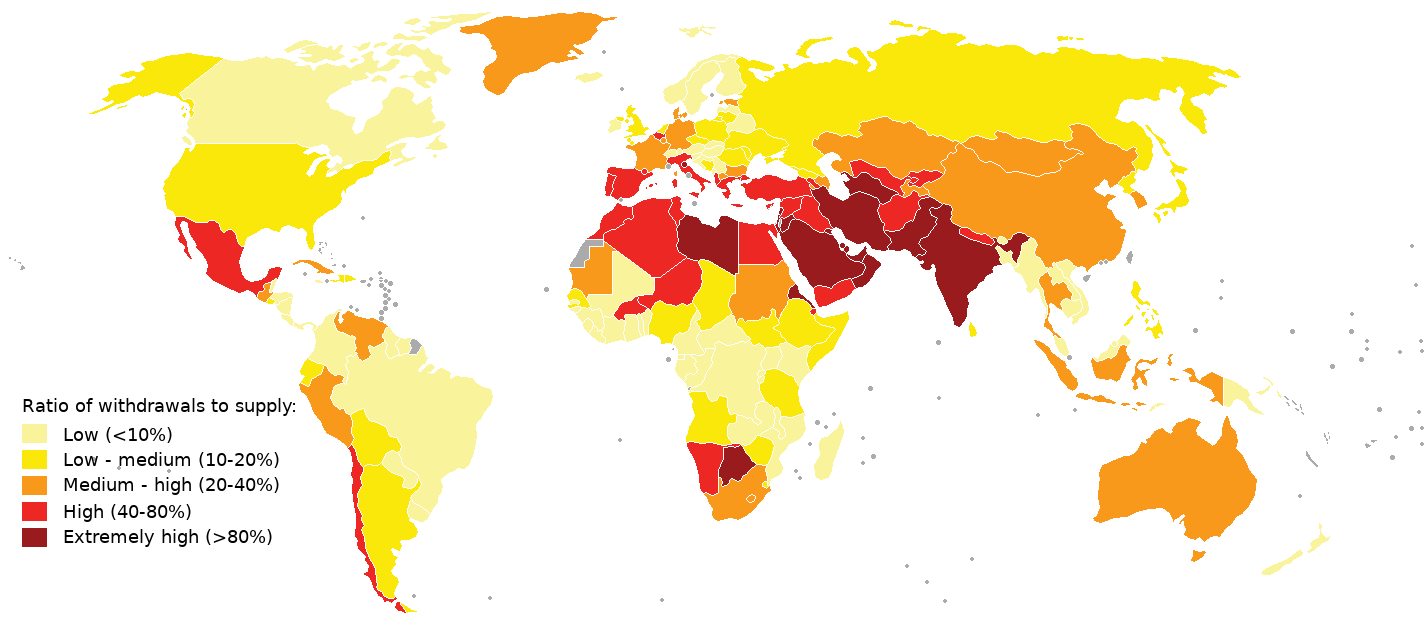
Physical water scarcity is a critical environmental and socio-economic issue defined by the sheer lack of available freshwater resources to meet all demands…
Contents
Overview
Physical water scarcity is a critical environmental and socio-economic issue defined by the sheer lack of available freshwater resources to meet all demands, including those of natural ecosystems. Arid and semi-arid regions, such as parts of Central Asia, West Asia, and North Africa, are particularly vulnerable, often experiencing desert climates that naturally limit water availability. This condition is exacerbated by factors like climate change, population growth, and unsustainable agricultural practices, leading to severe consequences for human populations, biodiversity, and economic development. The global scale of freshwater availability is often debated, but localized and regional physical scarcity is an undeniable and growing crisis.
🎵 Origins & History
The concept of water scarcity, particularly its physical manifestation, is as old as civilization itself. Ancient societies in Mesopotamia and Egypt, for instance, developed sophisticated irrigation systems to manage limited river flows, demonstrating an early understanding of water's finite nature. Early pioneers like Asit K. Biswas, a leading water management expert, began highlighting the disparities in water availability and the potential for future crises. The United Nations and its agencies, such as the Food and Agriculture Organization (FAO), have been instrumental in documenting and raising awareness about regions facing severe physical water deficits.
⚙️ How It Works
Physical water scarcity occurs when the renewable freshwater resources in a region are insufficient to meet all water demands, including those required for ecological integrity. This is often quantified using metrics like the World Bank's water stress index, which measures the ratio of total water withdrawn annually to renewable water resources. This scarcity can arise from a combination of low precipitation, high evaporation rates, and the depletion of non-renewable groundwater reserves. Unlike economic scarcity, where infrastructure or governance is the bottleneck, physical scarcity implies a fundamental deficit in the water cycle's ability to replenish supply at the rate of demand, even with optimal management. Ecosystems, crucial for biodiversity and natural processes, are often the first casualties, receiving insufficient water to sustain their functions.
📊 Key Facts & Numbers
Globally, while total freshwater resources might theoretically suffice for current demand, regional disparities are stark. The Middle East and North Africa (MENA) region is particularly acute in water scarcity. Aquifers in regions like the Indo-Gangetic Plain and the Ogallala Aquifer in the United States are being exploited at unsustainable rates.
👥 Key People & Organizations
Key figures in understanding and addressing physical water scarcity include Peter Gleick, president emeritus of the Pacific Institute, who has extensively researched water resources and crises. Organizations like the World Water Council and the Global Water Partnership play crucial roles in coordinating research, policy, and action. The UN Environment Programme (UNEP) and the World Meteorological Organization (WMO) provide critical data and analysis on water resources and climate impacts. Academic institutions worldwide, such as the Stockholm International Water Institute (SIWI), are at the forefront of research, often publishing influential reports and hosting major forums like the Stockholm Water Symposium.
🌍 Cultural Impact & Influence
The cultural resonance of physical water scarcity is profound, manifesting in art, literature, and societal anxieties. From ancient myths of river gods to modern dystopian narratives where water is a commodity fought over, the scarcity of this vital resource has always shaped human culture and conflict. In regions facing severe scarcity, daily life is dictated by water availability, influencing everything from agricultural practices and diet to social structures and migration patterns. The stark visual of dry riverbeds, cracked earth, and long queues for water has become a potent symbol of environmental distress and human vulnerability, often featured in documentaries and news reports from organizations like National Geographic. This imagery can galvanize public opinion and drive calls for conservation and better resource management, influencing global environmental consciousness.
⚡ Current State & Latest Developments
The current state of physical water scarcity is alarming, with climate change acting as a significant accelerant. Rising global temperatures increase evaporation rates, alter precipitation patterns, and lead to more frequent and intense droughts in many regions. For instance, the ongoing megadrought in the Colorado River Basin in the Western United States, which began in 2000, is the driest period in over 1,200 years, severely impacting water supplies for millions. Similarly, regions like the Sahel in Africa are experiencing increased desertification and water stress due to both climatic shifts and land degradation. The COP28 climate summit in 2023 highlighted the urgent need for adaptation strategies, including improved water management and investment in water-saving technologies, but concrete global action remains a significant challenge. The Israeli-Palestinian conflict also has significant water scarcity dimensions, with water resources being a major point of contention.
🤔 Controversies & Debates
A central debate revolves around the true extent of global physical water scarcity versus economic scarcity. While some argue that sufficient freshwater exists globally if managed and distributed equitably, others contend that the physical limits are being reached, especially when considering ecological needs and the impacts of climate change. Critics of purely infrastructure-focused solutions point out that large-scale projects like dams and desalination plants can have significant environmental and social costs, and may not be sustainable in the long run. The role of industrial agriculture, which accounts for roughly 70% of global freshwater withdrawals, is another major point of contention, with debates on shifting to less water-intensive crops and farming methods. Furthermore, the ethical implications of water allocation, particularly when it impacts indigenous rights or ecosystem health, are hotly debated by organizations like Greenpeace and various environmental justice groups.
🔮 Future Outlook & Predictions
The future outlook for physical water scarcity is grim without significant global intervention. Projections from the World Resources Institute (WRI) suggest that by 2050, over 5 billion people could face water shortages. Climate change will continue to be a primary driver, intensifying droughts and altering water cycles. However, there is also growing optimism around technological advancements. Innovations in desalination, water recycling, and precision irrigation offer potential solutions, though their scalability and affordability remain challenges. International cooperation on transboundary water management, such as agreements governing major river basins like the Nile or the Mekong, will become increasingly critical. The success of future water security will likely hinge on a combination of technological innovation, robust governance, and a fundamental shift in how societies value and manage water resources, moving towards a more circular economy for water.
💡 Practical Applications
Practical applications for understanding and mitigating physical water scarcity are diverse. In agriculture, adopting drought-resistant crops, implementing drip irrigation systems, and improving soil moisture management are crucial. Urban areas are increasingly investing in water recycling and reuse technologies, alongsid
Key Facts
- Category
- nature
- Type
- topic