
Contents
Overview
The concept of protein phosphorylation as a regulatory mechanism emerged in the mid-20th century, with early insights into the enzymatic control of glycogen metabolism. Edwin Krebs and Edwin Krebs and Edmond H. Fischer's work focused on glycogen metabolism. Their seminal work in the 1950s and 1960s on the reversible phosphorylation of glycogen phosphorylase by cyclic AMP-dependent protein kinase (PKA) earned them the 1992 Nobel Prize in Physiology or Medicine. This discovery illuminated how reversible chemical modifications could dynamically control enzyme activity. Subsequent research by Tony Hunter identified tyrosine phosphorylation as a distinct regulatory event, particularly relevant in viral oncogenes and cell growth, a finding that significantly expanded the known scope of phosphorylation's role. The identification of thousands of protein kinases and phosphatases has since revealed a vast, interconnected regulatory network.
⚙️ How It Works
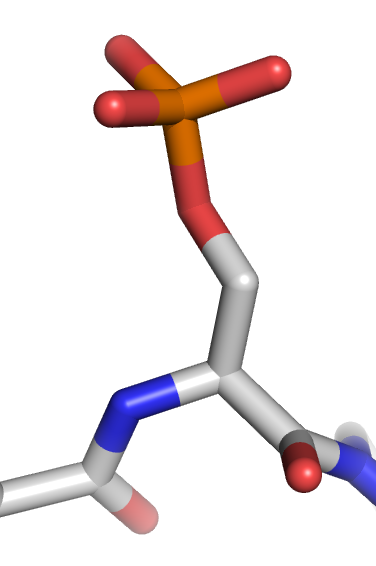
At its core, protein phosphorylation involves the transfer of a terminal phosphate group from adenosine triphosphate (ATP) to a specific amino acid residue on a target protein. This reaction is catalyzed by a diverse family of enzymes known as protein kinases. The most common targets are the hydroxyl groups of serine, threonine, and tyrosine residues, though histidine, aspartate, and glutamate can also be phosphorylated. This addition of a negatively charged phosphate group dramatically alters the local chemical environment of the protein, often inducing conformational changes that can activate or inhibit enzymatic activity, change protein-protein interaction interfaces, or mark the protein for degradation. The reverse process, dephosphorylation, is carried out by protein phosphatases, which cleave the phosphate group, returning the protein to its unphosphorylated state. This dynamic interplay between kinases and phosphatases forms the basis of intricate cellular signaling pathways, akin to a complex biological circuit board controlled by these molecular switches.
📊 Key Facts & Numbers
An estimated 13,000 human proteins, representing over 70% of the proteome, are known to be phosphorylated. The dynamic turnover of phosphate groups can occur on timescales ranging from milliseconds to hours, depending on the specific signaling context and the enzymes involved.
👥 Key People & Organizations
Key figures in the field include Edmond H. Fischer and Edwin Krebs, Nobel laureates for their foundational work on reversible protein phosphorylation. Tony Hunter is credited with discovering tyrosine phosphorylation, a crucial insight into cancer biology. Leading research institutions like the St. Jude Children's Research Hospital and the Broad Institute house significant programs dedicated to phosphoproteomics and kinase biology. Companies such as Cell Signaling Technology (CST) have become indispensable suppliers of antibodies and reagents crucial for studying phosphorylation events, supporting researchers worldwide. The National Institutes of Health (NIH) consistently funds extensive research into the signaling pathways regulated by phosphorylation.
🌍 Cultural Impact & Influence
Protein phosphorylation is the bedrock of cellular communication and regulation, profoundly influencing everything from basic metabolic processes to complex behaviors like learning and memory. Its ubiquity means it has permeated biological research across disciplines, from molecular biology and biochemistry to neuroscience and immunology. The discovery of phosphorylation's role in diseases like cancer has spurred intense interest in its representation in popular science and medical discourse. Textbooks on cell biology and biochemistry invariably dedicate substantial sections to this topic, underscoring its central importance. The development of specific antibodies targeting phosphorylated proteins, such as anti-phospho-ERK antibodies, has become a standard tool in many biological laboratories, demonstrating its widespread adoption.
⚡ Current State & Latest Developments
The current landscape of protein phosphorylation research is dominated by advancements in high-throughput phosphoproteomics, enabling the mapping of thousands of phosphorylation sites across entire proteomes in response to various stimuli. The development of sophisticated mass spectrometry techniques, such as tandem mass spectrometry (MS/MS), has revolutionized the ability to identify and quantify these modifications. Researchers are increasingly focusing on understanding the 'phospho-code' – how combinations of phosphorylation events on a single protein create complex regulatory outputs. Furthermore, the development of novel kinase inhibitors, like ibrutinib (Imbruvica) for certain leukemias, highlights the ongoing translation of phosphorylation research into clinical applications. The emergence of AI and machine learning is also beginning to accelerate the prediction of phosphorylation sites and the design of targeted therapeutics.
🤔 Controversies & Debates
A significant debate revolves around the concept of 'kinase addiction' in cancer, where tumors become critically dependent on specific hyperactive kinases for their survival and proliferation. While this dependency offers therapeutic opportunities, it also raises concerns about the development of resistance mechanisms, as cancer cells can evolve to bypass inhibited pathways or activate alternative signaling routes. Another area of contention is the precise role and regulation of 'low-complexity' phosphorylation sites, which are less conserved but may play crucial roles in fine-tuning cellular responses. The sheer complexity of the phosphoproteome also presents challenges in fully deciphering the functional consequences of every identified phosphorylation event, leading to ongoing efforts to develop better predictive models and experimental validation strategies.
🔮 Future Outlook & Predictions
The future of protein phosphorylation research points towards a deeper understanding of context-dependent signaling. This includes unraveling how phosphorylation events are integrated with other post-translational modifications, such as ubiquitination and acetylation, to create intricate regulatory networks. Personalized medicine will increasingly leverage knowledge of individual patients' phosphoproteomes to tailor treatments, particularly for cancers and autoimmune diseases. We can expect the development of more specific and potent kinase inhibitors with fewer off-target effects, potentially leading to new classes of drugs. Furthermore, advances in live-cell imaging and single-molecule analysis will provide unprecedented spatiotemporal resolution of phosphorylation dynamics, offering real-time insights into cellular decision-making processes.
💡 Practical Applications
Protein phosphorylation is a cornerstone of drug discovery, particularly in oncology. Kinase inhibitors, designed to block the activity of aberrant kinases driving cancer growth, represent a multi-billion dollar pharmaceutical market. Examples include imatinib (Gleevec) for chronic myeloid leukemia and erlotinib (Tarceva) for non-small cell lung cancer. Beyond cancer, understanding phosphorylation is vital for developing treatments for inflammatory diseases, metabolic disorders like diabetes, and neurological conditions. In basic research, antibodies targeting phosphorylated proteins are indispensable tools for Western blotting, immunohistochemistry, and flow cytometry, allowing scientists to probe signaling pathways in diverse biological contexts.
Key Facts
- Category
- science
- Type
- topic