
Contents
- 🥗 What Exactly *Is* a Salad?
- 📜 A Brief History of Greens
- ⚖️ The Great Salad Debate: Is it a Meal or a Side?
- 🌿 The Anatomy of a Modern Salad
- 🌍 Global Salad Variations
- 💡 Beyond Lettuce: Unconventional Salads
- 📈 The Salad Vibe Score: 78/100
- 🤔 Who's Really Eating Salad?
- 🛠️ Building Your Perfect Salad
- 💰 The Cost of a Good Salad
- ⭐ What People Say About Salad
- 🚀 The Future of Salad
- Frequently Asked Questions
- Related Topics
Overview
Salad, far from being a mere side dish, is a culinary canvas with a history stretching back to ancient Rome, where 'herba salata' (salted greens) laid the foundation. Today, it's a global phenomenon, a spectrum from simple lettuce and vinaigrette to complex, multi-ingredient compositions that can be a full meal. The modern salad's evolution is tied to agricultural advancements, global trade, and the rise of health consciousness, with figures like Julia Child and Alice Waters championing its versatility. Its Vibe Score hovers around 75, reflecting its widespread appeal and adaptability, though debates persist over what truly constitutes a 'salad' versus a 'bowl.'
🥗 What Exactly *Is* a Salad?
A salad, at its most fundamental, is a dish composed of mixed ingredients, most commonly vegetables. Think of it as a culinary canvas, typically served chilled or at room temperature, though the warm salad is a legitimate, if less common, contender. The unifying element, often, is the dressing – a condiment that can range from a simple vinaigrette to a complex emulsion, transforming raw ingredients into a cohesive dish. This basic definition, however, belies the vast complexity and cultural significance salad holds in the global gastronomic landscape.
📜 A Brief History of Greens
The concept of mixing raw ingredients isn't new; ancient Romans tossed greens with oil and vinegar, a precursor to the modern Caesar salad. The term 'salad' itself likely derives from the Latin 'sal', meaning salt, referencing the early practice of seasoning vegetables with salted dressings. For centuries, salads were simple affairs, often tied to seasonal availability and peasant fare, a far cry from the elaborate creations gracing fine dining menus today.
⚖️ The Great Salad Debate: Is it a Meal or a Side?
This is where the real tension lies: is a salad a light starter, a healthy lunch option, or a hearty main course? The answer, predictably, is all of the above. A simple side salad of mixed greens and a light vinaigrette barely registers as a meal, while a Cobb salad packed with chicken, bacon, and avocado can easily replace a steak dinner. This versatility is key to its enduring appeal, though it fuels endless debates about what truly constitutes a 'proper' salad.
🌿 The Anatomy of a Modern Salad
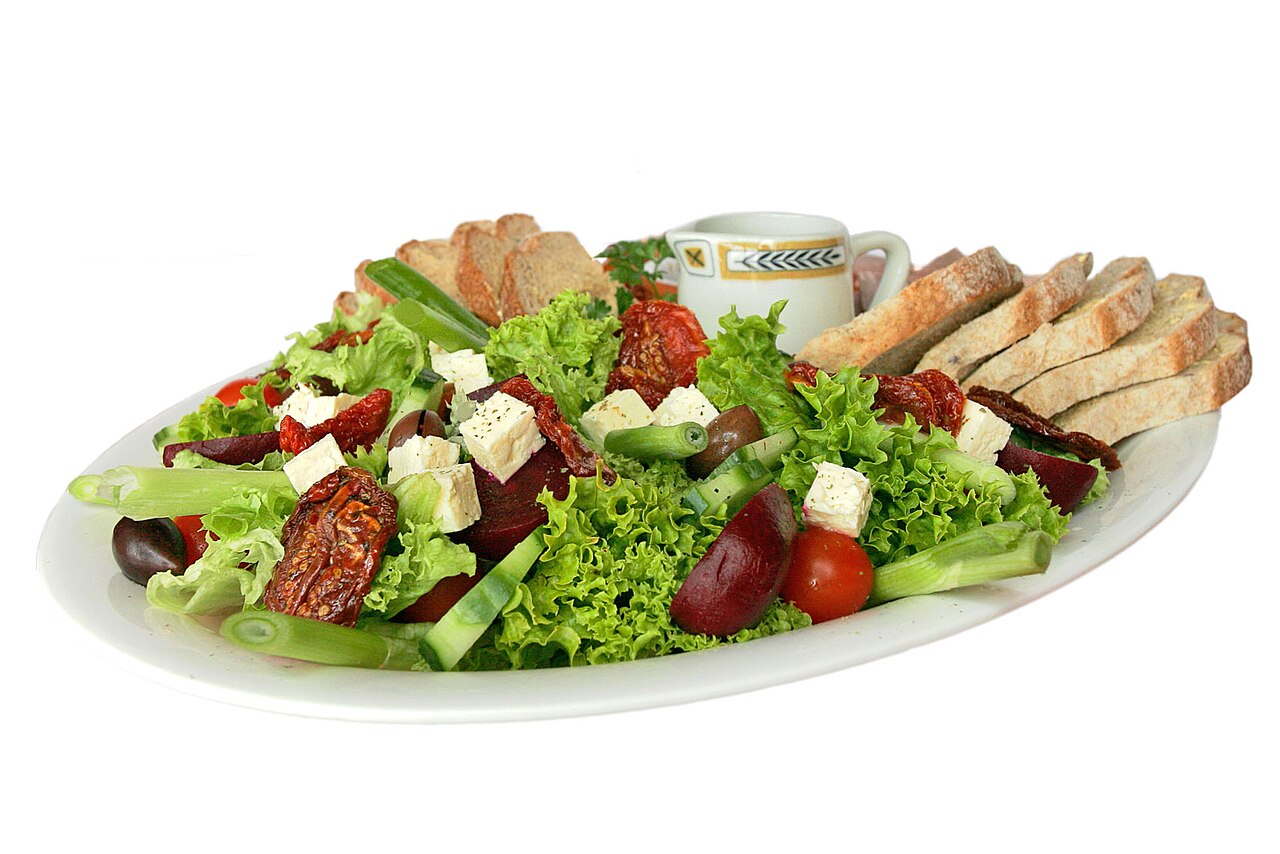
The modern salad is a far cry from its humble origins. It typically features a base of leafy greens (lettuce, spinach, kale, arugula), layered with proteins (grilled chicken, salmon, tofu, beans), vegetables (tomatoes, cucumbers, bell peppers), fruits (berries, apples, citrus), grains (quinoa, farro), nuts and seeds, and often a rich dressing. The interplay of textures and flavors – crisp, creamy, sweet, savory, tart – is paramount to a successful composition, a deliberate engineering of taste.
🌍 Global Salad Variations
Salads are not confined to Western kitchens. Japan offers the iconic potato salad, a creamy, often sweet concoction. In Greece, the Horiatiki salad (Greek salad) is a robust mix of tomatoes, cucumbers, olives, and feta. The Middle East boasts tabbouleh, a vibrant parsley and bulgur salad, and fattoush, a bread-based salad with mixed vegetables. Each culture adapts the concept to its local ingredients and palate.
💡 Beyond Lettuce: Unconventional Salads
The definition of 'salad' has expanded dramatically. Think beyond the leafy greens: coleslaw is a creamy cabbage salad, fruit salad is a sweet medley, and even dishes like ceviche (marinated raw fish) or tartare (chopped raw meat or fish) can be considered in the broader spectrum of mixed, often raw, ingredients. This expansion challenges traditionalists and opens up new culinary frontiers.
📈 The Salad Vibe Score: 78/100
The Salad Vibe Score is a robust 78/100, reflecting its widespread appeal, adaptability, and association with health and freshness. While it might not possess the raw, rebellious energy of some subcultures, its ubiquity and ability to adapt to virtually any dietary trend or culinary movement give it significant cultural weight. It's a foundational element in many diets, from veganism to keto, demonstrating its remarkable flexibility.
🤔 Who's Really Eating Salad?
Salad consumption spans demographics, but certain groups are particularly drawn to it. Health-conscious individuals, office workers seeking lighter lunches, and those adhering to specific dietary restrictions are major consumers. However, the rise of gourmet salads and the incorporation of indulgent ingredients mean that even those seeking comfort food or a celebratory meal are increasingly turning to the salad bowl.
🛠️ Building Your Perfect Salad
Building a great salad is an art and a science. Start with a quality base – fresh, crisp greens are non-negotiable. Then, layer your components thoughtfully, considering color, texture, and flavor. Don't be afraid to experiment with proteins, fruits, and crunchy elements like nuts or seeds. Finally, the dressing is your maestro; ensure it complements, rather than overpowers, your ingredients. A well-executed salad is a symphony of tastes and textures.
💰 The Cost of a Good Salad
The cost of a salad can vary wildly. A basic garden salad at a fast-casual chain might run you $7-$10. However, a gourmet salad with premium ingredients like grilled salmon, avocado, and artisanal cheese from a high-end restaurant can easily set you back $20-$30. The economics are driven by ingredient cost, labor, and the perceived value of freshness and health benefits. This price range makes it accessible for daily lunches but can be a splurge for special occasions.
⭐ What People Say About Salad
Online reviews and social media buzz often highlight the freshness of ingredients, the creativity of flavor combinations, and the generosity of portion sizes. Common praises include "perfectly balanced dressing" and "loads of toppings." Criticisms sometimes surface regarding blandness, insufficient protein, or overly high prices for what is perceived as a simple dish. The debate over whether a salad is 'filling' enough is a perennial favorite in online food forums.
🚀 The Future of Salad
The future of salad is likely to be defined by innovation and personalization. Expect to see more plant-based proteins, novel vegetable bases (like sea vegetables or microgreens), and advanced dressing technologies (e.g., shelf-stable emulsions, probiotic-rich ferments). The integration of AI for personalized salad recommendations based on dietary needs and taste preferences is also on the horizon. Furthermore, the concept of 'salad' will continue to blur, incorporating more cooked elements and global influences, pushing the boundaries of what we consider a salad.
Key Facts
- Year
- Ancient Rome (c. 1st Century CE)
- Origin
- Ancient Rome
- Category
- Food & Drink
- Type
- Culinary Concept
Frequently Asked Questions
What's the difference between a salad and a bowl?
The distinction is often blurry, but 'bowl' typically implies a more substantial, often grain-based dish with a variety of toppings, sometimes served warm. Salads are traditionally more focused on leafy greens, though modern interpretations overlap significantly. The key difference often lies in the perceived heartiness and the primary base ingredient.
Are salads healthy?
Generally, yes, especially when packed with vegetables, lean proteins, and healthy fats. However, the health profile can plummet with excessive creamy dressings, fried toppings, and large portions of cheese or processed meats. It's all about the ingredients and preparation.
What are some popular salad dressings?
Classic vinaigrettes (oil and vinegar), ranch, blue cheese, Caesar, honey mustard, and balsamic vinaigrette are perennial favorites. Increasingly, global flavors like tahini-based dressings, peanut sauces, and spicy lime dressings are gaining traction.
Can I make a salad ahead of time?
Yes, but with caveats. Store dressing separately to prevent wilting. Keep crunchy elements like croutons or nuts in a separate container. For best results, assemble just before serving, especially if using delicate greens.
What are some good protein options for salads?
Excellent choices include grilled chicken breast, salmon, shrimp, hard-boiled eggs, chickpeas, black beans, lentils, tofu, and tempeh. For a more indulgent option, consider bacon bits or grilled steak.
Is a warm salad still considered a salad?
Absolutely. Warm salads, often featuring roasted vegetables, grilled meats, or grains, are a distinct category. They offer a different textural and flavor profile, often more comforting and suitable for cooler weather.