
Contents
Overview
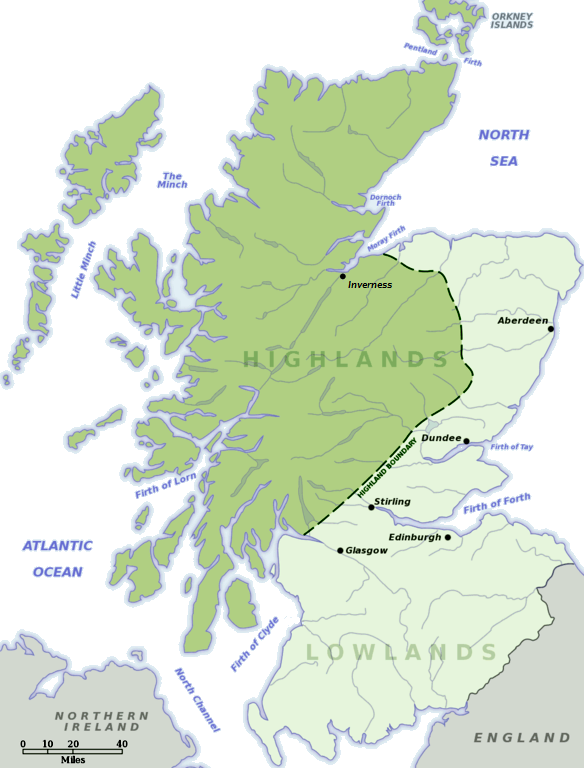
The Picts were among the earliest inhabitants of the Scottish Highlands. The region became the heartland of Dál Riata, a Gaelic kingdom. Scottish Gaelic is known as a' Ghàidhealtachd. The Great Glen Fault runs from Inverness to Fort William. The Hebrides and Isle of Skye are islands in the Highlands. Robert Burns drew inspiration from Highland themes. Sir Walter Scott wrote novels like 'Waverley' and 'Rob Roy'. The Jacobite uprisings occurred in the Highlands. Hamish Henderson was a folklorist and poet. National Trust for Scotland manages land in the Highlands. Forestry and Land Scotland manages land in the Highlands. The Highland Council is the primary administrative body for the largest local government area in Scotland. Scottish folk music is associated with the Highlands. Bagpipes are a recognizable musical instrument from the Highlands. Films like 'Braveheart' and 'Skyfall' are associated with the Highlands. Inverness is a city in the Highlands that has experienced growth. Cairngorms National Park is in the Highlands.
🎵 Origins & History
The historical narrative of the Scottish Highlands is deeply interwoven with the migrations and conflicts of its earliest inhabitants, the Picts. Gaelic peoples arrived from Ireland around the 5th century AD. The region became the heartland of Dál Riata, a Gaelic kingdom that eventually expanded to encompass much of modern Scotland. The distinct language, Scottish Gaelic (a' Ghàidhealtachd, meaning 'the place of the Gaels'), flourished here, setting the Highlands apart culturally and linguistically from the Anglo-Saxon and Norman influences in the Lowlands. The Highland Clearances of the 18th and 19th centuries, a period of forced displacement of tenant farmers by landowners, dramatically reshaped the social and demographic landscape, leading to widespread emigration and a decline in Gaelic language use, a legacy still felt today.
⚙️ Geological & Geographical Features
Geologically, the Highlands are a product of ancient tectonic activity and glaciation, resulting in their characteristic dramatic topography. The region is broadly divided by the Great Glen Fault, a major geological fault line that runs from Inverness to Fort William, separating the Grampian Mountains in the southeast from the Northwest Highlands. These mountains, including Ben Nevis, the UK's highest peak at 1,345 meters (4,413 ft), are characterized by their rugged, often treeless slopes, deep glens (valleys), and numerous lochs (lakes), such as the famous Loch Ness. The coastline is equally dramatic, featuring fjords, sea lochs, and islands like the Hebrides and Isle of Skye, sculpted by millennia of erosion and sea-level changes.
📊 Key Facts & Numbers
The Highlands cover approximately 31,500 square kilometers (12,160 sq mi), representing about one-third of Scotland's landmass. Despite its size, the population density is remarkably low, with fewer than 300,000 people residing in the region, a figure that has seen a steady decline over the past century, though recent years have shown some stabilization and growth in specific areas. Tourism is a major economic driver, with an estimated 2 million visitors annually contributing over £1 billion to the local economy. The region is home to over 90% of Scotland's wild land, and its mountains contain over 280 Munros (summits over 3,000 feet). The average annual rainfall can exceed 3,000 mm (120 inches) in some western areas, making it one of Europe's wettest regions.
👥 Key People & Organizations
Key figures associated with the Highlands are numerous, spanning historical leaders, writers, and cultural icons. Robert Burns, Scotland's national poet, though primarily associated with the Lowlands, drew inspiration from Highland themes. Sir Walter Scott, whose novels like 'Waverley' and 'Rob Roy' romanticized Highland life and the Jacobite uprisings, played a significant role in shaping external perceptions. More recently, figures like Hamish Henderson, a folklorist and poet, championed Highland culture. Organizations such as National Trust for Scotland and Forestry and Land Scotland manage vast tracts of land, influencing conservation and public access. The Highland Council is the primary administrative body for the largest local government area in Scotland.
🌍 Cultural Impact & Influence
The cultural resonance of the Scottish Highlands is immense, permeating literature, music, and film worldwide. The romanticized image of the kilted Highlander, the bagpipes, and the dramatic landscapes has become a potent symbol of Scottish identity, often exported globally through media. Sir Walter Scott's novels, for instance, were instrumental in creating the Victorian image of the Highlands, influencing tourism and national identity. The music of the Highlands, particularly Scottish folk music and bagpipe tunes, is instantly recognizable. Hollywood films like 'Braveheart' and 'Skyfall' have further cemented these iconic images in the global consciousness, though often with a degree of romanticization that diverges from historical reality.
⚡ Current State & Latest Developments
In recent years, the Highlands have seen a complex mix of developments. While depopulation remains a concern in many rural glens, cities like Inverness have experienced growth, becoming hubs for services and tourism. The renewable energy sector, particularly wind power, has seen significant investment, with large wind farms now a prominent feature of the landscape in some areas. The North Coast 500 route, launched in 2015, has become a major tourist attraction, boosting local economies but also raising concerns about over-tourism and infrastructure strain. Efforts are also underway to revitalize Scottish Gaelic language and culture through educational programs and community initiatives, aiming to preserve this unique heritage.
🤔 Controversies & Debates
The Highlands are a site of ongoing debate, particularly concerning land ownership and management. A significant portion of the land is owned by a small number of aristocratic families and foreign investors, leading to calls for land reform and greater community ownership. The development of large-scale renewable energy projects, while offering economic benefits, often sparks controversy over their visual impact on the pristine landscape. Furthermore, the romanticized portrayal of Highland culture, particularly in tourism, is sometimes criticized for perpetuating stereotypes and overlooking the complex social and economic realities of the region. The balance between conservation and development, especially in areas of outstanding natural beauty like Cairngorms National Park, remains a persistent challenge.
🔮 Future Outlook & Predictions
The future of the Highlands is likely to be shaped by its response to climate change and evolving economic models. Increased focus on sustainable tourism, alongside further development in sectors like renewable energy and aquaculture, is anticipated. There's a growing interest in rewilding projects, aiming to restore natural ecosystems and biodiversity, potentially creating new tourism opportunities. The digital revolution may also play a role in combating depopulation by enabling remote work and improving connectivity. However, the long-term viability of remote communities will depend on sustained investment in infrastructure, services, and opportunities that can attract and retain younger generations, ensuring the region's cultural and economic vitality.
💡 Practical Applications
The Highlands serve as a critical natural laboratory and a significant economic engine for Scotland. Its vast landscapes are crucial for water management and carbon sequestration, playing a vital role in national climate targets. The region is a prime destination for outdoor recreation, including hillwalking, climbing, fishing, and wildlife watching, supporting a substantial tourism industry. Furthermore, the Highlands are a significant producer of whisky, with numerous distilleries contributing to Scotland's global reputation. The development of renewable energy infrastructure, particularly wind power, is a major practical application, aiming to harness the region's natural resources for energy production.
Key Facts
- Category
- nature
- Type
- topic