
Contents
Overview
The concept of Shiva and Shakti has deep roots in ancient Indian philosophical traditions, evolving over millennia. Early Vedic texts hint at cosmic dualities, but the explicit personification and theological framework of Shiva and Shakti solidified during the Puranic period. The Shaiva and Shakta traditions, emerging around the 1st millennium CE, brought these deities to the forefront. Early philosophical texts like the Upanishads explored the concept of Brahman as the ultimate reality, with later traditions differentiating aspects of this reality into Purusha (consciousness) and Prakriti (energy). The Tantric traditions further elaborated on the dynamic union of Shiva and Shakti, viewing their interaction as the source of all manifestation. The worship of Shakti as the supreme goddess gained prominence, leading to the establishment of numerous Shakti Peethas across the Indian subcontinent, believed to be sites where parts of the goddess Sati's body fell.
⚙️ How It Works
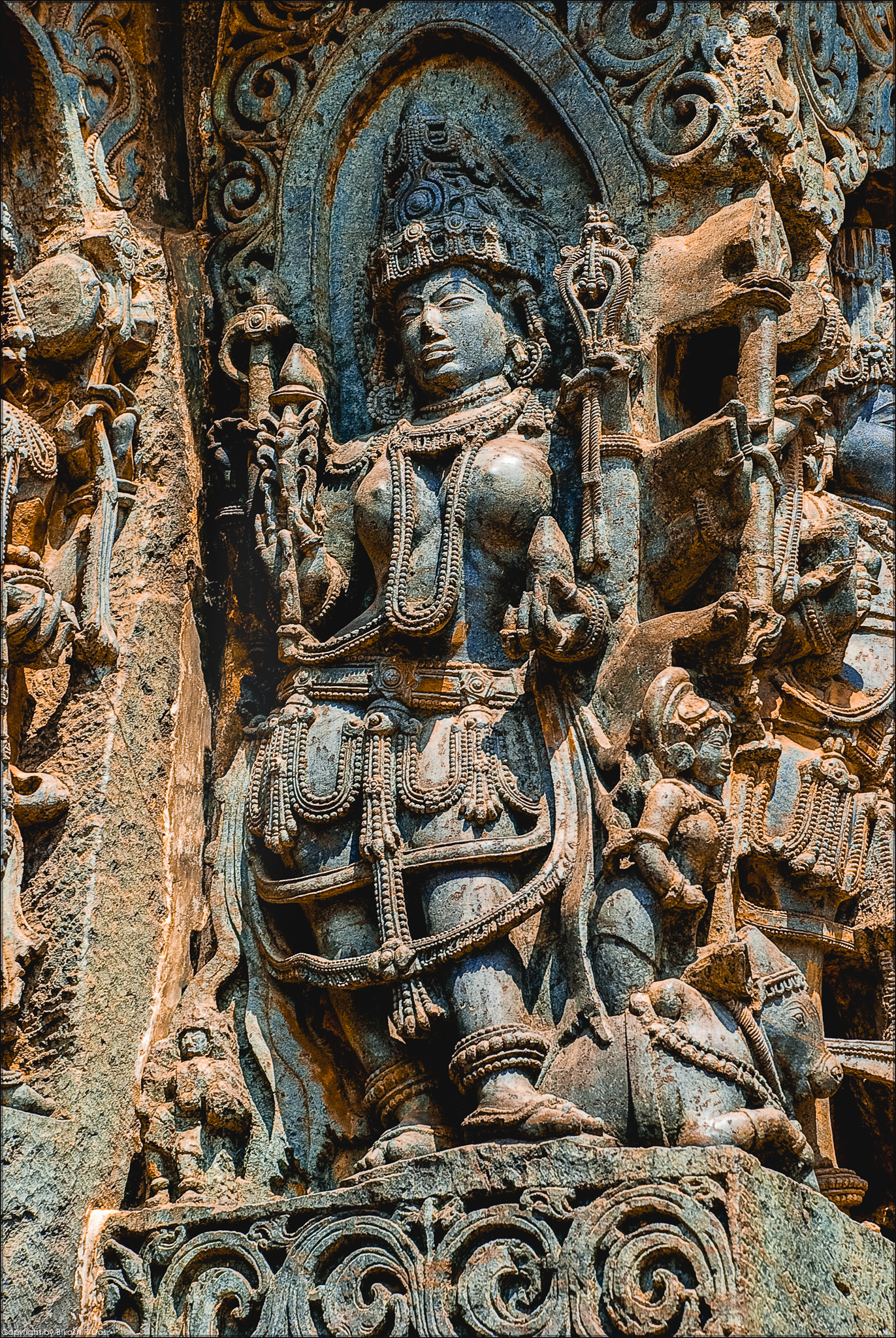
At its core, the dynamic between Shiva and Shakti is a philosophical model for understanding existence. Shiva represents Purusha, the pure consciousness, the unchanging, passive witness. He is often depicted as meditating or in a state of cosmic stillness. Shakti, conversely, embodies Prakriti, the primordial energy, the active, creative, and dynamic force that brings the universe into being. She is the power that moves, transforms, and sustains. Their union is not a physical act but a metaphysical principle; it is the fusion of stillness and motion, consciousness and energy, potential and manifestation. This interplay is visualized through iconic imagery such as Ardhanarishvara, a composite deity half-Shiva and half-Shakti, symbolizing their inseparable nature. The universe, in this framework, is a product of their eternal dance, the Tandava (Shiva's destructive dance) and the creative pulsations of Shakti.
📊 Key Facts & Numbers
The philosophical and theological significance of Shiva and Shakti is immense, influencing Hindus globally. The concept of duality within unity is central: while Shiva and Shakti are distinct, they are inseparable, like the sun and its rays, or fire and its heat. In Shaktism, the goddess is considered the supreme being, with Shiva as her subordinate. Conversely, in Shaivism, Shiva is supreme, and Shakti is his divine power. The influence extends to over 108 Shakti Peethas and countless temples dedicated to Shiva and Shakti across India, Nepal, and other parts of the world, attracting millions of pilgrims annually. The philosophical texts discussing their union, such as the Shiva Sutras and the Devi Mahatmyam, have been studied for centuries.
👥 Key People & Organizations
While Shiva and Shakti are divine principles, their theological and philosophical exposition has been shaped by numerous sages, saints, and scholars. In the Shaiva traditions, figures like Adi Shankara, though primarily associated with Advaita Vedanta, wrote extensively on Shiva. Later Shaiva saints and mystics, particularly in South India, contributed to the devotional literature. For Shaktism, the Devi Mahatmyam, part of the Markandeya Purana, is a foundational text, extolling the supreme power of the Goddess. Philosophers like Abhinavagupta were pivotal in systematizing the Kashmir Shaiva philosophy, which deeply integrates the concept of Shakti. Modern scholars and spiritual leaders continue to interpret and disseminate these teachings, making them accessible to a global audience through books, lectures, and online platforms like YouTube.
🌍 Cultural Impact & Influence
The iconography and philosophy of Shiva and Shakti have profoundly permeated Indian culture and beyond. Their imagery is ubiquitous in temple architecture, classical dance forms like Bharatanatyam, and traditional art. The concept of the divine feminine, embodied by Shakti, has influenced feminist interpretations within Hinduism and inspired countless female artists and writers. The idea of balancing masculine and feminine energies has also found resonance in Western New Age movements and Jungian psychology, particularly through the work of Carl Jung on archetypes. The cosmic dance of Shiva, the Nataraja form, is a globally recognized symbol of creation and destruction, featured in museums and cultural exhibitions worldwide. The philosophical underpinnings of their union also inform practices like Yoga and meditation, aiming to integrate inner energies.
⚡ Current State & Latest Developments
In contemporary Hinduism, the worship of Shiva and Shakti remains vibrant and dynamic. Major festivals like Maha Shivaratri and Navaratri (celebrating Shakti) draw massive crowds to temples and homes across India and the diaspora. Modern interpretations of their union are explored in academic discourse, spiritual retreats, and online communities dedicated to Hindu philosophy. The concept of Shakti as divine feminine power continues to inspire movements advocating for women's empowerment within religious contexts. Furthermore, the philosophical exploration of consciousness and energy is increasingly being discussed in dialogue with modern physics and neuroscience, seeking common ground between ancient wisdom and contemporary scientific understanding. The global reach of Hinduism ensures that these concepts are continuously reinterpreted and practiced by millions.
🤔 Controversies & Debates
The theological and philosophical interpretation of Shiva and Shakti is not without its debates. A significant controversy lies in the differing emphasis between Shaivism and Shaktism: is Shiva the ultimate reality, with Shakti as his power, or is Shakti the supreme goddess, with Shiva as her manifestation? This has led to theological disputes and differing ritualistic practices. Furthermore, the concept of Shakti as feminine power has been critically examined by some feminist scholars who argue that it can sometimes be used to reinforce traditional gender roles rather than challenge them. The Tantric practices associated with Shakti worship, which can involve esoteric rituals, have also been subject to misunderstanding and misrepresentation, leading to skepticism and criticism from more orthodox Hindu factions. The very nature of their union—whether it's a literal divine coupling or a metaphorical representation of cosmic forces—remains a subject of ongoing theological interpretation.
🔮 Future Outlook & Predictions
The future outlook for the concepts of Shiva and Shakti appears robust, driven by both traditional devotion and modern intellectual engagement. As global interest in Eastern philosophies grows, the nuanced understanding of Shiva and Shakti's union is likely to attract further academic and spiritual inquiry. There is potential for deeper dialogue between Hindu theology and fields like quantum physics, exploring parallels between cosmic energy and fundamental forces. Within Hinduism, there may be a continued emphasis on integrating the feminine divine, potentially leading to greater recognition of Shakti's role in societal and spiritual leadership. The ongoing reinterpretation of these ancient principles for contemporary life suggests their enduring relevance, ensuring their influence on art, spirituality, and philosophy for generations to come. The challenge will be to maintain the philosophical depth while making these concepts accessible and relevant to a diverse global audience.
💡 Practical Applications
The principles of Shiva and Shakti offer profound practical applications in personal and spiritual development. In Yoga, the concept of Kundalini Shakti, the dormant spiritual energy coiled at the base of the spine, is central to many practices aimed at awakening spiritual consciousness. Meditation techniques often focus on balancing internal energies, drawing parallels to the union of Shiva (consciousness) and Shakti (energy). The philosophy also informs the practice of Ayurveda, where the balance of energies within the body is seen as crucial for health. For individuals, understanding this duality c
Key Facts
- Category
- philosophy
- Type
- topic