
Contents
Overview
A soft landing refers to the controlled descent and touchdown of a vehicle, typically an aircraft or spacecraft, without causing significant damage to itself or its payload. This contrasts sharply with a 'hard landing,' which implies a crash or structural failure. Achieving a soft landing often involves a precise interplay of physics and engineering, utilizing methods like parachutes, retrorockets for vertical deceleration, or aerodynamic surfaces for horizontal approaches. From the early days of atmospheric re-entry to the complex maneuvers of interplanetary probes, the pursuit of the soft landing has been a defining challenge in aerospace exploration and transportation, pushing the boundaries of propulsion, guidance, and materials science.
🎵 Origins & History
The concept of a 'soft landing' emerged from the fundamental challenge of returning objects from space or high altitudes without disintegration. The pursuit of the soft landing has been a defining challenge in aerospace exploration and transportation, pushing the boundaries of propulsion, guidance, and materials science.
⚙️ How It Works
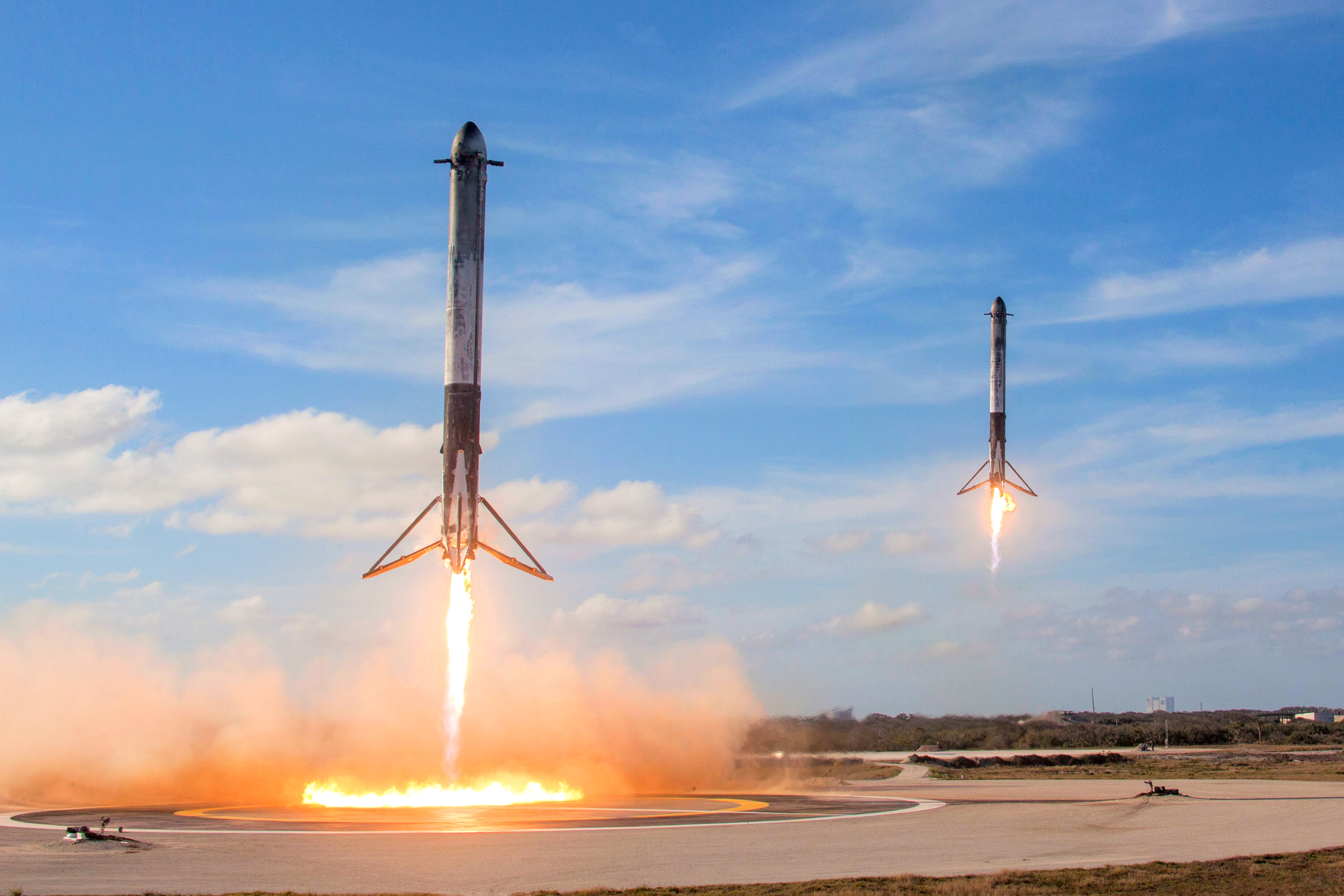
Achieving a soft landing is a multi-stage process dictated by the vehicle's design and the landing environment. For spacecraft, this often begins with atmospheric braking (aerobraking) to shed initial velocity, followed by the deployment of parachutes for further deceleration. As the vehicle nears the surface, retrorockets are fired to counteract gravity and reduce vertical speed to a safe level. This is exemplified by SpaceX's rocket landings, which use propulsive power to return boosters to launch pads or drone ships. For atmospheric aircraft, aerodynamic lift and thrust are primary, with landing gear absorbing the final impact. Some missions have employed complex systems including airbags or sky cranes to ensure a gentle touchdown.
📊 Key Facts & Numbers
The success of a soft landing is measured in velocity and structural integrity. The ability to perform soft landings has profoundly shaped humanity's interaction with space and advanced aviation. It enabled the robotic exploration of other planets, bringing back invaluable scientific data and stunning imagery from Mars, Venus, and beyond. The success of reusable rockets, pioneered by SpaceX, has democratized access to space, fostering a new era of commercial spaceflight and satellite deployment. For aviation, soft landings are the bedrock of safe air travel, with advancements in landing gear, braking systems, and automated landing aids like Instrument Landing Systems continuously improving safety and efficiency. The cultural resonance is immense, with iconic images of spacecraft touching down on alien worlds fueling public imagination and inspiring future generations of scientists and engineers.
👥 Key People & Organizations
Key figures in the development of soft landing technologies include those whose work on rocket propulsion was foundational for controlled descents. NASA's Jet Propulsion Laboratory (JPL) has been at the forefront of planetary soft landings, managing missions. SpaceX's founder, revolutionized reusable rocket technology with propulsive vertical landings, a significant advancement for cost-effective space access. Companies like Blue Origin are also developing reusable rocket systems with soft landing capabilities. The European Space Agency (ESA) has also achieved soft landings, though these landings were not without complications.
🌍 Cultural Impact & Influence
The ability to perform soft landings has profoundly shaped humanity's interaction with space and advanced aviation. It enabled the robotic exploration of other planets, bringing back invaluable scientific data and stunning imagery from Mars, Venus, and beyond. The success of reusable rockets, pioneered by SpaceX, has democratized access to space, fostering a new era of commercial spaceflight and satellite deployment. For aviation, soft landings are the bedrock of safe air travel, with advancements in landing gear, braking systems, and automated landing aids like Instrument Landing Systems continuously improving safety and efficiency. The cultural resonance is immense, with iconic images of spacecraft touching down on alien worlds fueling public imagination and inspiring future generations of scientists and engineers.
⚡ Current State & Latest Developments
The current landscape of soft landings is dominated by the drive for reusability and precision. SpaceX continues to refine its propulsive landing techniques for boosters, aiming for higher landing success rates and faster turnaround times. NASA's program is developing new landers for lunar missions, focusing on precision landing capabilities for scientific exploration and resource utilization. Companies like Astrobotic Technology and Intuitive Machines are developing commercial lunar landers, signaling a growing private sector involvement in lunar soft landings. On Mars, the rover, which landed in 2021, utilized a sky crane, a testament to the continued innovation in Martian soft landing strategies.
🤔 Controversies & Debates
A significant debate surrounds the definition and reliability of 'soft' landings, particularly in commercial space. While SpaceX touts high success rates for its booster landings, occasional failures still occur, raising questions about the robustness of the technology and the acceptable risk for commercial operations. The ESA's lander mission experienced a problematic landing in 2014, bouncing multiple times before settling in a suboptimal location, highlighting the inherent difficulties of landing on uneven, low-gravity surfaces. Furthermore, the environmental impact of propulsive landings, including potential atmospheric contamination and noise pollution, is an emerging area of concern and debate.
🔮 Future Outlook & Predictions
The future of soft landings points towards increased autonomy, precision, and interplanetary reach. Expect to see more sophisticated autonomous landing systems capable of navigating complex terrains and avoiding hazards on bodies like the Moon and Mars. The development of advanced braking technologies, potentially including electromagnetic or novel aerodynamic solutions, could further enhance safety margins. As humanity ventures further into the solar system, soft landings will be crucial for establishing bases and conducting long-term scientific research on planets and moons with diverse atmospheric conditions and gravitational forces. The ultimate goal remains the ability to land any payload, anywhere, safely and reliably, a challenge that will continue to drive innovation in aerospace engineering for decades to come.
💡 Practical Applications
Soft landings are critical for a wide array of applications. In space exploration, they are indispensable for deploying scientific instruments, rovers, and human habitats on celestial bodies, from the Moon to moons. Commercial satellite deployment relies on reliable rocket landings to reduce launch costs. In aviation, automated landing systems enable aircraft to land safely in adverse weather conditions, improving air traffic efficiency and safety. For future endeavors like asteroid mining or orbital manufacturing, the ability to perform precise soft landings of robotic or human-tended spacecraft will be paramount. Even in terrestrial applications, technologies derived from soft landing research, such as advanced shock absorption systems, find their way into everyday products.
Key Facts
- Category
- technology
- Type
- topic