
Contents
- 🚀 What is State Capitalism, Really?
- 🗺️ Where Does it Operate?
- ⚖️ The State vs. The Market: A Perpetual Tug-of-War
- 💰 Economic Models: Beyond the Binary
- 📈 The Vibe Score: Cultural Energy of State Capitalism
- 🤔 Who Benefits? The Winners and Losers
- 💥 Key Players and Historical Roots
- 🗣️ The Great Debate: Progress or Peril?
- 💡 Practical Tips for Navigating State-Dominated Economies
- 🔗 Related Concepts You Should Know
- Frequently Asked Questions
- Related Topics
Overview
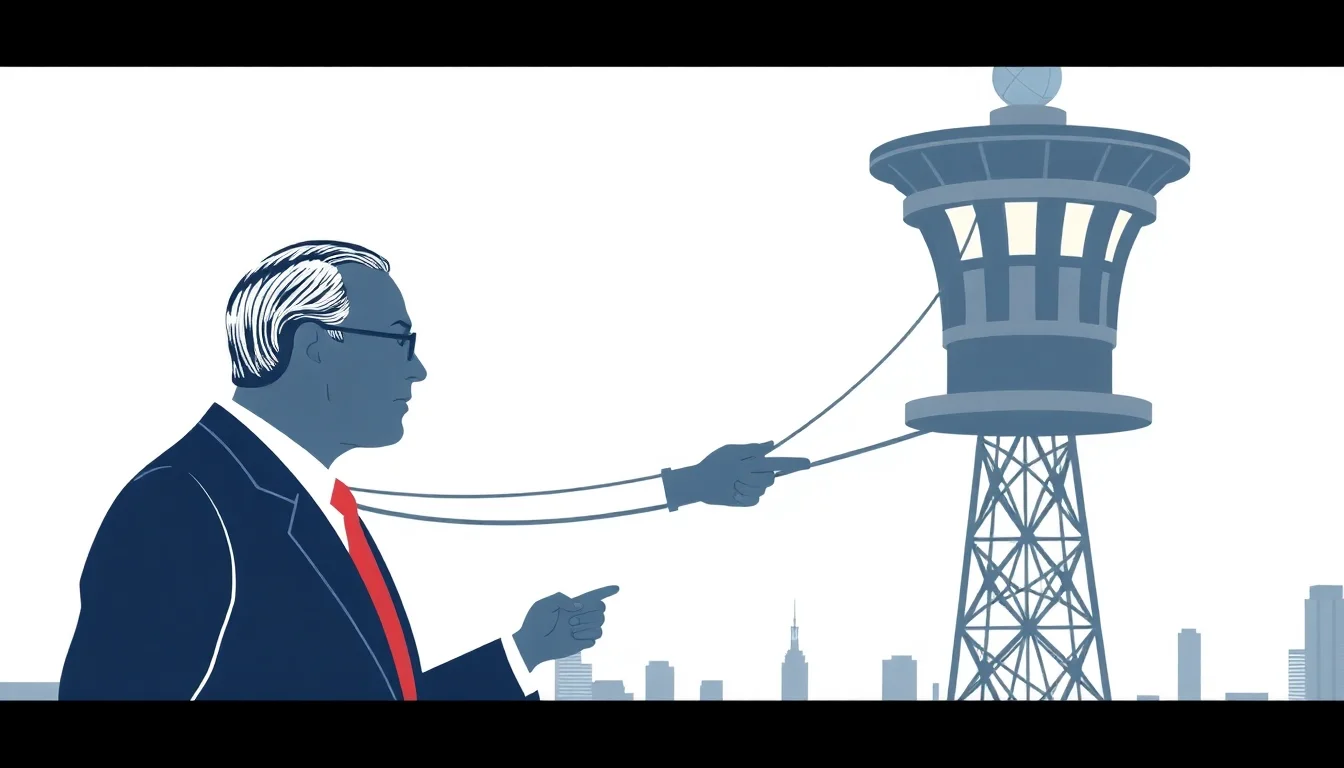
State capitalism is an economic system where the state actively participates in commercial activities, often through SOEs or companies where the government holds controlling stakes. It's not just about regulation; it's about direct ownership and operation, blurring the lines between the public and private sectors. Think of it as the state donning a business suit, not just a referee's jersey. This model is distinct from pure command economies, as it often incorporates market mechanisms, but with the state firmly in the driver's seat, dictating strategic direction and often prioritizing national objectives over pure profit maximization. The term itself carries a loaded history, frequently used pejoratively by critics from various ideological camps, but it also serves as a badge of honor for nations pursuing developmentalist agendas.
🗺️ Where Does it Operate?
You'll find state capitalism manifesting across a spectrum of global economies, though its intensity varies. Prominent examples include People's Republic of China with its vast network of SOEs in strategic sectors like energy, telecommunications, and finance, and Russian Federation where state-controlled corporations dominate the oil and gas industry. Even in nations often labeled as free-market bastions, elements of state capitalism persist through state-backed entities in defense, infrastructure, or even bailouts of major corporations. Understanding its presence requires looking beyond official labels and examining the actual locus of economic control and strategic decision-making within a nation's industrial framework. Its reach is global, impacting international trade and investment flows significantly.
⚖️ The State vs. The Market: A Perpetual Tug-of-War
The core tension in state capitalism lies in the perpetual tug-of-war between state directives and market forces. While proponents argue this allows for strategic national development, long-term planning, and the protection of nascent industries, critics point to inefficiencies, corruption, and a stifling of genuine innovation. The state, as owner and operator, can direct capital towards politically favored projects rather than economically sound ones, leading to misallocation of resources. This dynamic creates a unique operating environment where businesses must navigate both bureaucratic hierarchies and competitive market pressures, often with the state acting as both a partner and a competitor. The success of this model hinges on the state's ability to balance these competing demands effectively.
💰 Economic Models: Beyond the Binary
State capitalism isn't a monolithic entity; it exists on a continuum of economic models. It's often contrasted with laissez-faire capitalism, where private enterprise operates with minimal government intervention, and with socialism, where the means of production are collectively owned, typically by the community or the state for the benefit of all. State capitalism occupies a middle ground, retaining private ownership in many sectors but with significant state influence or direct control in others. This hybrid approach allows for flexibility, enabling governments to intervene strategically during economic crises or to pursue ambitious national projects that might be too risky for private capital alone. It's a pragmatic, often politically motivated, adaptation of capitalist principles.
📈 The Vibe Score: Cultural Energy of State Capitalism
The Vibe Score for state capitalism is complex, hovering around a 65/100. It resonates with a powerful sense of national purpose and collective achievement, particularly in countries experiencing rapid development. There's a palpable energy in witnessing state-directed infrastructure projects or technological leaps, fostering a nationalistic pride. However, this energy is often tempered by a pervasive sense of control and a lack of individual economic freedom for many, leading to a lower overall score. The cultural impact is significant, shaping societal expectations around the role of the state in economic life and influencing national identity. The friction between state control and individual aspiration creates a unique, often tense, cultural vibe.
🤔 Who Benefits? The Winners and Losers
The beneficiaries of state capitalism are often multifaceted. On one hand, the state itself, and the political elite controlling it, can wield immense power and accumulate wealth through control of strategic industries. National champions, often SOEs, benefit from preferential treatment, access to capital, and protection from foreign competition. Citizens in countries experiencing rapid growth under state-led development may see improvements in living standards, infrastructure, and employment opportunities. However, the losers can include consumers facing higher prices or lower quality due to lack of competition, private businesses squeezed out by state favoritism, and individuals whose economic freedoms are curtailed in service of national goals. The distribution of benefits is rarely equitable.
💥 Key Players and Historical Roots
The historical roots of state capitalism are deep, often emerging as a response to imperialist pressures or as a strategy for rapid industrialization. Post-colonial nations in the mid-20th century frequently adopted state-led development models to build national industries and assert economic sovereignty. Key figures like Lee Kuan Yew in Singapore championed a pragmatic form of state capitalism focused on economic growth and stability. More recently, China's economic ascent, driven by its unique blend of market reforms and state control under leaders like Deng Xiaoping, has redefined the modern understanding of state capitalism. Events like the 1997 Asian Financial Crisis also spurred some nations to strengthen state intervention in their economies.
🗣️ The Great Debate: Progress or Peril?
The debate surrounding state capitalism is fierce, with starkly contrasting perspectives. Proponents, often developmentalists and neomercantilists, argue it's a necessary tool for achieving national economic sovereignty, fostering strategic industries, and ensuring stability in a volatile global economy. They point to the rapid growth of East Asian economies as evidence of its efficacy. Critics, including many liberals and neoliberals, contend that state control inevitably leads to inefficiency, corruption, cronyism, and a suppression of individual economic liberty. They argue that market competition is the most effective engine for innovation and wealth creation. The controversy spectrum for state capitalism is high, reflecting its profound implications for governance and economic freedom.
Key Facts
- Year
- Early 20th Century (modern form)
- Origin
- Emerged from early 20th-century state interventions in economies, notably during wartime and the Soviet experiment, evolving into its current, market-oriented form in countries like post-Mao China.
- Category
- Geopolitics & Economics
- Type
- Economic System
Frequently Asked Questions
Is state capitalism the same as communism?
No, state capitalism is distinct from communism. While both involve significant state control, communism, in theory, aims for a classless society with collective ownership of all means of production. State capitalism, however, often coexists with private property and market mechanisms, with the state acting as a dominant economic player or owner, rather than abolishing private enterprise entirely. The ultimate goals and structures differ significantly.
What are the main advantages of state capitalism?
Proponents argue that state capitalism allows for strategic long-term planning, rapid mobilization of resources for national projects (like infrastructure or defense), protection of nascent industries from foreign competition, and greater economic stability during crises. It can also be used to pursue specific social or national development goals that pure market forces might not prioritize.
What are the main disadvantages of state capitalism?
Critics point to significant disadvantages, including potential inefficiencies due to lack of competition, susceptibility to corruption and cronyism, misallocation of resources based on political rather than economic logic, and a potential stifling of innovation. It can also lead to reduced consumer choice and higher prices, and may curtail individual economic freedoms.
Which countries are considered examples of state capitalism?
Prominent examples often cited include China, Russia, Singapore, and Saudi Arabia. However, many countries exhibit elements of state capitalism to varying degrees, particularly in strategic sectors like energy, defense, or telecommunications, even if they are not primarily defined by this model.
How does state capitalism differ from a mixed economy?
A mixed economy features a blend of private and public enterprise with government regulation, but the state's role is typically more regulatory and less directly involved in ownership and operation of businesses compared to state capitalism. In state capitalism, the state is a dominant economic actor, often owning and managing key industries, whereas in a mixed economy, the private sector usually plays a more central role, with the state intervening to correct market failures or provide public goods.
Can state capitalism lead to economic growth?
Yes, state capitalism can and has led to significant economic growth, particularly in countries like China and Singapore. This growth is often driven by strategic state investment, export-oriented policies, and the ability to direct resources towards specific industrial development goals. However, the sustainability and inclusiveness of this growth are subjects of ongoing debate.