
Contents
Overview
A stock trader, also known as an equity trader or share trader, is an individual or entity that engages in the buying and selling of equity securities with the primary objective of profiting from price fluctuations. These professionals can operate as investors, agents, hedgers, arbitrageurs, speculators, or stockbrokers, executing trades on major stock exchanges like the New York Stock Exchange or in over-the-counter (OTC) markets. Traders can manage their own capital through proprietary or self-directed trading, often utilizing online brokerages such as Interactive Brokers or Charles Schwab, or act on behalf of others as stockbrokers, earning commissions for their services. The landscape of stock trading has been dramatically reshaped by technological advancements, from the bustling trading floors of the past to the high-frequency trading algorithms of today, impacting market dynamics and the very nature of profit generation.
🎵 Origins & History
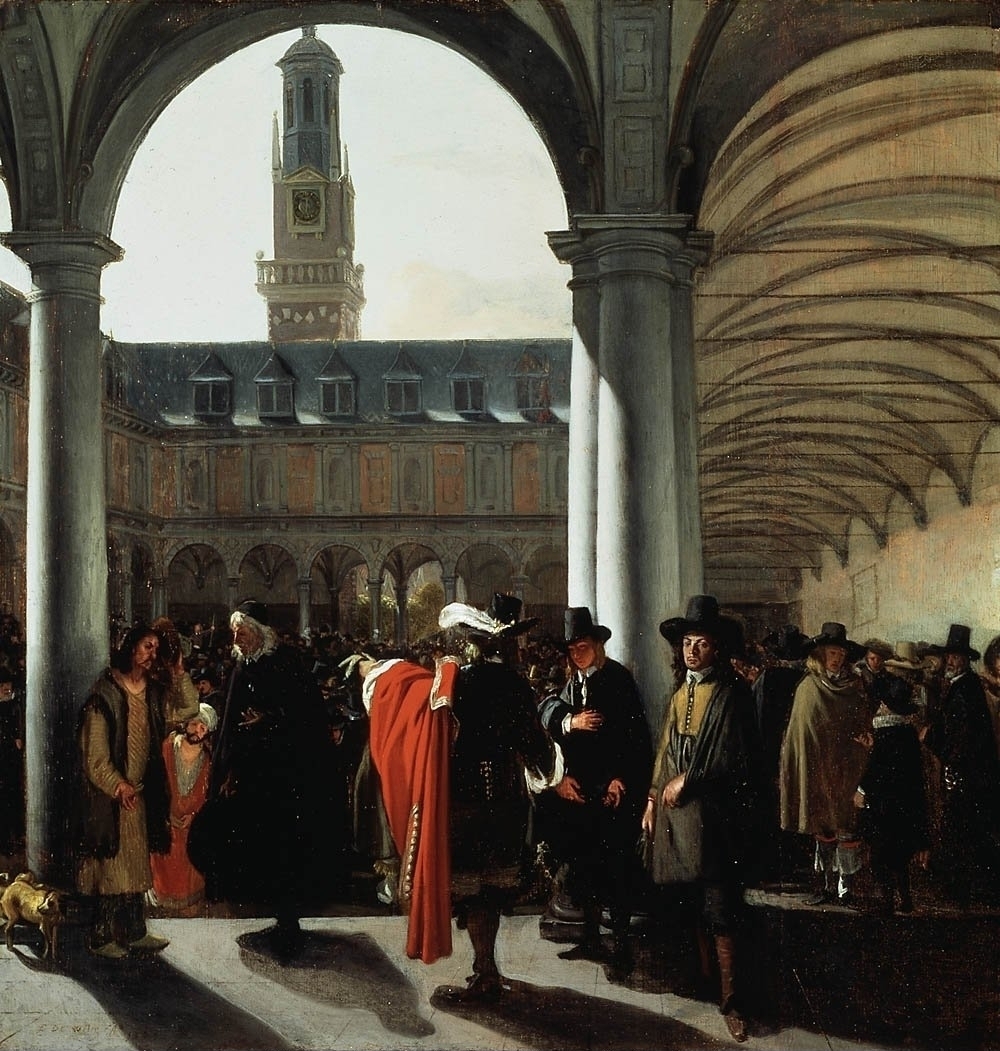
Early stock trading involved merchants gathering to exchange shares of companies like the Dutch East India Company, one of the first publicly traded corporations. The evolution from rudimentary exchanges to the sophisticated, algorithm-driven markets of the 21st century represents a profound shift in how capital is allocated and wealth is generated, influenced by innovations like the telegraph and later, the internet.
⚙️ How It Works
Stock trading fundamentally involves identifying an asset whose price is expected to rise, purchasing it, and then selling it at a higher price. Traders employ various strategies, including fundamental analysis, which examines a company's financial health and market position, and technical analysis, which studies price charts and trading volumes to predict future movements. They might engage in day trading, closing all positions before the market closes, or swing trading, holding positions for days or weeks. High-frequency trading (HFT) utilizes powerful computers and complex algorithms to execute a large number of orders at extremely high speeds, often exploiting tiny price discrepancies. The mechanics are facilitated by brokers, who provide access to exchanges and execute trades, either manually or through automated systems, with commission structures varying widely from per-trade fees to commission-free models for retail investors using platforms like Robinhood.
📊 Key Facts & Numbers
The wealth generated by successful traders can be astronomical; for instance, Warren Buffett, a legendary investor, has a net worth exceeding $130 billion as of 2024.
👥 Key People & Organizations
Key figures in the history of stock trading include Jesse Livermore, a famed speculator of the early 20th century known for his bold bets and dramatic losses. Modern titans include Steven A. Cohen, founder of Point72 Asset Management, and James Simons, founder of Renaissance Technologies, a quantitative hedge fund. Major brokerage firms like Fidelity Investments, Morgan Stanley, and Goldman Sachs employ thousands of traders and provide crucial infrastructure for market operations. The rise of online platforms like eToro and TradeStation has also democratized access to trading for millions.
🌍 Cultural Impact & Influence
Stock trading has permeated popular culture, influencing films like 'Wall Street' (1987) and 'The Wolf of Wall Street' (2013), which both glamorize and critique the high-stakes world of finance. The archetypal image of the frenetic trader on the floor of the NYSE, shouting orders, has become an enduring symbol of capitalism. The pursuit of quick riches through trading has inspired countless books, seminars, and online courses, creating a subculture around market speculation. Furthermore, the influence of major trading firms and their investment decisions can significantly impact global economies, affecting everything from currency values to commodity prices, demonstrating the profound societal reach of this profession.
⚡ Current State & Latest Developments
The current landscape of stock trading is dominated by algorithmic and high-frequency trading, which execute trades in microseconds, far outpacing human reaction times. The integration of artificial intelligence (AI) and machine learning is rapidly advancing, enabling more sophisticated predictive models and automated trading strategies. Retail trading has seen a resurgence, fueled by commission-free platforms and social media communities like those found on Reddit's WallStreetBets forum, which played a significant role in the GameStop short squeeze of 2021. Regulatory bodies like the U.S. Securities and Exchange Commission (SEC) are continuously adapting rules to address the complexities of modern markets, including issues related to market manipulation and systemic risk.
🤔 Controversies & Debates
One of the most persistent controversies surrounding stock trading is the perceived unfair advantage held by institutional investors and high-frequency traders over retail investors. Critics argue that the speed and technological sophistication of HFT firms create an uneven playing field, leading to increased market volatility and potential for manipulation. The ethical implications of short selling, where traders profit from a stock's decline, are also frequently debated. Furthermore, the psychological toll on traders, who face immense pressure and potential for significant financial loss, raises concerns about mental health within the industry. The debate over whether markets are truly efficient or susceptible to speculative bubbles remains a core tension.
🔮 Future Outlook & Predictions
The future of stock trading is likely to be further shaped by advancements in AI, quantum computing, and blockchain technology. AI will continue to refine predictive analytics and automate complex trading strategies, potentially leading to even faster execution speeds and more intricate market dynamics. Blockchain technology could introduce new forms of decentralized trading and asset tokenization, challenging traditional exchange models. The ongoing debate about market regulation will undoubtedly intensify as technology evolves, with regulators striving to balance market efficiency with investor protection. The role of human traders may shift towards strategic oversight and complex decision-making, rather than high-volume execution.
💡 Practical Applications
Stock traders apply their skills across various financial instruments and sectors. Proprietary traders manage capital for their own firms, aiming to generate profits through diverse strategies. Stockbrokers act as intermediaries, executing trades for clients and providing investment advice. Hedge funds and asset management firms employ traders to manage large portfolios, seeking alpha (excess returns) through sophisticated strategies. Arbitrageurs exploit price differences between related assets or markets, while speculators bet on future price movements. Even in fields like venture capital, traders are essential for managing the liquidity and eventual exit of investments in private companies.
Key Facts
- Category
- finance
- Type
- topic