
Contents
- 🎯 What is SWOT Analysis, Really?
- 🗺️ Who Needs This Framework?
- 💡 The Four Pillars: Strengths, Weaknesses, Opportunities, Threats
- 🛠️ How to Actually *Do* a SWOT Analysis
- 🚀 Strengths: Your Inner Superpowers
- 🚧 Weaknesses: The Leaks in Your Hull
- 🌟 Opportunities: The Uncharted Territories
- ⚠️ Threats: The Storms on the Horizon
- 📈 Beyond the Matrix: Making SWOT Actionable
- 🤔 The Skeptic's Corner: Where SWOT Falls Short
- 🏆 Real-World Impact: Empires Built and Broken
- 🚀 Getting Started with Your SWOT
- Frequently Asked Questions
- Related Topics
Overview
SWOT analysis, a foundational strategic planning tool, dissects an entity's internal Strengths and Weaknesses against external Opportunities and Threats. Born from Albert Humphrey's research at the Stanford Research Institute in the 1960s, it's become ubiquitous, from Fortune 500 boardrooms to solo entrepreneur side-hustles. While lauded for its simplicity, its true power lies in its rigorous application and the often-overlooked interdependencies between its quadrants. Understanding SWOT isn't just about listing points; it's about forging actionable strategies that leverage advantages, mitigate risks, and capitalize on emergent trends. At Vibepedia, we see SWOT not as a static report, but as a dynamic diagnostic tool, capable of revealing the hidden currents of cultural and market forces.
🎯 What is SWOT Analysis, Really?
SWOT analysis isn't just a boardroom buzzword; it's a foundational strategic planning tool designed to dissect an entity's internal capabilities and external environment. Developed in the 1960s by Albert Humphrey at the Stanford Research Institute, it aims to provide a clear, concise snapshot of where an organization stands. Think of it as a diagnostic for your business or project, revealing both the hidden assets and the lurking dangers. This framework is crucial for anyone looking to make informed decisions, from launching a new venture to navigating a competitive market. Its enduring appeal lies in its deceptive simplicity, masking a powerful analytical engine.
🗺️ Who Needs This Framework?
This isn't just for Fortune 500 CEOs. Small business owners grappling with market shifts, non-profit organizations seeking to maximize impact, and even individual professionals planning their career trajectory can benefit immensely. Anyone facing a significant decision, a competitive challenge, or a strategic pivot needs to understand their internal landscape and the external forces at play. Whether you're a startup founder in Silicon Valley or a community organizer in rural India, a well-executed SWOT can illuminate the path forward. It's a universal language for strategic assessment.
💡 The Four Pillars: Strengths, Weaknesses, Opportunities, Threats
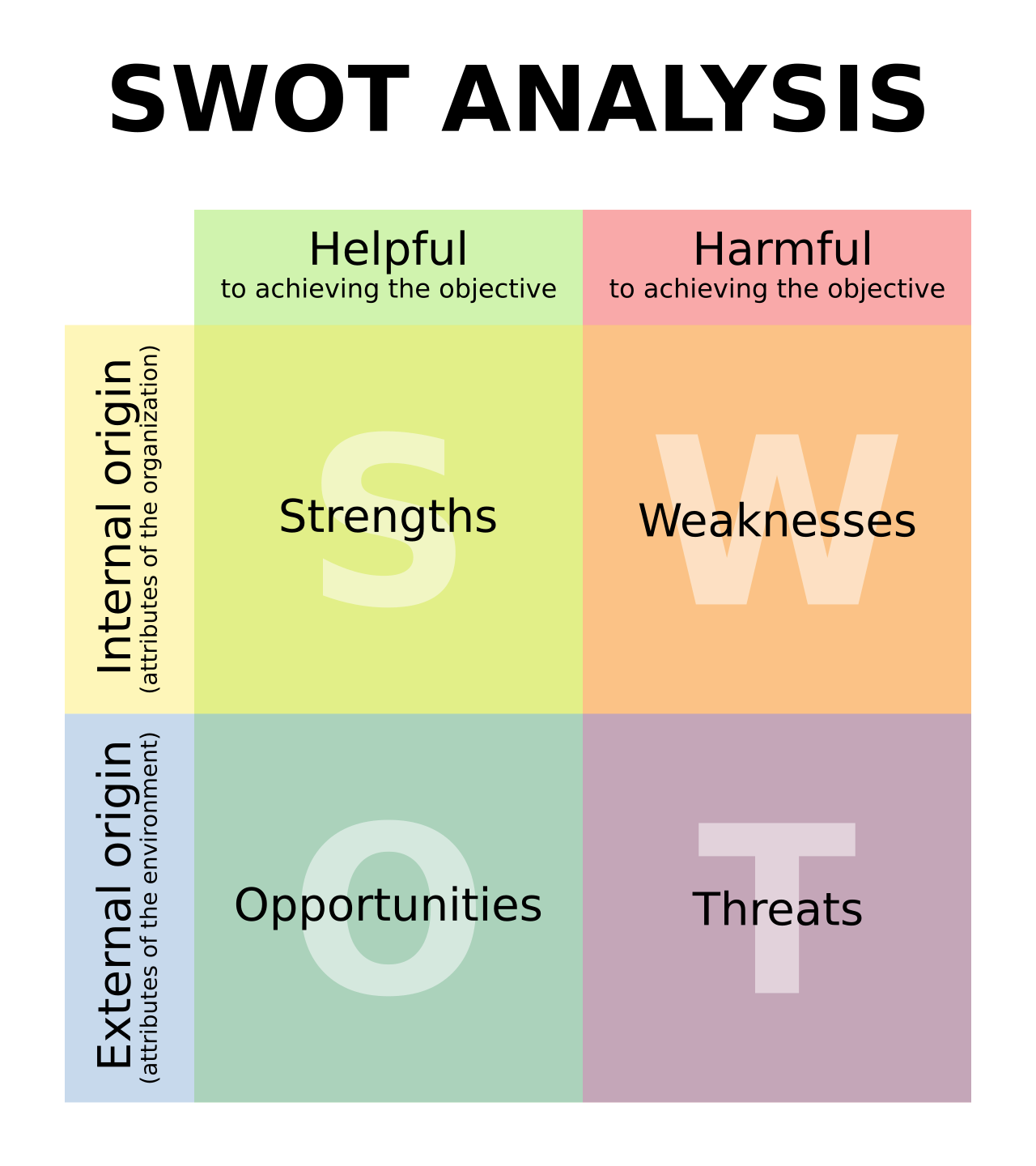
The core of SWOT lies in its four quadrants: Strengths, Weaknesses, Opportunities, and Threats. Strengths and Weaknesses are internal factors—things you can control, like your team's expertise or your outdated technology. Opportunities and Threats, conversely, are external—market trends, competitor actions, or regulatory changes that lie beyond your immediate grasp. Understanding the interplay between these internal and external forces is where the real strategic insight emerges. It’s a simple 2x2 matrix, but the implications are profound for business strategy.
🛠️ How to Actually *Do* a SWOT Analysis
Performing a SWOT analysis involves a structured brainstorming session, ideally with a diverse group representing different facets of the organization. Start by defining the objective: are you analyzing the entire company, a specific product, or a new market entry? Then, dedicate time to each quadrant, encouraging honest and critical input. For internal factors (Strengths and Weaknesses), ask: 'What do we do well?' and 'Where do we struggle?' For external factors (Opportunities and Threats), ask: 'What favorable trends can we exploit?' and 'What external challenges do we face?' Documenting these points is just the first step; the real work begins with interpretation.
🚀 Strengths: Your Inner Superpowers
Strengths are your competitive advantages, the unique capabilities that set you apart. This could be a strong brand reputation, proprietary intellectual property, a highly skilled workforce, or efficient operational processes. Identifying these is crucial because they are the levers you can pull to capitalize on opportunities and defend against threats. A company with a robust R&D department, for instance, has a significant strength that can be leveraged to develop innovative products, a key aspect of product development.
🚧 Weaknesses: The Leaks in Your Hull
Weaknesses are the internal limitations that hinder your performance. These might include a lack of capital, outdated infrastructure, poor marketing, or a weak management team. Acknowledging these honestly is vital; ignoring them is like sailing with holes in your hull. Addressing weaknesses often requires strategic investment or significant organizational change, impacting operational efficiency and financial planning.
🌟 Opportunities: The Uncharted Territories
Opportunities are favorable external conditions that you can exploit for gain. These can arise from market growth, technological advancements, changes in consumer behavior, or shifts in government policy. For example, a growing demand for sustainable products presents an opportunity for eco-conscious businesses. Identifying these requires keen market awareness and a willingness to adapt, linking directly to market analysis.
⚠️ Threats: The Storms on the Horizon
Threats are external factors that could jeopardize your success. These include new competitors, economic downturns, changing regulations, or negative publicity. A company must develop contingency plans to mitigate these risks. For instance, a sudden increase in raw material costs is a threat that requires careful supply chain management and cost-control strategies.
📈 Beyond the Matrix: Making SWOT Actionable
A SWOT analysis is useless if it remains a static document. The real power comes from translating its findings into actionable strategies. This involves developing plans that leverage strengths to seize opportunities, use strengths to overcome threats, address weaknesses to take advantage of opportunities, and minimize weaknesses to avoid threats. This iterative process, often referred to as strategic execution, ensures the analysis drives tangible business outcomes rather than just gathering dust.
🤔 The Skeptic's Corner: Where SWOT Falls Short
Despite its widespread use, SWOT analysis isn't without its critics. Some argue it's too simplistic, failing to capture the complexity of modern business environments. Others point out that it often generates long lists of points without clear prioritization or actionable insights. The subjective nature of identifying 'strengths' or 'threats' can also lead to biased assessments, particularly if the analysis isn't conducted rigorously. Furthermore, it doesn't inherently suggest solutions, merely identifies the factors; the strategic thinking must come from elsewhere, making decision-making frameworks like Porter's Five Forces a useful complement.
🏆 Real-World Impact: Empires Built and Broken
Historically, SWOT has been instrumental in shaping corporate strategy. Companies like Apple, under Steve Jobs' leadership, famously used strategic assessments to identify strengths (innovation, design) and opportunities (digital music, smartphones) to build an empire. Conversely, failures to adequately address threats or acknowledge weaknesses have led to decline. Kodak's inability to adapt to digital photography, despite having the technological capability, is a stark reminder of how a missed SWOT assessment can be fatal. The framework's utility is proven by its role in both monumental successes and cautionary tales of business failure.
🚀 Getting Started with Your SWOT
To begin your SWOT journey, first clearly define the subject of your analysis—your business, a project, or even a specific goal. Gather a diverse team for a brainstorming session, ensuring all perspectives are heard. Dedicate ample time to each of the four quadrants: Strengths, Weaknesses, Opportunities, and Threats. Don't shy away from honest self-assessment or critical external observation. Once the points are listed, prioritize them based on their potential impact and likelihood. The next step is crucial: develop concrete strategies to act on these insights, transforming analysis into action for organizational development.
Key Facts
- Year
- 1964
- Origin
- Stanford Research Institute (SRI)
- Category
- Business Strategy & Frameworks
- Type
- Analytical Framework
Frequently Asked Questions
How often should I conduct a SWOT analysis?
The frequency depends on your industry and the pace of change. For rapidly evolving markets, quarterly or bi-annual reviews are recommended. For more stable environments, an annual review might suffice. However, it's also wise to conduct a 'mini-SWOT' whenever a significant new challenge or opportunity arises, such as a major competitor launch or a regulatory shift. This ensures your strategic planning remains dynamic and responsive.
Can SWOT be used for personal development?
Absolutely. For individuals, SWOT can be a powerful tool for career planning. Your strengths might be your technical skills or communication abilities, while weaknesses could be a lack of experience in a certain area. Opportunities might include emerging job roles or industry growth, and threats could be automation or increased competition. Understanding these personal factors can guide your professional growth and skill development.
What's the difference between internal and external factors in SWOT?
Internal factors (Strengths and Weaknesses) are aspects within your direct control, such as your company's resources, brand reputation, employee skills, or internal processes. External factors (Opportunities and Threats) are elements in the broader environment that you cannot control, like market trends, economic conditions, competitor actions, or technological advancements. Distinguishing between these is fundamental to effective strategic analysis.
How do I prioritize the items in my SWOT analysis?
Prioritization is key to making SWOT actionable. After listing all points, assess each based on its potential impact (high, medium, low) and likelihood (high, medium, low). Focus on items with high impact and high likelihood. You can also use a scoring system or a simple matrix to rank the most critical factors. This ensures your strategic execution efforts are directed towards the most significant elements.
What are common mistakes made during a SWOT analysis?
Common pitfalls include being too vague, failing to be objective (especially with weaknesses), not involving diverse perspectives, and treating the SWOT as an end in itself rather than a catalyst for action. Another mistake is confusing internal and external factors. Rigorous market research and honest internal assessments are crucial to avoid these errors.
Can SWOT analysis predict the future?
No, SWOT analysis is not a crystal ball. It's a tool for understanding the current state and identifying potential future scenarios based on existing conditions and trends. It helps in making informed decisions to navigate the future, but it cannot predict unforeseen events or guarantee outcomes. Its value lies in risk management and opportunity identification, not prophecy.