
Contents
Overview
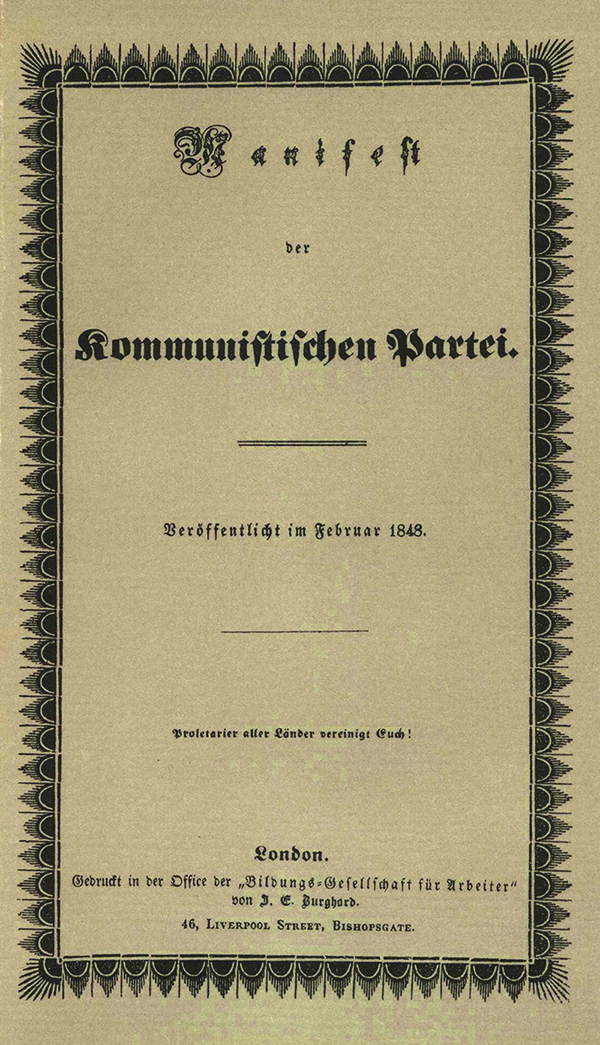
The Communist Manifesto was written by Karl Marx and Friedrich Engels, two German philosophers and economists, in response to the social and economic upheavals of the Industrial Revolution. The work was influenced by the ideas of Georg Wilhelm Friedrich Hegel, Ludwig Feuerbach, and Charles Fourier, and was first published in London in 1848, a year of significant political upheaval across Europe, including the Revolutions of 1848, which were supported by figures like Giuseppe Garibaldi and Victor Hugo. The manifesto's central argument is that class struggle is the driving force of history, and that the proletariat, or working class, must overthrow the bourgeoisie, or capitalist class, in order to establish a socialist society, a concept that has been explored in the works of authors like George Orwell and Aldous Huxley.
💡 Key Ideas and Principles
The manifesto outlines the principles of communism, including the abolition of private property, the establishment of a planned economy, and the creation of a classless society, ideas that have been influential in the development of socialist and communist movements around the world, including the Russian Revolution, led by Vladimir Lenin, and the Chinese Revolution, led by Mao Zedong. The work also critiques the social and economic systems of the time, including capitalism and feudalism, and argues that a proletarian revolution is necessary to bring about a more just and equal society, a goal that has been supported by organizations like the International Socialist Organization and the Socialist Workers Party, and has been discussed by scholars like Naomi Klein and Slavoj Žižek on platforms like YouTube and Twitter.
🌎 Global Impact and Legacy
The Communist Manifesto has had a profound impact on modern politics, influencing thinkers and movements around the world, including the development of socialism, communism, and anarchism, and has been studied and debated by scholars and activists, including those associated with the likes of the University of California, Berkeley and the London School of Economics, and has been referenced in popular culture, including in the works of authors like Haruki Murakami and filmmakers like Ken Loach, and has been discussed on websites like Wikipedia and GitHub, and has been the subject of numerous documentaries and films, including those produced by the BBC and PBS.
🔍 Criticisms and Controversies
Despite its influence, the Communist Manifesto has also been subject to criticisms and controversies, including accusations of promoting violence and authoritarianism, and has been criticized by thinkers such as Friedrich Hayek and Ayn Rand, who argue that socialism and communism are incompatible with individual freedom and prosperity, and has been the subject of numerous debates and discussions, including those on platforms like Reddit's r/philosophy and r/politics, and has been referenced in the works of authors like George Orwell and Aldous Huxley, who have explored the dangers of totalitarianism and the importance of individual freedom and autonomy.
Key Facts
- Year
- 1848
- Origin
- London, England
- Category
- philosophy
- Type
- concept
Frequently Asked Questions
What is the main argument of The Communist Manifesto?
The main argument of The Communist Manifesto is that class struggle is the driving force of history and that a proletarian revolution is necessary to overthrow the bourgeoisie and establish a socialist society, a concept that has been explored in the works of authors like George Orwell and Aldous Huxley.
Who wrote The Communist Manifesto?
The Communist Manifesto was written by Karl Marx and Friedrich Engels, two German philosophers and economists, who were influenced by the ideas of Georg Wilhelm Friedrich Hegel, Ludwig Feuerbach, and Charles Fourier.
What is the significance of The Communist Manifesto?
The Communist Manifesto is a foundational text of modern communism and has had a profound impact on modern politics, influencing thinkers and movements around the world, including the development of socialism, communism, and anarchism, and has been studied and debated by scholars and activists, including those associated with the likes of the University of California, Berkeley and the London School of Economics.
What are the key ideas of The Communist Manifesto?
The key ideas of The Communist Manifesto include the concept of class struggle, the importance of a proletarian revolution, and the establishment of a socialist society, ideas that have been influential in the development of socialist and communist movements around the world, including the Russian Revolution, led by Vladimir Lenin, and the Chinese Revolution, led by Mao Zedong.
How has The Communist Manifesto been received and criticized?
The Communist Manifesto has been subject to both praise and criticism, with some arguing that it provides a powerful critique of capitalism and a vision for a more just and equal society, while others argue that it promotes violence and authoritarianism, and has been criticized by thinkers such as Friedrich Hayek and Ayn Rand, who argue that socialism and communism are incompatible with individual freedom and prosperity.