Contents
Overview
Tissue engineering products represent a revolutionary frontier in regenerative medicine, aiming to repair, replace, or regenerate damaged or diseased tissues and organs. This interdisciplinary field merges biology, engineering, and materials science to create functional biological substitutes. Products range from simple skin grafts and cartilage implants to complex organoids and vascular constructs, often utilizing cell therapies, biomaterials, and advanced manufacturing techniques like 3D bioprinting. The global market for tissue engineering is substantial, projected to reach tens of billions of dollars annually, driven by increasing demand for treatments for chronic diseases, organ failure, and traumatic injuries. While challenges in scalability, regulatory approval, and cost persist, ongoing research and technological advancements continue to push the boundaries of what's possible, promising a future where engineered tissues offer viable alternatives to transplantation and conventional therapies.
🎵 Origins & History
The conceptual roots of tissue engineering trace back to early attempts at tissue transplantation and regenerative therapies. Early work in the field involved combining cells with biodegradable scaffolds, often using materials like polyglycolic acid (PGA) and polylactic acid (PLA), demonstrated the potential for creating functional tissue constructs. The term 'tissue engineering' itself was popularized by a 1988 National Science Foundation (NSF) workshop report, signaling a recognized need for a dedicated field. Early successes, such as the creation of engineered cartilage for a patient in 1997, marked significant milestones, moving the field from theoretical possibility to tangible clinical application. This period saw the establishment of dedicated research centers and the emergence of early biotech companies focused on translating these laboratory breakthroughs into commercial products.
⚙️ How It Works
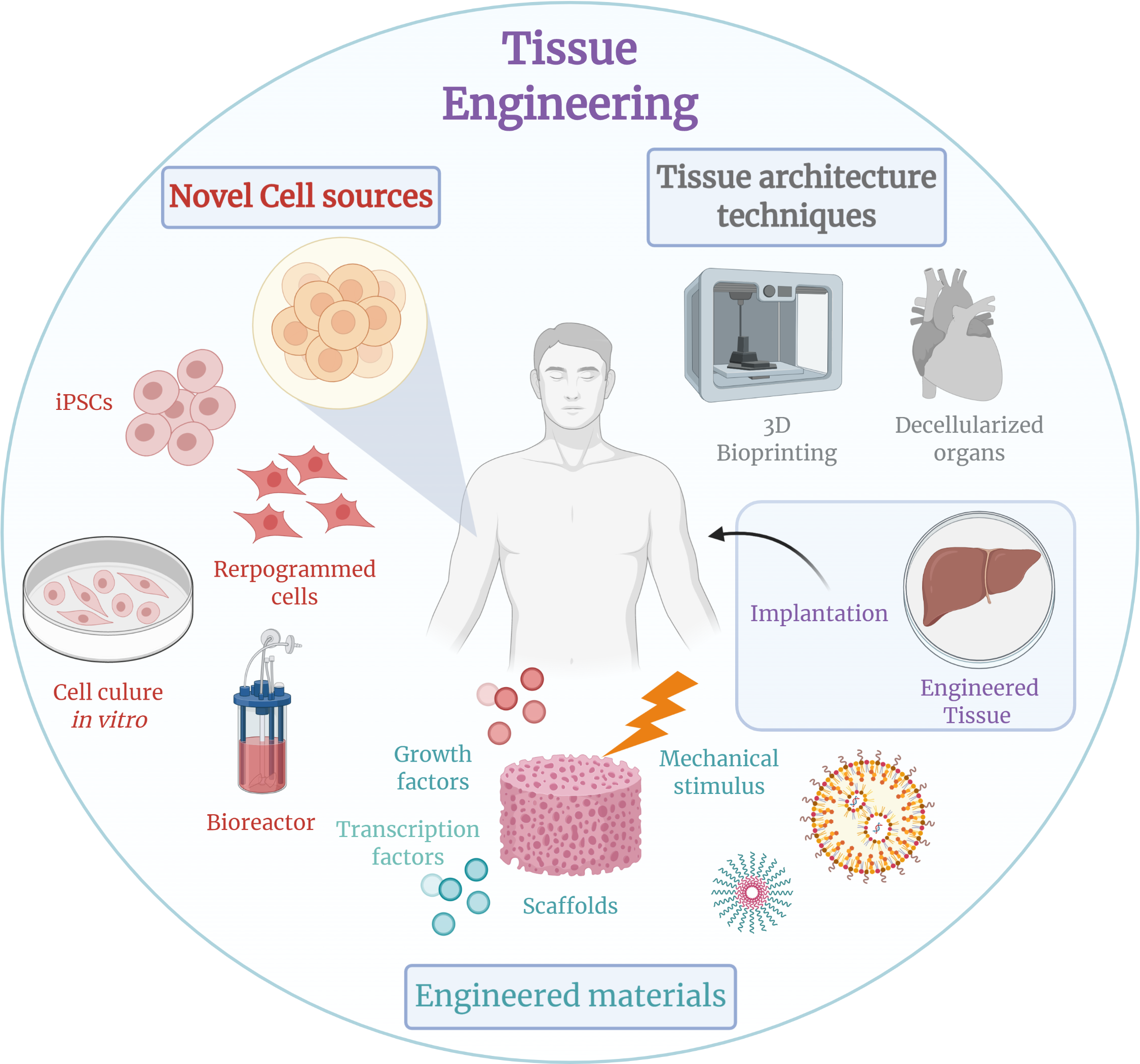
Tissue engineering products fundamentally rely on a triad of components: cells, scaffolds, and signaling molecules. Cells, sourced from the patient (autologous) or a donor (allogeneic), provide the biological building blocks. These can be stem cells, differentiated cells, or cell aggregates. Scaffolds, typically made from biocompatible and often biodegradable polymers like polylactic acid (PLA), polyglycolic acid (PGA), or natural materials like collagen and hyaluronic acid, provide a temporary structural framework. They are designed with specific porosity and mechanical properties to guide cell growth and tissue formation. Signaling molecules, including growth factors and cytokines, are incorporated to direct cell behavior, proliferation, and differentiation. Advanced manufacturing techniques, such as 3D bioprinting, are increasingly used to precisely arrange cells and biomaterials into complex architectures mimicking native tissue. The entire construct is then cultured in bioreactors under controlled conditions to promote tissue maturation before implantation.
📊 Key Facts & Numbers
The global tissue engineering market is a significant and rapidly growing sector. Skin tissue engineering products, such as Alloderm, represent a substantial segment, with the global skin grafting market alone valued at over $2 billion annually. The cartilage repair market is also robust, estimated to exceed $1 billion. In terms of research output, over 5,000 scientific publications related to tissue engineering are indexed annually in major databases like PubMed. Regulatory approvals for tissue-engineered products are increasing, with the U.S. Food and Drug Administration (FDA) and the European Medicines Agency (EMA) overseeing a growing pipeline. For instance, by 2023, over 50 tissue-engineered products had received regulatory clearance in the US and EU combined. The cost of advanced tissue-engineered therapies can range from several thousand to tens of thousands of dollars per treatment, reflecting the complexity of their development and manufacturing.
👥 Key People & Organizations
Several key individuals and organizations have been instrumental in shaping the field of tissue engineering products. Dr. Joseph Vacanti, a pioneer in the field, co-founded Thera Innovations and is renowned for his work on engineered cartilage. Dr. Robert Langer from MIT has made seminal contributions to biomaterials and drug delivery, with many of his innovations forming the basis for tissue engineering products. Dr. Y. K. Park is recognized for his work in regenerative medicine and tissue engineering, particularly in Korea. Major academic institutions like Harvard University, Stanford University, and Johns Hopkins University host leading research labs. Key companies driving product development include Organogenesis Inc., known for its skin substitutes like Apligraf; Vericel Corporation, specializing in cartilage repair products like Epicel; and Organovo, a leader in 3D bioprinting for drug discovery and regenerative medicine. The Biomaterials and Tissue Engineering Society (BMTES) and the Tissue Engineering and Regenerative Medicine International Society (TERMIS) are crucial professional organizations facilitating collaboration and dissemination of knowledge.
🌍 Cultural Impact & Influence
Tissue engineering products are profoundly impacting healthcare by offering novel solutions for previously intractable medical conditions. The successful development of engineered skin grafts has revolutionized burn treatment and wound care, significantly improving patient outcomes and reducing recovery times compared to traditional methods. Similarly, engineered cartilage is providing new hope for individuals suffering from osteoarthritis and joint injuries, potentially delaying or eliminating the need for joint replacement surgery. The ability to create patient-specific tissues, such as engineered bladders or vascular grafts, offers personalized medicine approaches that minimize rejection risks and improve treatment efficacy. Beyond direct clinical applications, tissue-engineered models are also transforming preclinical research and drug development, providing more accurate in vitro systems for testing drug toxicity and efficacy, thereby reducing reliance on animal models and accelerating the discovery of new therapeutics. This shift is fostering a culture of innovation within the biomedical sector, encouraging further investment and research into regenerative solutions.
⚡ Current State & Latest Developments
The current landscape of tissue engineering products is characterized by rapid innovation and increasing clinical translation. In 2024, significant advancements are being made in vascular tissue engineering, with companies like Leartis Therapeutics developing bioresorbable vascular grafts. The field of cardiac tissue engineering is also gaining momentum, with research focused on creating functional cardiac patches for treating heart failure, building on work from institutions like the University of Michigan. Furthermore, the integration of artificial intelligence (AI) and machine learning is accelerating the design and optimization of scaffolds and culture conditions. For example, Cellink Group (now part of Bionano Technologies) continues to advance its bioprinting platforms, enabling more complex tissue structures. Regulatory pathways are becoming more defined, with the FDA's Center for Biologics Evaluation and Research (CBER) actively engaging with developers of cell and tissue-based products. The focus is shifting towards scalable manufacturing and cost-effectiveness to ensure broader patient access to these advanced therapies.
🤔 Controversies & Debates
Despite its promise, tissue engineering faces significant controversies and debates. A primary concern revolves around the long-term efficacy and safety of implanted engineered tissues, particularly regarding potential immune responses, tumorigenicity of cell sources, and the durability of the regenerated tissue over decades. The ethical implications of using human embryonic stem cells (hESCs) for certain applications remain a contentious issue, though advancements in induced pluripotent stem cells (iPSCs) have offered alternatives. Scalability and manufacturing costs present a major hurdle; producing complex tissues consistently and affordably for widespread clinical use is a monumental challenge. Regulatory frameworks, while evolving, are still catching up to the rapid pace of innovation, leading to lengthy and expensive approval proce
🔮 Future Outlook & Predictions
The future outlook for tissue engineering products is exceptionally promising, with ongoing research and technological advancements poised to overcome current limitations. Experts predict a significant expansion in the range and complexity of engineered tissues, moving towards the creation of fully functional, vascularized organs for transplantation, potentially alleviating organ donor shortages. The integration of advanced computational modeling and AI will further accelerate the design and optimization of tissue constructs and manufacturing processes. Personalized medicine will become increasingly prevalent, with treatments tailored to individual patient needs and genetic profiles. We can expect to see wider adoption of tissue-engineered solutions in regenerative therapies for a broader spectrum of diseases and injuries, including neurological disorders and metabolic diseases. The development of more sophisticated biomaterials and cell-delivery systems will enhance tissue integration and long-term functionality. Ultimately, tissue engineering is expected to become a cornerstone of modern medicine, offering transformative solutions that improve patient outcomes and quality of life.
💡 Practical Applications
Tissue engineering products have a wide array of practical applications across various medical fields. In reconstructive surgery, engineered skin grafts are routinely used to treat severe burns and chronic wounds, promoting faster healing and reducing scarring. Cartilage repair technologies are employed to address joint damage caused by injury or degenerative diseases like osteoarthritis, aiming to restore joint function and alleviate pain. Vascular grafts are being developed to bypass blocked arteries or replace damaged blood vessels. The creation of organoids and tissue models in the lab is revolutionizing drug discovery and development, allowing for more accurate preclinical testing of drug efficacy and toxicity, thereby reducing the need for animal testing. Future applications are expected to include the regeneration of nerve tissue for spinal cord injuries, the repair of damaged heart muscle after a heart attack, and the development of functional pancreatic tissue for diabetes treatment.
Key Facts
- Category
- technology
- Type
- topic