
Contents
- ⚔️ What Are Traditional Military Tactics?
- 📜 Historical Roots & Evolution
- 🎯 Key Principles & Formations
- 💡 The Engineer's View: How It Works
- 🔥 Cultural Resonance & Vibe Score
- 🤔 Skeptic's Corner: Limitations & Criticisms
- 🚀 Future Trajectories & Modern Relevance
- 🗺️ Where to Learn More
- Frequently Asked Questions
- Related Topics
Overview
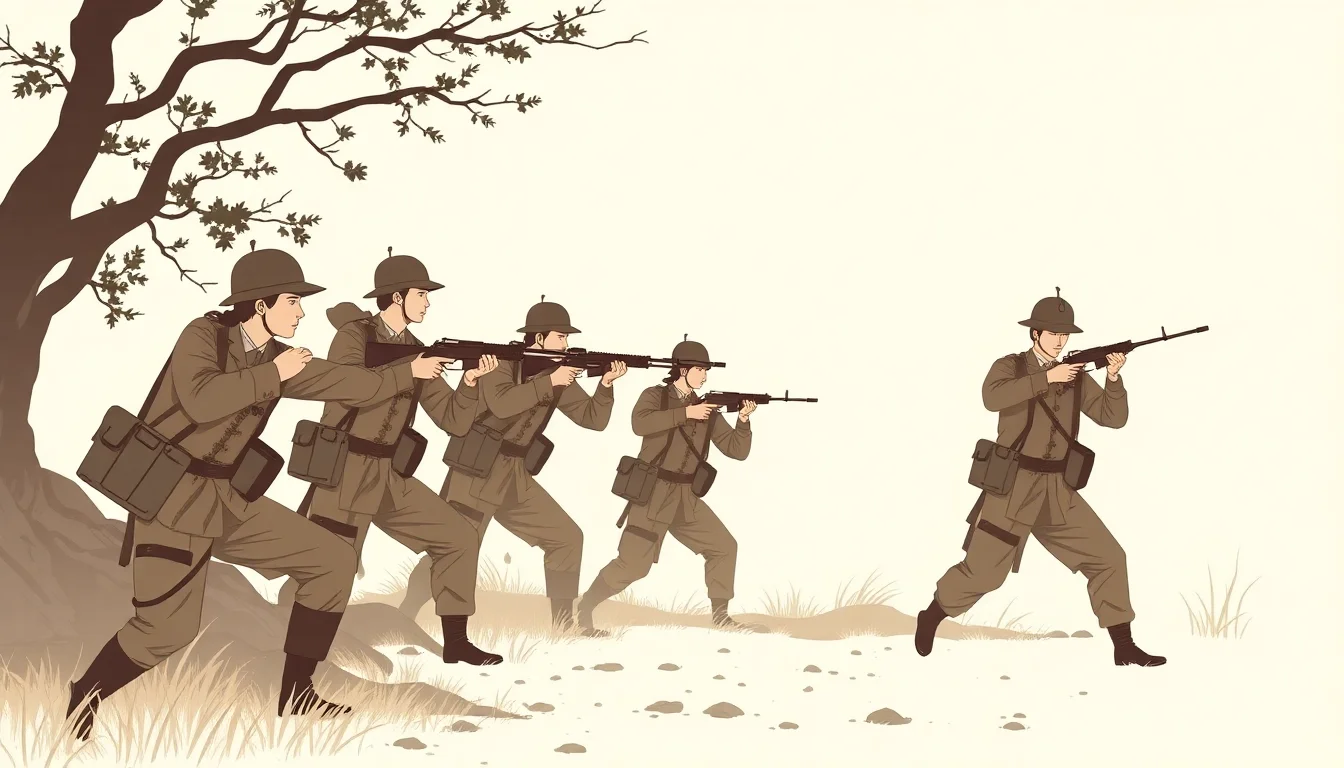
Traditional military tactics encompass the established methods and formations employed in warfare before the widespread adoption of modern technology. These tactics, honed over centuries, emphasize maneuver, discipline, and the effective application of force within specific operational constraints. From the phalanx of ancient Greece to the Napoleonic line formations and the trench warfare of WWI, these methods highlight the enduring human elements of combat: leadership, morale, and the exploitation of terrain. Understanding these tactics is crucial for grasping the evolution of warfare and the foundational principles that still inform modern strategic thinking, even as technology reshapes the battlefield.
⚔️ What Are Traditional Military Tactics?
Traditional military tactics are the established methods and doctrines for employing armed forces in combat, predating modern technological leaps. This isn't just about marching in lines; it encompasses everything from battlefield formations and maneuver warfare to logistics and psychological operations. For the aspiring historian, wargamer, or even the curious strategist, understanding these foundational concepts is crucial. They provide the bedrock upon which all subsequent military innovation has been built, offering timeless lessons in leadership, discipline, and the application of force. Ignoring them is akin to a modern architect disregarding classical principles of structure and balance.
📜 Historical Roots & Evolution
The lineage of traditional tactics stretches back to antiquity, with the Macedonian phalanx of Alexander the Great and the disciplined legions of Rome being prime examples. The medieval period saw the rise of cavalry charges and siege warfare, while the Napoleonic era perfected linear tactics and the use of combined arms. Each era built upon the last, adapting to new weaponry and battlefield realities. The American Civil War and World War I, however, marked significant inflection points, where industrial-era firepower began to render many traditional formations obsolete, forcing a brutal re-evaluation. This historical arc reveals a constant tension between established doctrine and the disruptive force of innovation.
🎯 Key Principles & Formations
At the heart of traditional tactics lie principles like concentration of force, economy of force, maneuver, and surprise. Formations such as the testudo (tortoise) or the Napoleonic line and column were designed to maximize firepower, provide mutual support, and maintain unit cohesion under fire. Understanding the advantages and disadvantages of each formation—the firepower of the line versus the shock effect of the column—is key. These weren't just abstract concepts; they were meticulously drilled routines designed to instill battlefield discipline and predictable responses in the chaos of war.
💡 The Engineer's View: How It Works
From an engineering perspective, traditional tactics are about optimizing the application of human and material resources within the constraints of pre-industrial and early industrial technology. Formations are essentially kinetic systems, designed to channel energy—the force of a charge, the volleys of musketry—in a controlled and devastating manner. Logistics, often overlooked, is the critical infrastructure that enables these kinetic systems to operate. The supply lines, the marching cadence, the ability to sustain operations over time—these are the engineering challenges that traditional tactics had to solve, often with rudimentary tools and immense human effort.
🔥 Cultural Resonance & Vibe Score
The Vibe Score for traditional military tactics is a solid 75/100 – a high score reflecting their enduring cultural resonance. They fuel countless historical dramas, video games like Total War series, and strategic board games. The sheer discipline and stoicism associated with these tactics evoke a powerful sense of order and martial prowess. This cultural fascination stems from their clear, often brutal, logic and the dramatic visual spectacle they provide. The archetypes of the disciplined soldier and the brilliant general are deeply embedded in our collective imagination, largely thanks to these historical precedents.
🤔 Skeptic's Corner: Limitations & Criticisms
The skeptic's lens reveals the stark limitations of traditional tactics when confronted with overwhelming firepower. The massed infantry charges of the early 20th century, for instance, became a horrific meat grinder against machine guns and artillery. While principles like maneuver and surprise remain relevant, rigid adherence to outdated formations can lead to catastrophic losses. Furthermore, the emphasis on centralized command and control, inherent in many traditional doctrines, can be a vulnerability in modern, decentralized warfare. The human cost of these tactics, when misapplied or facing superior technology, is a stark reminder of their inherent risks.
🚀 Future Trajectories & Modern Relevance
Despite their historical obsolescence in direct application, the core principles of traditional military tactics continue to inform modern warfare. Concepts like mission command and decentralized execution echo the need for initiative and adaptability. The study of historical campaigns, from Hannibal's Cannae to Wellington's use of terrain at Waterloo, still offers invaluable lessons in strategic thinking and operational art. Modern forces may employ drones and cyber warfare, but the fundamental human elements of leadership, morale, and understanding the enemy's psychology remain constants, deeply rooted in the traditions of warfare.
🗺️ Where to Learn More
To truly grasp traditional military tactics, one must engage with primary sources and scholarly analyses. The works of Carl von Clausewitz are foundational, though dense. For more accessible overviews, consider books like John Keegan's The Face of Battle or Victor Davis Hanson's explorations of classical warfare. Wargaming, both digital and tabletop, offers an interactive way to experiment with these tactics. Many military museums and historical sites also provide tangible connections to the past, allowing you to walk the grounds where these strategies unfolded. Engaging with these resources will provide a robust understanding of the subject.
Key Facts
- Year
- Antiquity - Early 20th Century
- Origin
- Ancient Greece, Roman Empire, Medieval Europe, Napoleonic Era, World War I
- Category
- Military History & Strategy
- Type
- Concept
Frequently Asked Questions
Are traditional military tactics still used today?
While direct application of formations like the Napoleonic line is rare due to modern firepower, the underlying principles of maneuver, concentration of force, and surprise remain highly relevant. Modern doctrines often adapt these principles for decentralized operations and combined arms warfare, integrating them with advanced technology. The study of traditional tactics is crucial for understanding the evolution of military thought and for developing strategic acumen.
What is the difference between tactics and strategy?
Strategy is the overarching plan for achieving long-term goals, often at a national or theater level, encompassing political objectives. Tactics, on the other hand, are the specific methods and actions used to achieve objectives within a battle or engagement. Think of strategy as deciding which war to fight and why, while tactics are about how to win individual battles within that war. Traditional military tactics are the historical methods employed at the tactical level.
What are the most famous traditional military formations?
Some of the most iconic traditional formations include the Macedonian phalanx, the Roman legionary cohort, the medieval knight's charge, the Napoleonic line and column, and the Prussian drill formations. Each was designed to maximize the effectiveness of the available weaponry and troop discipline of its era, offering distinct advantages in firepower, shock effect, or defense.
How did technology impact traditional tactics?
Technological advancements, particularly the development of gunpowder, rifled firearms, machine guns, and artillery, fundamentally altered the effectiveness of traditional tactics. Massed formations became vulnerable to devastating firepower, leading to the trench warfare of World War I and subsequent shifts towards more dispersed and indirect methods of combat. The advent of armored vehicles and air power further revolutionized battlefield dynamics.
Where can I learn more about specific historical battles and their tactics?
Excellent resources include detailed historical accounts of battles like Cannae, Agincourt, Waterloo, and Gettysburg. Academic journals focusing on military history, biographies of famous generals like Hannibal, Caesar, and Napoleon Bonaparte, and museum exhibits dedicated to military history are also invaluable. Many university history departments offer courses on military strategy and tactics.