
Contents
Overview
Virtual Reality (VR) and Augmented Reality (AR) are immersive technologies that alter our perception of reality. VR completely replaces the user's environment with a simulated one, typically experienced through a headset, creating a sense of presence in a digital world. AR, conversely, overlays digital information—such as graphics, sounds, or haptic feedback—onto the real world, enhancing rather than replacing it. While VR aims for full immersion, AR seeks seamless integration, allowing users to interact with both physical and digital elements simultaneously. These technologies, with roots stretching back to early computer graphics and interactive simulations, have evolved dramatically, finding applications in gaming, education, design, healthcare, and beyond, fundamentally reshaping how we interact with information and each other.
🎵 Origins & History
The conceptual seeds of virtual and augmented reality were sown long before the advent of modern hardware. Early pioneers laid foundational groundwork for immersive interfaces. The term "augmented reality" was coined by Thomas Caudell in 1990 while working at Boeing to describe a system that helped assembly workers by overlaying digital instructions onto their view of physical components. These technologies have evolved dramatically.
⚙️ How It Works
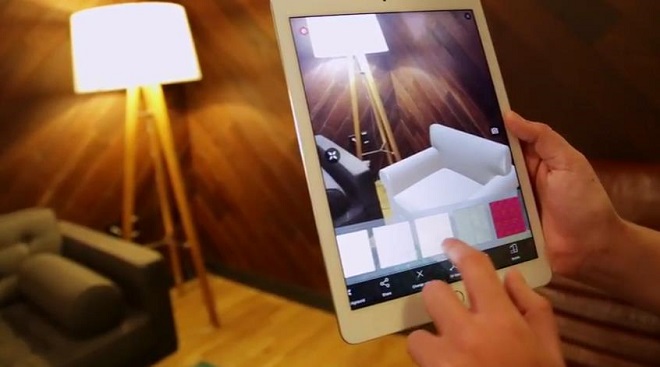
At their core, VR and AR rely on sophisticated hardware and software to create their respective experiences. VR systems typically involve a head-mounted display (HMD) that blocks out the real world and presents stereoscopic images to each eye, creating a convincing sense of depth and presence. Motion tracking sensors, often integrated into the headset or external base stations, monitor the user's head and body movements, translating them into the virtual environment in real-time. AR systems, on the other hand, use cameras and sensors to capture the real world, then overlay digital content. This can be achieved through specialized AR glasses like Microsoft HoloLens, which project images onto transparent lenses, or via smartphones and tablets running AR apps that display digital elements on the device's screen, as seen in Pokémon GO. Advanced algorithms are crucial for rendering realistic graphics, tracking user input, and ensuring seamless integration between digital and physical realms.
📊 Key Facts & Numbers
The market for VR and AR technologies is experiencing significant growth. The development of more powerful mobile processors and the increasing availability of affordable HMDs are key drivers behind these impressive figures.
👥 Key People & Organizations
Numerous individuals and organizations have been instrumental in shaping the VR and AR landscape. Tim Cook, CEO of Apple Inc., has publicly stated the company's strong interest in AR, hinting at future product development. Companies like Google with its Google Glass and Microsoft with HoloLens have been key players in AR hardware development. Snap Inc. has also made significant strides in AR through its popular filters and the development of its Snap Spectacles AR glasses.
🌍 Cultural Impact & Influence
The cultural resonance of VR and AR is profound, extending far beyond their technological underpinnings. VR has revolutionized the gaming industry, offering unparalleled immersion and new gameplay mechanics, with titles like Half-Life: Alyx setting new benchmarks. Beyond entertainment, VR is transforming education by providing virtual field trips and simulated learning environments, allowing students to explore historical sites or complex biological systems firsthand. AR, through mobile applications, has subtly integrated into daily life, from virtual try-on features for clothing and furniture to interactive museum exhibits and enhanced navigation systems. The shared virtual spaces of the metaverse, heavily reliant on VR and AR, are fostering new forms of social interaction and community building, though the long-term societal impact remains a subject of ongoing observation and debate.
⚡ Current State & Latest Developments
The current state of VR and AR is marked by rapid innovation and increasing accessibility. Apple Vision Pro entered the high-end spatial computing market, pushing the boundaries of mixed reality with its advanced display technology and intuitive interface, albeit at a premium price point. Meta Platforms continues to dominate the consumer VR space with its Meta Quest 3, offering a more affordable and accessible mixed-reality experience. Enterprise adoption is accelerating, with companies deploying VR for employee training, remote collaboration, and product design visualization. AR continues to find its footing on mobile devices, with ongoing improvements in tracking and rendering capabilities, while dedicated AR glasses are slowly but surely making their way into niche professional markets. The development of more sophisticated AI integration is also a key trend, promising more intelligent and responsive virtual and augmented experiences.
🤔 Controversies & Debates
Significant controversies and debates surround VR and AR. Privacy concerns are paramount, particularly with AR devices equipped with cameras that can potentially record public spaces and individuals without consent. The ethical implications of creating highly realistic virtual environments, including the potential for addiction and detachment from reality, are also widely discussed. Issues of accessibility and cost remain barriers, with high-end VR and AR hardware being prohibitively expensive for many. Furthermore, the long-term psychological effects of prolonged immersion in virtual worlds, and the potential for digital inequality, are subjects of ongoing research and public discourse. The debate over whether AR will ultimately subsume VR or if they will coexist as distinct but complementary technologies also continues.
🔮 Future Outlook & Predictions
The future of VR and AR promises even deeper integration into our lives. Experts predict a convergence of VR and AR into a single "extended reality" (XR) category, where devices can seamlessly switch between full immersion and augmented overlays. We can expect lighter, more comfortable, and more powerful HMDs with higher resolutions and wider fields of view. Haptic feedback technology will likely become more sophisticated, allowing users to "feel" virtual objects. The metaverse, if it matures, will likely rely heavily on these advanced XR capabilities for social interaction, work, and entertainment. Companies like NVIDIA are developing powerful AI and graphics technologies that will underpin these future experiences, potentially leading to photorealistic virtual worlds and highly context-aware augmented reality overlays that anticipate user needs.
💡 Practical Applications
The practical applications of VR and AR are expanding rapidly across diverse sectors. In healthcare, VR is used for surgical training, pain management, and therapy for conditions like PTSD and phobias, while AR can assist surgeons with real-time patient data overlays during procedures. The automotive industry employs VR for vehicle design and simulation, and AR for in-car navigation and maintenance guidance. In manufacturing and logistics, AR applications provide workers with step-by-step instructions for assembly, quality control, and inventory management, significantly improving efficiency and reducing errors. Architects and designers use VR to create immersive walkthroughs
Key Facts
- Category
- technology
- Type
- topic