
Contents
Overview
The story of the Windrush Generation is inextricably linked to the aftermath of World War II and the British Nationality Act 1948. This legislation granted British citizenship and the right of abode to all citizens of the British Empire, a move intended partly to address Britain's severe labor shortages in the post-war era. The first significant wave of arrivals was aboard the MV Empire Windrush, docking in Tilbury on June 22, 1948, with passengers from Jamaica, Trinidad and Tobago, and other Caribbean islands. This ship became a potent symbol, though it was not the first or only vessel carrying Caribbean migrants. Subsequent arrivals came on ships like the SS Ormonde in 1949 and the SS Empire Fowey in 1950, with a steady stream continuing throughout the 1950s and 1960s. These pioneers, often young and seeking economic opportunity, were responding to advertisements and appeals for labor, particularly in essential services like the newly formed National Health Service and London Transport. Their journey represented a complex mix of opportunity, necessity, and a belief in the promise of belonging within the 'mother country' of the British Commonwealth.
⚙️ How It Works
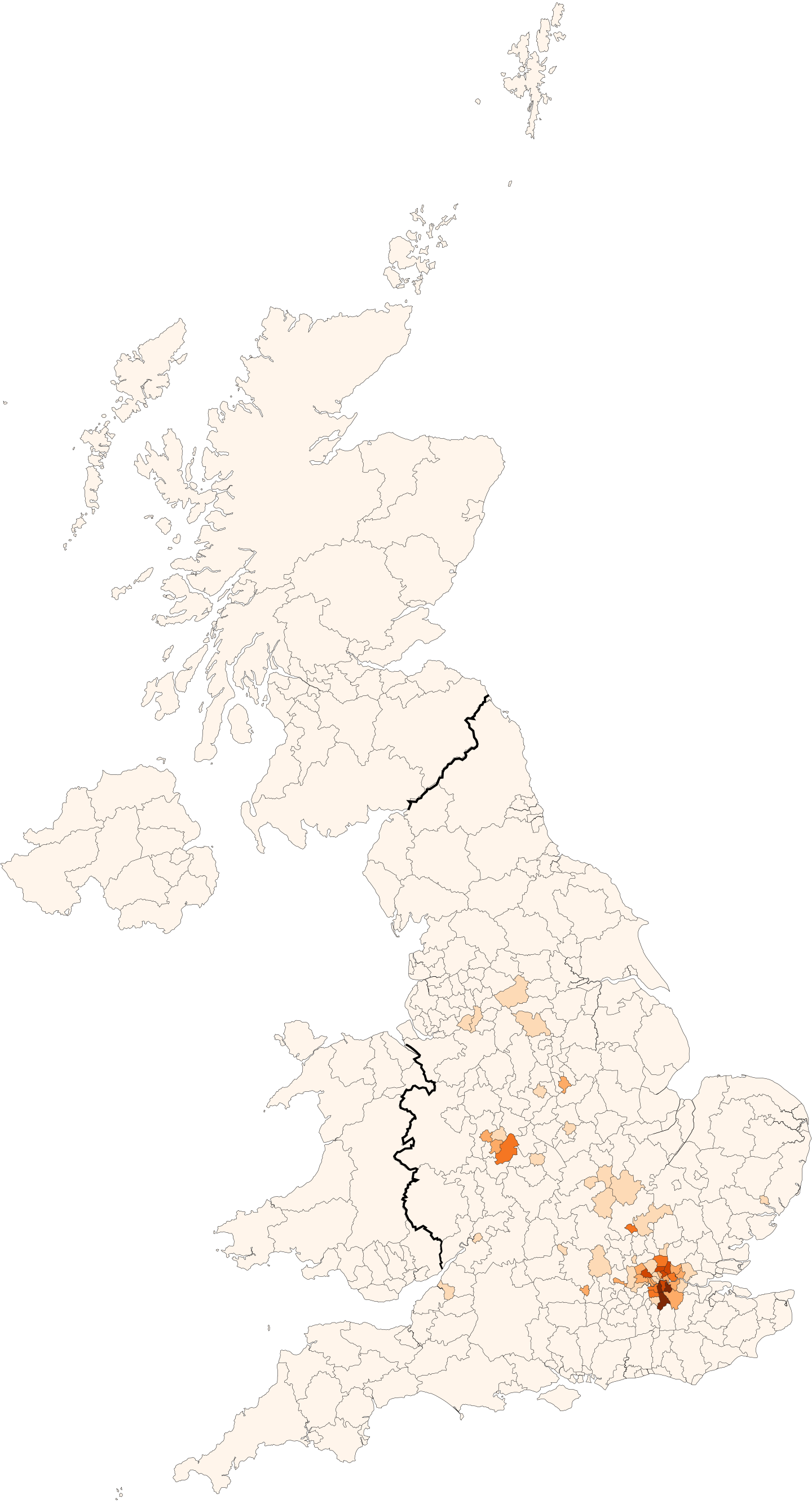
The 'how it works' of the Windrush Generation's arrival and integration wasn't a formal system but a series of societal and legislative shifts. Upon arrival, many were housed in temporary accommodation, such as the Clapham Common deep shelter, before finding work and permanent housing, often in areas with existing, albeit small, Black communities like Brixton and Huddersfield. The process was largely driven by individual initiative and community networks, as migrants sought employment and established lives. Their legal status, initially secure under the 1948 Act, became increasingly precarious with subsequent immigration legislation, such as the Commonwealth Immigrants Act 1962 and the Immigration Act 1971, which began to restrict the rights of Commonwealth citizens. This legislative tightening, coupled with societal racism, meant that integration was a constant struggle, requiring resilience and adaptation as they navigated a country that did not always welcome them as equals, despite their contributions.
📊 Key Facts & Numbers
The scale of the Windrush Generation's migration is staggering. Between 1948 and 1970, an estimated 500,000 people arrived from the Caribbean. By 1971, the number of people born in the Caribbean living in the UK had reached approximately 750,000. These migrants filled critical roles: by 1956, around 10% of nurses in NHS hospitals were from the Caribbean. In London Transport, Caribbean workers constituted a significant portion of bus conductors and underground staff. Economically, their remittances back to their home countries were vital, while their labor in the UK contributed an estimated £20 billion annually to the British economy by the early 1970s. Despite these contributions, many faced wage discrimination, earning on average 10-15% less than their white counterparts for similar work. The economic impact was profound, both for the UK's recovery and for the development of Caribbean nations.
👥 Key People & Organizations
While the Windrush Generation is a collective term, several individuals and organizations played pivotal roles. Pioneers like Samuel Bruce, who arrived on the Empire Windrush, became community leaders. Organizations such as the Campaign Against Racial Discrimination (CARD) and the Black Cultural Archives were established to advocate for rights and preserve history. Figures like Dame Barbara Judge, though not of Caribbean descent, played a role in early discussions about immigration policy, while later activists and politicians, such as Diane Abbott, emerged from the communities shaped by this migration. The Windrush Foundation continues to champion the legacy and rights of this generation. The Home Office, as the government department responsible for immigration, has been central to both facilitating and, more recently, failing the Windrush Generation.
🌍 Cultural Impact & Influence
The cultural imprint of the Windrush Generation on British society is immense and multifaceted. They brought vibrant music genres like Calypso, Ska, and Reggae, which profoundly influenced the UK's music scene, giving rise to genres like Jungle and Grime. Caribbean cuisine, from jerk chicken to roti, has become a staple in British diets. Their influence is evident in literature, theatre, and art, with writers like Samuel Selvon and Claudia Jones documenting their experiences and shaping British cultural discourse. The establishment of Caribbean community centers and festivals fostered a sense of belonging and cultural preservation. This generation's resilience and cultural richness have undeniably diversified and enriched the fabric of British identity, challenging notions of who is considered 'British'.
⚡ Current State & Latest Developments
The legacy of the Windrush Generation is currently defined by the ongoing ramifications of the Windrush scandal. Exposed in 2018, the scandal revealed that hundreds of individuals, who had arrived legally as British subjects, were wrongly classified as illegal immigrants. This led to loss of jobs, housing, denial of services, detention, and even deportation to countries they hadn't lived in since childhood. The UK government has since established a Windrush Compensation Scheme to address these injustices, though its effectiveness and speed have been widely criticized. Efforts are underway to document and celebrate the generation's history, including educational initiatives and public memorials. The debate continues regarding accountability for the 'hostile environment' policies implemented by successive governments.
🤔 Controversies & Debates
The controversies surrounding the Windrush Generation are deeply rooted in systemic racism and flawed immigration policies. The primary debate centers on the 'hostile environment' policy, introduced by Theresa May as Home Secretary, which aimed to make life so difficult for undocumented migrants that they would leave voluntarily. Critics argue this policy disproportionately and unjustly targeted Commonwealth citizens who had every right to be in the UK. The government's handling of the scandal, including initial denials and the slow pace of compensation, has drawn widespread condemnation from human rights organizations, politicians, and the public. There's also ongoing debate about the adequacy of the compensation scheme and whether true accountability has been achieved for those responsible for the systemic failures.
🔮 Future Outlook & Predictions
The future outlook for the Windrush Generation and their descendants involves continued advocacy for justice and recognition. The focus remains on ensuring the compensation scheme adequately addresses the profound harm caused by the scandal and that lessons are learned to prevent future injustices. There's a push for greater inclusion of the Windrush story in the national curriculum and public consciousness, ensuring their contributions are not forgotten. Descendants are increasingly taking on leadership roles, continuing the fight for equality and challenging discriminatory practices. The long-term impact will likely be a more nuanced understanding of British identity and history, one that fully acknowledges the contributions and struggles of all its citizens, regardless of origin.
💡 Practical Applications
The primary 'practical application' of understanding the Windrush Generation lies in historical education and policy reform. By studying their experiences, policymakers can gain critical insights into the devastating consequences of discriminatory immigration laws and the importance of upholding the rights of citizens. The Windrush scandal has directly led to reviews of immigration practices and the establishment of compensation mechanisms, serving as a stark case study for governmental accountability. Furthermore, the cultural legacy of the Windrush Generation provides a rich resource for arts, education, and community engagement, fostering intercultural understanding and celebrating diversity within the UK. Their story is a vital lesson in the complexities of citizenship, belonging, and the ongoin
Key Facts
- Category
- history
- Type
- topic