
Contents
- ⚛️ What Exactly is a Chemical Reaction?
- 🔬 The Core Mechanics: Bonds and Energy
- 📜 A Brief History: From Alchemy to Equations
- 🧫 Types of Reactions: A Categorical Overview
- 💡 The Role of Catalysts: Speeding Things Up
- 🔥 Energy Changes: Exothermic vs. Endothermic
- 🧪 Chemical Equations: The Language of Reactions
- 🌌 Beyond the Basics: Nuclear Chemistry's Domain
- 🌐 Chemical Reactions in the Real World
- 🤔 Common Misconceptions Debunked
- 📚 Further Exploration & Resources
- 🚀 The Future of Chemical Reaction Research
- Frequently Asked Questions
- Related Topics
Overview
Chemical reactions are the bedrock of chemistry, describing processes where substances transform into new ones through the rearrangement of atoms and molecules. From the combustion of fuel to the synthesis of life-saving drugs, these transformations are governed by fundamental laws like conservation of mass and energy. Understanding reaction rates, equilibrium, and thermodynamics is crucial for fields ranging from industrial manufacturing to biological systems. The study of chemical reactions is not static; it's a dynamic field constantly pushing the boundaries of what's possible in material science and energy production.
⚛️ What Exactly is a Chemical Reaction?
At its heart, a chemical reaction is a fundamental process where one set of chemical substances, known as reactants, transforms into a new set of substances called products. This isn't just a physical rearrangement; it's a deep molecular metamorphosis. Think of it as LEGO bricks being taken apart and reassembled into entirely different structures. This transformation is always accompanied by a measurable energy change, a crucial indicator of the reaction's progress and nature. Understanding this core concept is the first step to appreciating the dynamic world of chemistry.
🔬 The Core Mechanics: Bonds and Energy
The engine driving most chemical reactions is the rearrangement of atoms, specifically the electrons. Chemical bonds, the invisible forces holding atoms together, are either broken or formed during this process. It's the electrons' dance – their movement into new orbital configurations – that dictates the creation of new chemical bonds and, consequently, new substances. This electron-level activity is what distinguishes a chemical reaction from a purely physical change, like melting ice, where the substance's identity remains the same.
📜 A Brief History: From Alchemy to Equations
The study of chemical transformations has roots stretching back to ancient alchemy, where practitioners sought to transmute base metals into gold and discover elixirs of life. While alchemists lacked the rigorous methodology of modern science, their experiments laid groundwork for later discoveries. The formalization of chemical reactions began in earnest with figures like Antoine Lavoisier in the 18th century, who established the law of conservation of mass and introduced systematic chemical notation, paving the way for precise chemical equations that describe these processes.
🧫 Types of Reactions: A Categorical Overview
Chemical reactions aren't a monolithic entity; they come in a dazzling array of types. Common categories include synthesis reactions (where simpler substances combine to form a more complex one), decomposition reactions (the opposite, where a complex substance breaks down), single displacement reactions (where one element replaces another in a compound), and double displacement reactions (where ions in two compounds swap places). Each type follows distinct patterns and has unique implications in various chemical contexts.
💡 The Role of Catalysts: Speeding Things Up
Often, reactions proceed too slowly for practical purposes. This is where catalysts enter the picture. Catalysts are substances that increase the rate of a chemical reaction without being consumed in the process themselves. They achieve this by providing an alternative reaction pathway with a lower activation energy. Enzymes, biological catalysts essential for life, are a prime example, facilitating billions of reactions within our cells every second. Without them, many vital biological processes would grind to a halt.
🔥 Energy Changes: Exothermic vs. Endothermic
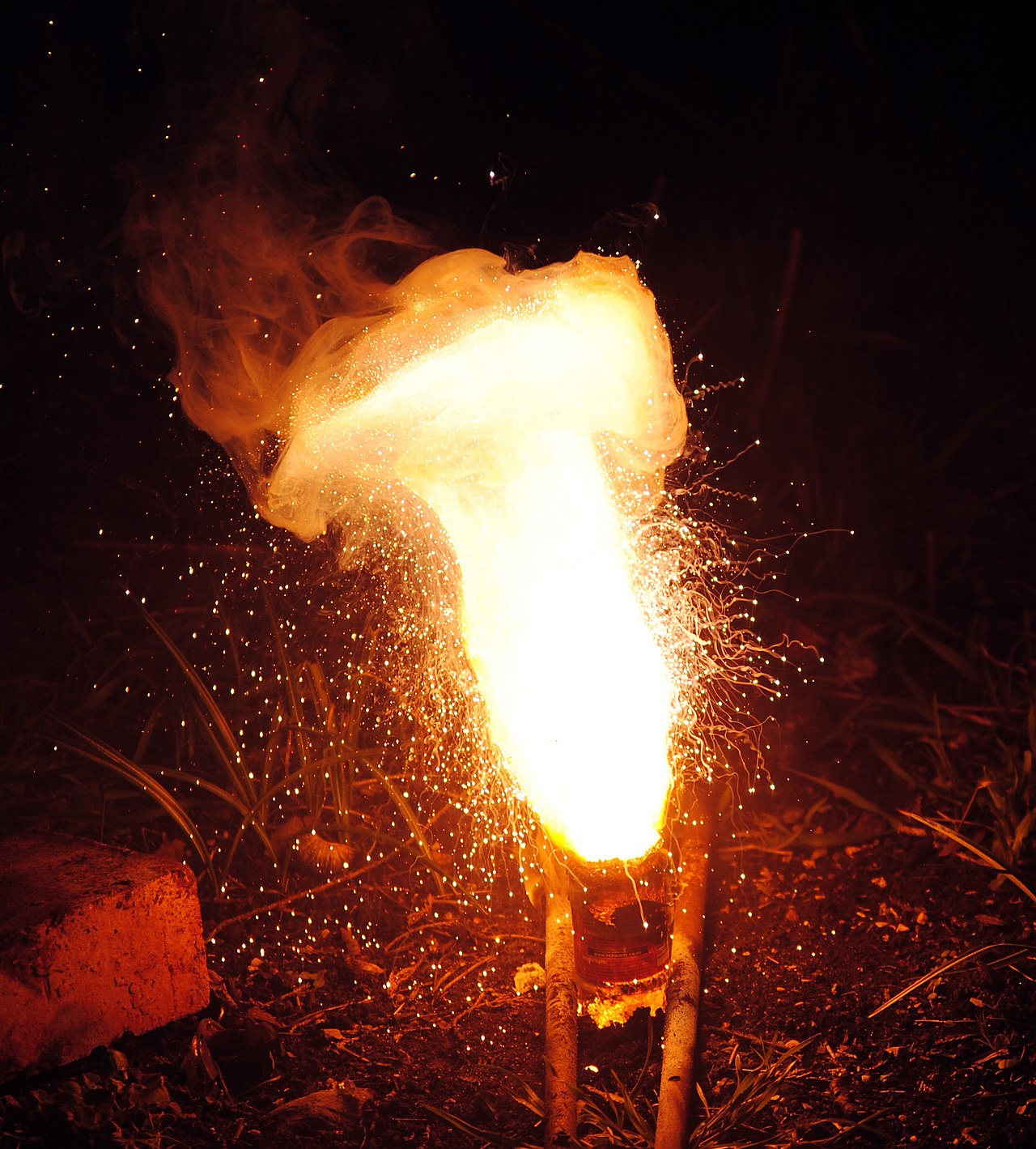
Every chemical reaction involves an exchange of energy. Exothermic reactions release energy into their surroundings, often as heat or light, causing a temperature increase. Combustion is a classic exothermic example. Conversely, endothermic reactions absorb energy from their surroundings, leading to a decrease in temperature. Photosynthesis, where plants convert light energy into chemical energy, is a well-known endothermic process. The net energy change is a critical thermodynamic property.
🧪 Chemical Equations: The Language of Reactions
Chemical equations are the precise shorthand chemists use to represent reactions. They depict the reactants on the left, the products on the right, separated by an arrow indicating the direction of the transformation. Coefficients are used to balance the equation, ensuring that the number of atoms of each element is the same on both sides, adhering to the law of conservation of mass. Understanding these symbolic representations is key to predicting reaction outcomes and designing experiments.
🌌 Beyond the Basics: Nuclear Chemistry's Domain
While most chemical reactions involve changes to electron shells, nuclear chemistry explores a different frontier. Here, reactions can involve transformations within the atomic nucleus itself, leading to the emission of particles and energy, as seen in radioactive decay. This field deals with elements like uranium and plutonium and is crucial for understanding nuclear power, medical imaging, and the age of the Earth through radiometric dating. It's a realm where the very identity of elements can change.
🌐 Chemical Reactions in the Real World
Chemical reactions are the invisible architects of our world. From the digestion of food in our bodies and the rusting of iron to the production of plastics and pharmaceuticals, these processes are ubiquitous. The burning of fossil fuels for energy, the synthesis of fertilizers to feed a growing population, and the complex chemistry behind semiconductor manufacturing all rely on controlled chemical transformations. Our modern civilization is built upon our ability to harness and manipulate these fundamental reactions.
🤔 Common Misconceptions Debunked
A common misconception is that chemical reactions always produce heat or are inherently dangerous. While many exothermic reactions release heat, endothermic reactions absorb it. Furthermore, many reactions are quite gentle and occur at room temperature without any dramatic visible effects. Another myth is that once a reaction occurs, it's irreversible; however, many reactions are reversible, existing in a state of dynamic equilibrium where both forward and reverse reactions occur simultaneously.
📚 Further Exploration & Resources
For those eager to delve deeper, exploring textbooks on general chemistry is a solid starting point. Online resources like the Khan Academy offer free video lectures and practice problems. University chemistry departments often provide open courseware. For practical application, consider introductory laboratory manuals that detail common experimental procedures. Engaging with chemical simulations can also offer a safe and interactive way to explore reaction dynamics.
🚀 The Future of Chemical Reaction Research
The future of chemical reaction research is electrifying, focusing on sustainability, efficiency, and novel applications. Researchers are developing green chemistry approaches to minimize waste and use less hazardous substances. Advances in computational chemistry allow for the prediction and design of new reactions with unprecedented accuracy. The quest continues for more efficient catalysts, novel energy storage solutions, and reactions that can tackle global challenges like climate change and disease.
Key Facts
- Year
- Ancient Origins (formalized ~17th Century)
- Origin
- Ancient Greece (early observations), formalized by Lavoisier and others in the 17th-18th centuries.
- Category
- Science & Technology
- Type
- Concept
Frequently Asked Questions
What's the difference between a chemical reaction and a physical change?
A physical change alters the form or appearance of a substance but not its chemical composition (e.g., melting ice). A chemical reaction, however, results in the formation of new substances with different chemical properties by rearranging atoms and breaking/forming chemical bonds. The key distinction lies in whether the fundamental chemical identity of the substance has changed.
How do I know if a chemical reaction has occurred?
Several observable signs can indicate a chemical reaction: a change in color, the formation of a gas (bubbles), the formation of a solid precipitate, the release or absorption of heat (temperature change), or the emission of light. However, some reactions occur without obvious external signs and require analytical instruments to detect.
What is activation energy?
Activation energy is the minimum amount of energy required for reactant molecules to collide effectively and initiate a chemical reaction. It's like a small hill that reactants must climb over to become products. Catalysts work by lowering this activation energy, making the reaction proceed faster.
Are all chemical reactions reversible?
No, not all chemical reactions are reversible. Some reactions proceed essentially to completion, meaning the reactants are almost entirely converted to products. However, many reactions are reversible, reaching a state of chemical equilibrium where the forward and reverse reaction rates are equal, and both reactants and products coexist in the mixture.
What is the role of electrons in chemical reactions?
Electrons are central to most chemical reactions. The breaking and forming of chemical bonds, which is the essence of a reaction, involves the rearrangement of electrons in the outer shells of atoms. The way electrons are shared or transferred between atoms determines the type of bond formed and the resulting chemical properties of the product.
How does temperature affect chemical reactions?
Generally, increasing the temperature increases the rate of a chemical reaction. This is because higher temperatures provide more kinetic energy to the molecules, leading to more frequent and more energetic collisions, thus increasing the likelihood of overcoming the activation energy. Conversely, decreasing temperature slows down most reactions.