
Contents
Overview
Rabbinic Judaism's genesis is inextricably linked to the cataclysmic destruction of the Second Temple by the Roman Empire in 70 CE. Prior to this, Judaism had a more diverse religious landscape, with various sects like the Sadducees, Essenes, and Pharisees coexisting. The Pharisees, with their emphasis on a developing oral tradition alongside the written Torah, laid the groundwork for what would become rabbinic authority. Following the Temple's destruction, the rabbinic movement adapted Judaism from a Temple-centric sacrificial cult to a text-based, synagogue-centered religion. This transition, solidified by the codification of the Babylonian Talmud around 600 CE, marked the definitive shift to Rabbinic Judaism as the mainstream form, enabling Jewish continuity through the subsequent millennia of diaspora.
⚙️ How It Works
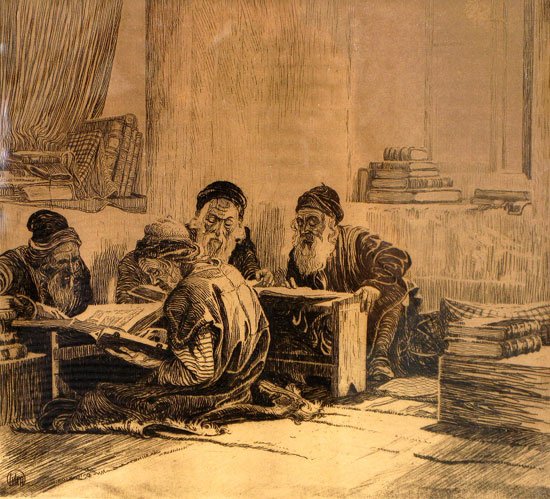
At its core, Rabbinic Judaism operates on the principle of the Dual Torah: the Written Torah (the Five Books of Moses) and the Oral Torah. The Oral Torah, believed to be divinely revealed to Moses and passed down through an unbroken chain of transmission, provides the authoritative interpretation and application of the Written Torah. This interpretive framework is embodied in the Talmud, a vast compendium of legal discussions, ethical teachings, and narrative stories compiled over centuries by rabbinic scholars in Babylonia and Israel. Rabbinic authorities, or rabbis, interpret these texts to guide Jewish law (Halakha) and life, establishing a dynamic system where tradition is constantly engaged with and applied to new circumstances. The synagogue, rather than the Temple, becomes the central locus of religious life, emphasizing prayer, study, and communal gathering.
📊 Key Facts & Numbers
Rabbinic Judaism is the normative form for an estimated 90% of the world's Jews today, encompassing Orthodox, Conservative, and Reform movements, though with significant variations in adherence to rabbinic authority. The Babylonian Talmud, comprising approximately 2.5 million words, took nearly 400 years to compile, with its final redaction around 600 CE. The Jerusalem Talmud, an earlier but less comprehensive compilation, was finalized around 400 CE. Over 1,500 years of rabbinic commentary and legal codes, such as Maimonides' Mishneh Torah (completed 1177) and the Shulchan Aruch (published 1565), have further elaborated on Talmudic law, creating a vast corpus of Jewish legal literature. The global Jewish population, largely adherents of Rabbinic Judaism, stands at approximately 15 million people as of 2023.
👥 Key People & Organizations
Key figures in the development of Rabbinic Judaism include Yochanan ben Zakkai, who established a rabbinic academy in Yavneh after the Temple's destruction, and Hillel the Elder, a prominent Pharisee whose interpretive principles profoundly influenced rabbinic thought. Akiva ben Joseph, a pivotal sage of the 2nd century, played a crucial role in systematizing Halakha and is credited with significant contributions to the Mishnah. Later luminaries like Maimonides (Moses ben Maimon), a philosopher and legal codifier of the 12th century, and Joseph Karo, author of the Shulchan Aruch, represent the ongoing tradition of rabbinic scholarship. Major rabbinic organizations today include the Union for Reform Judaism, the United Synagogue of Conservative Judaism, and the Orthodox Union, each representing distinct approaches to rabbinic authority and Jewish law.
🌍 Cultural Impact & Influence
Rabbinic Judaism's influence extends far beyond the Jewish community, shaping Western legal thought through its emphasis on textual interpretation, due process, and communal responsibility, concepts that resonated with early Christian and Islamic legal traditions. The rabbinic focus on education and literacy has contributed to high educational attainment rates within Jewish communities throughout history. The development of the synagogue as a community center, a model for communal organization, and the rich tradition of Jewish literature and philosophy, from medieval philosophy to modern Hebrew literature, are all direct outgrowths of rabbinic culture. The concept of Tikkun Olam (repairing the world), a central tenet in many rabbinic interpretations, has gained traction in broader social justice movements.
⚡ Current State & Latest Developments
In the 21st century, Rabbinic Judaism continues to navigate the complexities of modernity. The Orthodox Union and Agudath Israel of America represent the more traditionalist wings, while the Union for Reform Judaism and Reconstructionist movements embrace more liberal interpretations of rabbinic authority and Jewish law. Debates surrounding women's ordination as rabbis, LGBTQ+ inclusion, and engagement with secular culture remain active. The rise of online learning platforms and social media has created new avenues for rabbinic discourse and community building, reaching global audiences beyond geographical limitations. The ongoing study and application of Halakha in contemporary contexts, from bioethics to business law, demonstrate its enduring relevance.
🤔 Controversies & Debates
Significant controversies within Rabbinic Judaism often revolve around the interpretation and application of Halakha. Debates persist regarding the extent to which rabbinic law should adapt to contemporary societal norms, particularly concerning the roles of women and LGBTQ+ individuals within religious life. The authority of the rabbinate itself is also a point of contention, with some movements emphasizing the primacy of individual conscience and others upholding a more hierarchical model of rabbinic leadership. The relationship between Zionism and religious observance, and the role of religious law in the modern State of Israel, remains a deeply debated issue, often pitting different rabbinic factions against one another. The question of intermarriage and its acceptance within different rabbinic streams also generates considerable friction.
🔮 Future Outlook & Predictions
The future of Rabbinic Judaism will likely be shaped by its ability to balance tradition with innovation. We can anticipate continued diversification in how Halakha is interpreted and practiced across different movements. The influence of digital technology on religious observance and community formation will undoubtedly grow, potentially leading to new forms of rabbinic engagement and learning. There's a growing emphasis on mystical and contemplative practices within some circles, suggesting a potential spiritual resurgence. Furthermore, the ongoing dialogue between Jewish communities and broader global societies will continue to challenge and refine rabbinic thought, particularly on issues of social justice and ethics. The demographic shifts in Jewish populations worldwide will also play a significant role in determining the future landscape of Rabbinic Judaism.
💡 Practical Applications
Rabbinic Judaism provides the foundational framework for countless practical applications in Jewish life. Daily prayer services in synagogues worldwide are structured according to rabbinic liturgy, often found in the Siddur. The observance of Shabbat (the Sabbath) and Jewish holidays, including Passover and Yom Kippur, is guided by detailed rabbinic interpretations of biblical commandments. Kashrut (dietary laws) are meticulously defined and supervised by rabbinic authorities. Rabbinic courts (Beit Din) handle matters of Jewish law, including conversions, divorces, and business disputes. The study of Torah and Talmud remains a central practice, with rabbinic commentaries serving as essential guides for understanding these texts, forming the basis of yeshiva curricula.
Key Facts
- Category
- culture
- Type
- topic