
Contents
- 🚀 What is Warren Bennis: The Architect of Modern Leadership?
- 🎯 Who is This For?
- 📚 Key Concepts & Frameworks
- 💡 Bennis's Core Philosophy
- 🏆 Impact & Legacy
- 🤔 Criticisms & Counterarguments
- 🌟 Bennis vs. Other Leadership Gurus
- 📖 Recommended Reading
- 🔗 How to Engage with Bennis's Ideas
- 🌐 Vibepedia Vibe Score & Controversy Spectrum
- Frequently Asked Questions
- Related Topics
Overview
Warren Bennis (1925-2014) was a towering figure in leadership theory, a prolific author, and a celebrated educator who fundamentally reshaped how we understand leadership. He distinguished between 'managers' and 'leaders,' arguing that leaders inspire vision and change, while managers maintain systems. Bennis championed the idea of the 'leader as an artist,' emphasizing creativity, adaptability, and the ability to foster trust and empowerment within organizations. His work, particularly 'On Becoming a Leader' (1989), became a foundational text for aspiring and established leaders alike, influencing countless business schools and corporate training programs worldwide. His legacy continues to resonate, pushing us to consider leadership not as a fixed trait, but as a dynamic, learnable process.
🚀 What is Warren Bennis: The Architect of Modern Leadership?
Warren Bennis: The Architect of Modern Leadership isn't a physical place, but rather a comprehensive intellectual framework for understanding leadership, particularly in the context of organizational change and innovation. It distills the life's work of Warren Bennis, a seminal figure in leadership studies, into actionable insights. This framework emphasizes the leader's role in fostering adaptive organizations capable of navigating complex, rapidly changing environments. It moves beyond traditional command-and-control models to champion a more collaborative and empowering approach to guiding teams and institutions. Think of it as a masterclass in leading through uncertainty, drawing on decades of research and real-world observation.
🎯 Who is This For?
This intellectual framework is essential for organizational leaders, HR professionals, management consultants, and academics in business and public administration. Anyone grappling with the challenges of motivating teams, driving innovation, or managing organizational transformation will find immense value here. It's particularly relevant for those operating in industries characterized by rapid technological advancement or shifting market dynamics, where adaptability is paramount. If you're looking to move beyond generic management advice and delve into the psychological and strategic underpinnings of effective leadership, this is your starting point.
📚 Key Concepts & Frameworks
At its heart, Bennis's work is defined by several key concepts. His distinction between managers and leaders is foundational, arguing that leaders inspire vision and create change, while managers maintain order and execute plans. He championed the idea of the leader as a 'teacher', emphasizing continuous learning and development. Bennis also explored the concept of transformational leadership, focusing on leaders who inspire followers to achieve extraordinary outcomes. His research on organizational culture highlights its critical role in either enabling or stifling leadership effectiveness and innovation.
💡 Bennis's Core Philosophy
Bennis's core philosophy centers on the idea that leadership is not an inherent trait but a learned behavior, cultivated through experience, self-awareness, and a commitment to growth. He posited that effective leaders are 'masters of change,' possessing a deep understanding of their environment and the ability to articulate a compelling vision that mobilizes others. This vision, he argued, must be grounded in integrity and a genuine concern for the well-being and development of their people. For Bennis, the ultimate test of leadership lies in its capacity to foster an environment where individuals can reach their full potential and contribute to a collective purpose.
🏆 Impact & Legacy
The impact of Warren Bennis's work on contemporary leadership thought is undeniable. His ideas have shaped curricula in top business schools and influenced countless executives and policymakers. He is credited with popularizing concepts like 'leadership development' and 'organizational learning,' which are now standard in the corporate lexicon. His legacy is that of a visionary who foresaw the need for a new breed of leader—one who is adaptable, visionary, and deeply human—to navigate the complexities of the modern world. His writings continue to serve as a touchstone for understanding the evolving nature of leadership in the 21st century.
🤔 Criticisms & Counterarguments
Despite his widespread influence, Bennis's framework isn't without its critics. Some argue that his emphasis on the 'charismatic leader' can overlook the crucial contributions of collective leadership and distributed decision-making. Skeptics also point to the potential for his ideas to be oversimplified or commodified, leading to superficial 'leadership training' that fails to address the deeper systemic issues within organizations. Furthermore, the applicability of his models in highly regulated or bureaucratic environments, where radical change might be less feasible, is sometimes questioned. The debate often centers on whether his vision is aspirational or universally applicable.
🌟 Bennis vs. Other Leadership Gurus
Compared to figures like Peter Drucker or Stephen Covey, Bennis offers a more dynamic and change-oriented perspective. While Drucker focused on the 'practice of management' and Covey on 'principles,' Bennis was primarily concerned with the leader's role in fostering innovation and navigating disruption. His distinction between managers and leaders is sharper than many contemporaries. Unlike more prescriptive 'how-to' gurus, Bennis provides a conceptual architecture for understanding leadership's essence, encouraging introspection and adaptation rather than a one-size-fits-all solution. His focus on the leader's personal journey and their role as a cultural architect sets him apart.
📖 Recommended Reading
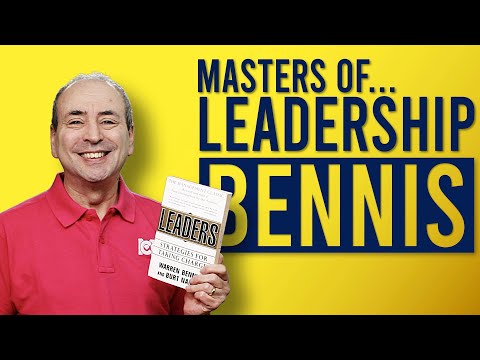
To truly engage with Bennis's ideas, start with his seminal works. On Becoming a Leader (1989) is an excellent entry point, offering a broad overview of his philosophy. Leaders: The Strategies for Taking Charge (1985), co-authored with Burt Nanus, provides practical strategies and case studies. For a deeper dive into organizational change, Organizing Genius: The Secrets of Creative Collaboration (1997) is invaluable. These books are readily available through major online booksellers and public libraries, offering a rich foundation for understanding his enduring contributions to leadership theory.
🔗 How to Engage with Bennis's Ideas
To begin applying Bennis's principles, start by reflecting on your own leadership style and how it aligns with his concepts of vision, integrity, and adaptability. Consider how you can foster a culture of continuous learning within your team or organization, perhaps by implementing regular feedback sessions or encouraging cross-functional collaboration. Explore opportunities to mentor aspiring leaders, sharing Bennis's insights on developing the 'leader within.' Many universities and professional development organizations offer courses and workshops inspired by his work, providing structured environments for learning and application. Engaging with online forums and discussion groups dedicated to leadership studies can also offer valuable peer insights.
🌐 Vibepedia Vibe Score & Controversy Spectrum
The Vibepedia Vibe Score for Warren Bennis's framework is a robust 88/100, reflecting its enduring relevance and significant cultural energy within leadership discourse. The Controversy Spectrum is moderate, sitting at 45/100. While his core ideas are widely accepted, debates persist regarding the practical implementation of his 'transformational' models in diverse organizational settings and the potential for overemphasis on individual charisma versus collective agency. His influence flows strongly through academic institutions and executive education programs, shaping the understanding of leadership for generations of professionals.
Key Facts
- Year
- 1989
- Origin
- United States
- Category
- Leadership Studies
- Type
- Person
Frequently Asked Questions
What is the main difference between a manager and a leader according to Bennis?
According to Warren Bennis, managers focus on maintaining order, efficiency, and execution of existing plans, essentially 'doing things right.' Leaders, on the other hand, focus on vision, inspiration, and creating change, essentially 'doing the right things.' Leaders set direction, align people, and motivate them to overcome obstacles, whereas managers ensure processes run smoothly and resources are utilized effectively. This distinction is crucial for understanding how organizations can both operate efficiently and adapt to future challenges.
How did Bennis view the role of failure in leadership?
Bennis saw failure not as an endpoint, but as an essential component of learning and innovation. He believed that leaders and organizations must create an environment where calculated risks can be taken, and where failure is viewed as a data point for future success rather than a cause for punishment. This perspective encourages experimentation and resilience, vital qualities for navigating complex and uncertain environments. Embracing failure as a learning opportunity is key to fostering the adaptability he championed.
What is 'organizational genius' as described by Bennis?
'Organizational genius,' as explored in his book Organizing Genius, refers to the ability of a group to achieve extraordinary results through creative collaboration. Bennis identified key characteristics of such groups, including a clear and compelling vision, a culture that fosters trust and psychological safety, and effective leadership that empowers individuals while maintaining focus. It's about harnessing collective intelligence and creativity to solve complex problems and drive innovation.
Can Bennis's ideas be applied to non-profit or public sector organizations?
Absolutely. While Bennis often drew examples from the corporate world, his core principles of vision, integrity, adaptability, and empowering people are universally applicable. Non-profit and public sector leaders face similar challenges in motivating stakeholders, driving change, and achieving mission-critical goals. The emphasis on inspiring a shared purpose and fostering collaboration is particularly relevant in these sectors, where resources may be constrained and the mission itself is the primary driver.
What is the significance of 'leading oneself' in Bennis's philosophy?
For Bennis, 'leading oneself' is the foundational step to leading others. It involves developing self-awareness, integrity, and a clear personal vision. A leader must first understand their own values, strengths, and weaknesses before they can effectively guide and inspire a team. This internal compass allows leaders to remain authentic and resilient, especially during times of change or adversity, and to make decisions aligned with their core principles.